Anti-Arab hatred and white supremacy, the seeds of Zionism

Anti-Arab hatred and white supremacy, the seeds of Zionism

Cedric Domenjoud

by Cedric Domenjoud | Nov 23, 2024

This article, authored by an individual whose personal trajectory has been deeply influenced by his family history, employs a rigorously anti-fascist and anti-authoritarian analytical framework to argue that Zionism is historically rooted in traditions of white and Germanic supremacist thought.

Context

The military operation in response to the bloody attack by the Palestinian resistance on the Israeli settlements adjacent to the Gaza ghetto on 7th October 2023 quickly became the scene of war crimes against the Palestinian civilian population. Let's start by recalling the true toll of the Hamas attack on several military bases and settlements in southern Israel[1] on October 7, 2023, as well as a music festival: in the course of the armed action, 1,139 people were killed, including 695 civilians (among them 71 foreigners and 36 children) and 373 members of the security forces (305 soldiers, 58 policemen and 10 members of the Shin Bet intelligence service)[2]. Hamas also captured 251 hostages (including numerous military personnel) in order to exert pressure on the State of Israel, in particular to obtain the release of hundreds of Palestinian prisoners, over 1,300 of whom were being held without charge or trial before October 7th[3].

In retaliation, the Israeli army claims to have killed over a thousand Hamas fighters who took part in the attack, while independent investigations, as well as the testimonies of a number of surviving Israeli civilians, also blame the IDF for the death of a significant number of Israeli civilians, among those officially attributed to Hamas. Experts refer to the application of the “Hannibal Protocol”, a 1986 Israeli directive which advocates avoiding as far as possible the need to negotiate the release of hostages, even if it entails killing one's own nationals held hostage during the planned assault to free them. One thing is certain: this bloody adventure by Hamas has legitimized an unprecedented outpouring of violence by Israel, which has been condemned by the International Court of Justice for acts of genocide against the Palestinians of Gaza.

The rules of conventional warfare were in fact widely violated, first by the proscribed practice of siege, blocking the population's water, electricity and food supplies, then by the combined use of weapons banned by international conventions (chemical weapons such as white phosphorus), snipers and killer drones targeting unarmed civilians, as well as the carpet bombing of residential areas, refugee camps, humanitarian NGO vehicles and premises, places of worship, schools and hospitals. On the top of that and from the very first weeks of the operation, dozens of humanitarian workers, working doctors and journalists were killed or arrested and transferred to detention centers without trial.

Social media tell the truth

The images produced by the Israeli regime's and army's communication services have not sought to conceal the use of inhuman and degrading treatment against the prisoners, who do not benefit from the status of prisoners of war, nor of hostages, either status implying the adoption of specific procedures and negotiations for their continued detention or their release within the framework of negotiations between the parties to the conflict. The IDF soldiers themselves did not stop communicating from the first day of the operation on social media, and in particular on Tiktok and Telegram, boasting almost daily of committing crimes and broadcasting damning videos testifying to their dehumanization of the Palestinians. More on this aspect further on.

War crimes have therefore been fully documented by the international community, NGOs and the media, including the Israeli media. In addition to conventional institutions and structures, social media have also widely reported on these crimes, and must be considered legitimate sources of information insofar as they transmit raw testimonies from an area directly affected. As such, these resources have as much evidential value as the testimonies of victims and civil parties, as well as the confessions of perpetrators in criminal trials, regardless of the subsequent use made of the images thus made public. What's more, user accounts, as well as the locations and dates of video recordings, can easily be verified and fact-checked by experts and investigators, making it impossible to consider them fabricated or manipulated: the vast majority of the thousands of megabytes of data from Gaza CANNOT be the result of fake news and computer-generated images, as some claim. Societies have evolved, and taking modernity into account means recognizing new information and communication modalities as legitimate, not least because they guarantee a greater diversity of sources than the mainstream and national media.

However, we know how embarrassing it is for governments to have to deal with media that avoid their control, hence their constant efforts to obtain total censorship of critical content shared on social networks.

Self-defense or retaliation?

Once we have ruled out the negationist or revisionist hypothesis, which implies denial of the reality of the crimes committed by the Israeli army against the Palestinians, what remains to be examined is the motivations behind these crimes and their intentional nature.

The notion of intentionality is crucial for several reasons. Firstly, because it makes it possible to distinguish self-defence from revenge or retaliation, and secondly, because it makes it possible to identify the real purpose of the act of violence or crime. Self-defence, a basic rule at the crossroads of natural and positive law, defines the circumstances in which a person can be killed or harmed without fear of punishment. To define precisely the circumstances in which self-defence can be invoked, the law has identified a number of criteria which must be met for self-defence to be deemed legitimate: the threat must be real (not imagined or supposed) and imminent (not prior to the moment of response), the response must be immediate (confined to the source of the threat and without delay, otherwise it would be retaliation), necessary (there must be no other way to avert the threat) and proportionate to the threat (just enough to neutralize the threat). At its origins, this rule was thought to enable the individuals lacking legal authority to protect themselves in the event of aggression, but also to be protected from any sanctions or legal proceedings if they have used violence to defend themselves from others violence. Over the past decade, however, the legal authorities (whom we would like to believe to be legitimate), i.e. the State and its representatives, have progressively changed the discourse and laws to appropriate rules of law reserved exclusively for those subject to the law.

If we take a step back and refer to the overall theoretical context in which these developments took place, we can only draw parallels with the argument mobilized by the State of Israel and its allies to legitimize the relentless massacre of Gaza's Arabs, based exclusively on its “right to defend itself” following the Hamas attack of October 7th 2023. The highly pragmatic questions the world should have been asking were: Was the threat posed by the population of Gaza to Israeli society a real one? Was the response - the total annihilation of an enclave inhabited by over two million people - necessary and proportionate? If the criteria of imminence and immediacy are indeed met on the surface, it would have been necessary to ask a final question to invalidate Israel's argument regarding the legitimacy of its response: Was the Hamas attack part of an ongoing context of oppression and colonial violence on the part of Israel, or was it a gratuitous act of aggression responding to no threat to the people of Palestine?

Before answering this question, it is absolutely necessary to recall historical events such as the Warsaw ghetto uprising of 1943 (against Nazi siege) or the Soweto township riots of 1976 (against South African apartheid regime), and to draw the necessary parallels: The state of Israel is neither colonized nor oppressed; it is the colonizer and the oppressor. As such, it can under no circumstances claim self-defense, for if we follow this logic, France would have been legitimated in erasing the entirety of Iraq and Syria from the map following the Islamic State's attacks on Paris in 2015. And in response, any Arab country would be justified in bombing Western cities whenever NATO armies forcefully interfere in its national affairs. Clearly, the logic legitimizing mass arabicide doesn't hold water. And yet, this is exactly the logic that led the United States to permanently destroy Iraq between 2003 and 2011, on the pretext of a nuclear threat which the best analysts knew to be totally implausible. The West always has a fallacious motive for destroying Arab societies.

Beyond the violence and horror of the Hamas attack, no one can decently deny the absence of any compelling necessity justifying the annihilation of the Gaza Strip from October 8th onwards, nor the total disproportionality of the means employed to this end, given that the attackers on October 7th were largely decimated or taken prisoner during their attack (1809 fighters according to Israel) and that the 5000 rockets fired by Hamas were largely intercepted, killing no more than five people in all: the main and imminent threat was therefore neutralized by the evening of October 7, and strict self-defence only applied to the Israeli response on the same day. Revenge, on the other hand, is characterized by premeditation and/or moral inflection, i.e. the anticipation or preparation (including mental preparation) of the crime, with the intention of not acting ethically. Lastly, while the real motivation or purpose of armed action is often unofficial, even secret, and therefore open to interpretation, in law there are what is known as “array of presumption”, which makes it possible to establish whether there are criminal motivations, particularly racist ones. In the context of Palestine, these grounds for presumption include acts and public declarations that demonstrate a desire to essentialize the entire population of Gaza and to assimilate it as a whole to a specific group, in this case Hamas. This essentialization involves the use of reductive and simplifying terminology that erases the complexity and diversity that characterizes any civilian population, especially if it includes several thousand people. In the case of Gaza, we're talking about 2.23 million inhabitants, including a multitude of ethnic, religious and political minorities, as well as thousands of dual nationals and 1.046 million children under the age of 18 (48%).

Hamas is in power in Gaza, but the Gazans are not Hamas

If we go back to the origins of the Hamas movement, we note that it was born late in 1987, almost 40 years after the creation of Israel. Before it, Palestinian resistance had been embodied by nationalist, socialist and secular political movements, including Fatah, founded in 1959. These movements globally renounced armed struggle at the end of the first intifada (1987-1993) to invest in peace negotiations, while remaining in solidarity with popular resistance to the Israeli apartheid regime. The perpetuation of violent oppression of the Palestinians despite the peace talks was the primary reason for the emergence of Islamist forces in Palestine, which coincided with the confessionalization of territorial conflicts in the region during the Lebanese civil war (1975-1990). Israel played an active part in this confessionalization, notably by supporting the Lebanese Christian militias, while encouraging the emergence of Hamas to weaken the socialist and non-confessional Palestinian organizations (PLO: Fatah, PFLP, DFLP, PPP, PLF...).

The imprisonment and death of political leaders involved in negotiating the peace agreements[4], followed by the second intifada (2000-2004) and the Lebanese war in 2006, accelerated the rise of Hamas in Palestine and Hezbollah in Lebanon. Finally, in 2006, Hamas won the elections in Gaza with 44.45% of the votes cast, while the secular nationalist and socialist political forces remained in the majority but divided (Fatah + PFLP + The Alternative + Independent Palestine = 51.32% of the vote). If we look back at these elections in detail, and take into account the abstention rate of 22.82%, then just 32.61% of registered voters chose Hamas. If we consider that 34.17% of the Palestinian population was either not registered to vote or not of voting age, only 11.14% of the 3.95 million Palestinians at the time actually chose Hamas.

Over the following decade, Hamas established itself as a conservative force that is intolerant of criticism and represses all forms of opposition, making itself relatively unpopular, as evidenced by a poll carried out in June 2023 by the Palestinian Center for Policy and Survey Research : 73% of Gazans consider that there is corruption within Hamas, 59% believe that Hamas cannot be criticized without fear, 57% would vote for Marwan Barghouti (Fatah) if he were free rather than for the Hamas candidate, while 43% believe that neither Hamas nor Fatah deserve to represent the Palestinians. Furthermore, 47% of Gazans favor peaceful resistance over armed struggle[5]. Finally, since the last elections were held 18 years ago, almost 78% of the current population was not born (48%) or of voting age in 2006 (30%), not to mention the fact that part of the population, and therefore of Hamas voters, has died in the last 18 years. As a result, we can say that the population of Gaza in 2023 has little or nothing to do with the election of Hamas in 2006, nor much to do with the fact that it has held on to power by force ever since.

Hamas: a reactionary movement

What's more - and this is often overlooked when talking about Palestinian resistance - the process of essentialization also affects Hamas militants themselves. Notably, Hamas's historical affiliation with the Muslim Brotherhood (and therefore with political Islam) is denied, and it is compared with jihadist currents, or even regularly equated with Al Qaeda or the Islamic State. Numerous intellectuals and specialists, most of whom cannot be accused of being Islamist sympathizers, have written a multitude of university theses and books on the history of Islam, as well as on religious and political currents within Islam. All these studies make it possible to understand why the Muslim Brotherhood is not jihadist, and why the institutionalization of political Islam almost systematically leads these currents to moderate their exercise of power[6]. The orientalism that characterizes the analysis of Muslim and Islamist currents today also clashes with the reality experienced by Arab and Muslim populations confronted with these movements.

What this reality says is that the Muslim Brotherhood is a moderate threat, both to the population under its control and to its neighbors, or in other words just as pervasive as any authoritarian political party or movement in power. Indeed, Hamas' despotism against the civilian population stems not specifically from its religious radicalism, but more from its desire to maintain a hegemonic hold over the Palestinian society. In the same way as any far-right current in the world, Hamas is an authoritarian party bearing conservative and retrograde values in many respects, but it is not a Salafist or Jihadist movement: Hamas, however violent, does not behead or burn anyone alive. Finally, the motivations behind the commitment of Hamas fighters must also be assessed in the light of the situation of strangulation and continual oppression of the Palestinian population for 75 years, as well as the blockade imposed on Gaza by Israel for 16 years, entailing an unemployment rate exceeding 45% and an overall lack of prospects for young people. Hamas militants aren't waging jihad, they're joining the only decolonial armed movement that claims to oppose normalization and build a balance of power with the Israeli apartheid regime. The number of fighters affiliated to Hamas is not known, the only figure given by Israel is 30,000. Given the reality of the region, and in particular the numbers of other Islamist militias (notably Hezbollah), it is unlikely that the real number of Hamas fighters exceeds 20,000 men, which does not indicate massive support for the movement among Gazans.

The anti-terrorist smokescreen

It's easy to see why Israel, in its efforts to dehumanize the Palestinians and discredit Palestinian resistance, finds it comfortable to use anti-terrorist rhetoric: like all authoritarian and colonial regimes, Israel refers to those who resist its oppression as terrorists. This newly universally accepted semantics reveals not only the ignorance and narrow-mindedness of those who employ it, but also their intention to reduce any armed resistance or radical or revolutionary opposition to a mere threat. Under the guise of protecting the civilian population from a threat to their security - which is not its actual motivation - counter-terrorism is first and foremost a tool of counter-insurgency to protect the security and interests of the state. Henceforth, simply designating a group as terrorist is enough to instantly deprive its members of every right and protection normally guaranteed by the laws of war, humanitarian laws and international conventions for the respect of human rights and dignity.

Moreover, the term “terrorist” has no precise legal definition, making it a vague notion entirely open to interpretation. Thus, in addition to the term “barbarian”, it is used to deprive individuals of their status as human beings, making public humiliation, summary executions, torture, mutilation and bodily harm lawful and acceptable. France in Algeria, the USA in Vietnam, Afghanistan and Iraq, Russia in Chechnya and even China in Xinjiang have all contributed to the normalization of cruel practices that are illegal under UN conventions. When Israel crosses the red line even further, it does so by assimilating the entire civilian population of Gaza to terrorism, claiming complicity with Hamas, including under-age children who, as already mentioned, make up almost half the population of Gaza. By encouraging the dissemination of blatant lies about Hamas's acts of cruelty during the bloody attack of October 7th 2023, and in particular the alleged beheadings of some forty children and serial rapes[7], Israel knew perfectly well that barbarity and terrorism would be the appropriate lexical register to legitimize all the war crimes that were to be committed in retaliation against Gazans. This is part of Israel's propaganda strategy, the Hasbara, which is part of Zionist lobbying aimed at countering negative discourse delegitimizing Israel.

The demonization of the Palestinians in order to convince the world that their annihilation is justified is thus combined with historical revisionism regarding the way in which the State of Israel was built and imposed by violence, and denial of the crimes committed by Zionist militias before 1948 and by the Israeli army since. For instance, we're supposed to forget that the Zionist Irgun militia carried out bomb attacks against civilians as well as the British police in the years before the creation of Israel[8], before its leader Menachem Begin became Prime Minister and then Minister of Defense of Israel thirty years later, conveniently cleared of his crimes. The State of Israel is therefore the best showcase of victorious, unpunished terrorism. Thus, the question is: who decides who is a terrorist, and for how long?

Nevertheless, the concept of terrorism is an extremely useful tool for designating popular resistance, whatever its ideological basis. Beyond that, it is the Arab communities as a whole that are targeted. The Arab has become the practical enemy number one, the scapegoat who bears responsibility for any popular resistance to the hegemonic and civilizing will of the West. A single armed attack by a marginal individual or group from Arab-Muslim communities is enough to legitimize the elimination of tens of thousands of Arab lives. Collective punishment has thus become normalized. And we can talk about the slow death of the Palestinians because it's in the news, but we mustn't forget that Western interventions in the East since the late Middle Ages have all been guided by the same messianic desire to reclaim the “Holy Land” from the heretic or godless barbarians who inhabit it, that is to say the Arabs[9]. What changed in the second half of the 20th century was the rhetoric, but not the motivations. Ever since the Western nations set themselves up as the enlightened vanguard and promulgated their laws of war and all kind of humanitarian conventions, before granting independence to a number of countries after decades of racial supremacy, colonial plunder and slavery, they have indeed been forced to renew their rhetoric in order to continue justifying imperialist wars waged in the name of the Global Market, particularly where oil and gas abound. And what better theme than the familiar theme of the barbarian from the East? And yet not just any ordinary barbarian, fighting a battle that respects the laws of war, and whose cause is seen as legitimate by a section of the people and the Western left. No, rather it is the paroxysm of the barbarian, monstrous and cruel, who terrifies anyone who imagines him close to them. The West will call this barbarian a “terrorist” for simplicity's sake. And if it doesn't exist, we'll have to help create it, or help it create itself, the crucial thing being that it frightens any ordinary people sufficiently for them to accept its death without further ado. This monster is the Muslim terrorist, who in the Western imagination resembles the vile and brutal Arab embodied by Mohammed Hassan aka Frank Lackteen in American movies of the 1930s-40s, as well as 78% of characters from the Near and Middle East appearing in American TV series[10].

Therefore, as soon as an Arab or Muslim launches a surprise attack or detonates a bomb here or there, it must be clearly understood that this is a specifically odious act, which has of course nothing to do with the attacks carried out by the Resistance to Nazism during the Second World War, the annihilation of Nagasaki and Hiroshima in 1945, the counter-insurgency actions applied by the French army and police against Algerian civilians between 1945 and 1962, the bombing of the American black group Move in the middle of the city by Philadelphia police in 1985, or the targeted assassinations regularly carried out using drones or remote-controlled missiles by the armies of the major democracies[11]. What sets them apart, though, is precisely the racist prism through which the perpetrators of these acts of violence are identified. Some, who can be described as villains, are by nature the aggressors, while the others, who are obviously good guys, necessarily act in self-defense. The former kill indiscriminately to terrorize and generate chaos, while the latter “neutralize targets” to restore peace and security. Beyond the ironic nature of these last sentences, we must realize just how close these caricatures are to the discourse commonly served up by the world's political and media elites, and adopted by the majority without any real critical suspicion. There are no good terrorists, only bad Arabs and bad Muslims. But when a white man massacres dozens of children in an American school or stabs Arabs in a French town[12], nobody uses the term terrorist. It's an “appellation d'origine contrôlée”.

Eretz Yisrael, a white Lebensraum in the Wild-East

In Gaza, Israël commits crimes, that has been established. The only thing that does not meet with consensus is the justification/legitimization of those crimes. We therefore need to look at what is known in law as the “motive for the crime”, which brings us back to the “array of presumptions” mentioned above. This requires an analysis of the organic relationship between Israel, Europe and North America. We won't be going around the bush here: we want to address the ideological proximity of Zionism and German nationalism, both of which combine a colonial project with racial/national supremacism. In addition to considering the defended race or nation as superior or chosen by divine will (messianism/millennialism), both nationalisms agree on the possible - and therefore morally acceptable - subjugation or annihilation of other nations or races deemed backward or inferior. The more moderate versions of these nationalisms[13] are confined to evoking the need to bring progress and development to populations frozen in the past, usually under the guise of modernism. Such is the case with Zionism.

This ideological movement was initiated by the Austro-Hungarian journalist and writer Theodor Herzl (1860-1904) in 1897. Since then, numerous international Zionist congresses have been held, setting up structures to encourage the diaspora to perform its “aliyah” (ascent), i.e. to settle in Palestine, which had been under Ottoman (Seljuk Turkish) rule since 1517, and then under British occupation from 1920. Herzl's personal views were deeply influenced by German supremacist theories, and he saw his move to Palestine as a hygienic project aimed at civilizing Eastern peoples, including the indigenous Jews. His anti-Zionist detractors, such as Abraham Shalom Yehuda (1877-1951), a Jew from Palestine, and Reuven Snir (b. 1953), a Jew from Iraq, mentioned some eloquent passages in Herzl's memoirs, published in 1960: “It is God's will that we return to the land of our fathers, we shall in so doing represent Western civilization, and bring the hygiene, order and pure customs of the West to this pestiferous and corrupt piece of the East [...] It is with the Jews, an element of German culture that will approach the eastern shores of the Mediterranean [...]. The return of the semi-Asiatic Jews under the rule of authentically modern people must undoubtedly mean the restoration of health in this neglected part of the East”. In this respect, we can draw a clear parallel with the thoughts and writings of Herzl's contemporaries, the geographer Friedrich Ratzel (1844-1904) and the philosopher Karl Haushofer (1869-1946), and in particular with their theory of “Lebensraum” (living space). This theory largely inspired the supremacist theories developed by Hitler in Mein Kampf, even though Ratzel imagined a colonial settlement of the German people in the heart of Africa (Mittelafrika), rather than in Eastern Europe as advocated by the ideologues of Nazism. In any case, both Ratzel and Herzl placed their colonial and civilizing ambitions beyond the Mediterranean, which makes them similar to many Western imperialists of the 19th and 20th centuries.

What the end of the twentieth century brought was a renunciation of the overtly racialist approach of Western imperialism, and with it, a certain (albeit relative) moralization or weighting of essentialist discourses relating to the populations of the South from the late 1970s onwards. However, the turn of the 1990s and the emergence over the last two decades of Arab[14] and Islamist terrorism have renewed Western supremacist discourse, which, while failing to openly display its racist bias, has imposed the idea that the defense of Western democracy can only be achieved through the suppression of Arab nationalism, which is always conveniently equated with Islamist fundamentalism, even though the two are often opposed. The idea of the besieged citadel and the rampart against barbarism from the East, which has its origins in the pre-medieval period, has found a new lease of life: it is no longer the Roman Empire that is in danger, but Western Democracy in its broadest sense, which implies that the stakes go beyond the safeguarding of European and North American societies alone to become the preservation of the entire “civilized world”, the boundaries of which nevertheless remain very blurred.

Good versus Evil, or the civilization versus the desert

Hannah Arendt (1906-1975) was a German philosopher, political scientist and journalist of renowned reputation, who conducted an in-depth analysis of the forces driving modernity and totalitarianism, based in particular on the experience of Nazi horror. While many know or claim to know her work on the banality of evil, namely that the worst atrocities are often permitted or committed by ordinary, even insignificant people, few actually give due importance to her analysis of the complicity of victims in their own persecution, through cowardice, naivety or wait-and-see attitude. In particular, Arendt had revealed the involvement of the Jewish Councils (Judensräte in German) in the deportation of Jews to Auschwitz, provoking a heated controversy that cost her some of her friendships[15]. Without going into the details of the controversy, which testifies to the inability of most people to put aside their own egos and survive their withering[16] in the face of the revelation of a truth that is painful to hear or facts that are difficult to admit, her writings tell of the impossibility for Western societies to conceive and accept the idea that barbarism has its source largely within themselves. It's interesting to note that the advance of the desert[17] that Hannah Arendt also spoke of, describing the rise of totalitarianism from within Western societies, can be the result of a population that is in itself a victim of such totalitarianism. In this respect, it is extremely revealing that, having been persecuted for millennia in the West, a considerable part of the Jewish community has become convinced that, by moving beyond its borders, it could not only find peace and security there, but that it would also constitute an outpost of democracy in the face of barbarism, at the very limits between civilization and the desert. It would be nothing less than civilizing the East while re-civilizing the West. In any case, this is how Zionism perceives its presence in Palestine, and how the United States justifies its unconditional support for Israeli colonization: Israel would be the bulwark of the moralized (yet unlivable for Jews) West against the unbridled violence of Arab “Mordor”[18] - which by the way did not take part in the Holocaust. It's comfortable to imagine an external enemy from which we can separate ourselves with a simple wall, when reality and historical experience demonstrate that more often than not the enemy is within us or among us. In the paradigm inversion represented by the Zionist colonization of Palestine, the conceptual desert of which Arendt spoke is embodied by these settlers from the West, while the natural and inhabited desert facing them is placed in the position of being subjected to their own totalitarianism. The paradox is such that the Zionists, who have come in search of greener pastures elsewhere, find themselves burning down centuries-old olive trees to plant conifers everywhere, contributing to the impoverishment of an entire ecosystem to which they are total strangers[19].

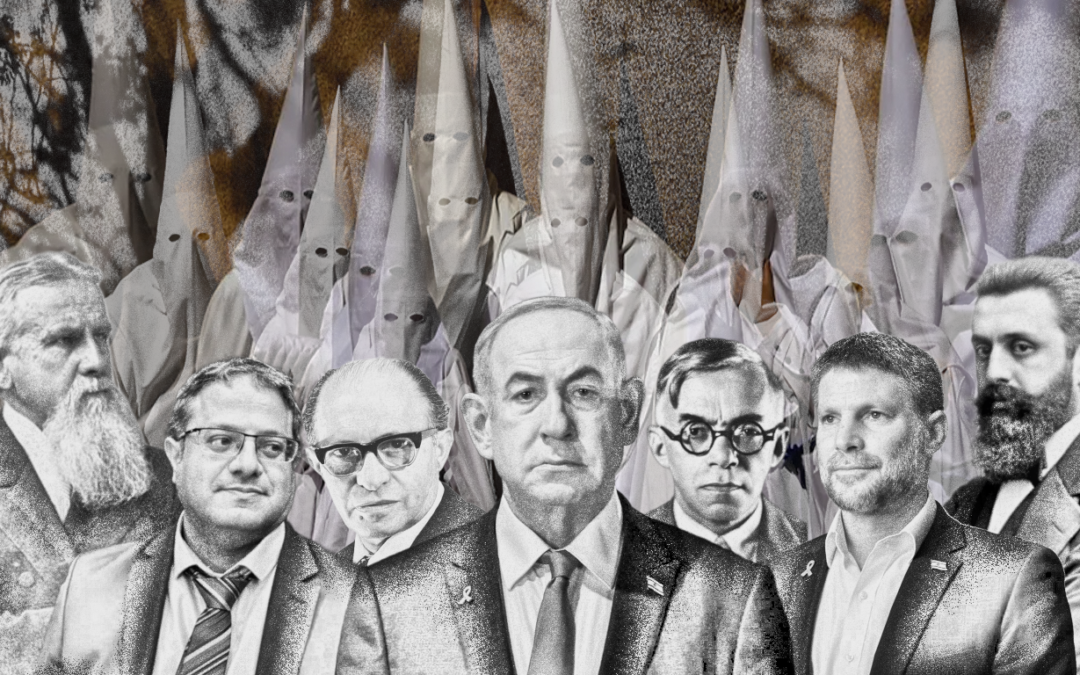
The fanatical settlers who are expanding their presence into the heart of the West Bank under Palestinian authority are making no secret about the fact that they're setting up more and more - illegal - outposts there, in response to a supremacist imperative that sees Arabs as a population to be expelled or eliminated in the name of a metaphysical battle of Good versus Evil. The expression of this duality takes the form of violently racist rhetoric on a scale not dissimilar to that used by Nazi theorists against Jews. In 2009, Yitzhak Shapira and Yosef Elitzur, rabbis from the settlement of Yitzhar, located five kilometers south of Nablus, published a book entitled “Torat HaMelech” in which they defended the idea that Jews were authorized by religious edicts to kill non-Jews, including children, in certain circumstances. These genocidal writings were supported by Dov Lior, rabbi of Hebron and Kiryat Arba, and charismatic leader of the Israeli Zionist far right, who has also repeatedly justified the murder of non-Jews, inspiring a whole fringe of the Israeli right with his hate-filled speeches. In the same spirit, in 2012 Rabbi Eyal Karim, currently rabbi of the Israeli armed forces, had justified the use of rape by soldiers in wartime, considering the matter in these terms: “Since our priority is the community's success in war, the Torah has allowed [soldiers] to satisfy their evil urges under the conditions it has stipulated in the name of the community's success”. The “anti-Goyim” and anti-Arab preaching of these rabbis feeds the racism that justifies the commission of crimes in the name of the survival of the Jewish people, and has an immense influence on hundreds of thousands of Israelis. Since then, the religious fundamentalists who have made the colonization of Palestine a messianic issue have gradually infused their supremacist and fascist ideas into the highest levels of the Israeli state. Their racist, millenarian vision is perfectly illustrated by Israeli Prime Minister Benyamin Netanhayu's speech, delivered on October 26, 2023 to justify his latest military offensive against the Palestinians of Gaza: “We are the sons of light, they are the sons of darkness, and light will prevail over darkness [...] Remember what Amalek did to you” [20]. When he invokes the extermination of the “seeds of Amalek” the reference is not religious but ethnic, insofar as Islam post-dates the period concerned by the use of this notion, designating an ancient people of Sinai in conflict with the Judeans: the Edomites (8th to 5th century B.C.). Beyond that, it's a promise of vengeance that has its origins in national mythology. At the same time, many other representatives of the Israeli government and parliament have made one racist statement after another, condoning the mass murder of Palestinian Arabs, while the Israeli army has engaged in the deadliest military operation in Israel's history, ethnically cleansing the Palestinians in Gaza, with no international body or state taking the necessary steps to stop the massacre[21]. But this is nothing new: for many years, the Revisionist Zionist current to which most members of the Netanyahu government claim to belong[22], including himself, has been multiplying public statements targeting Arabs. Long before October 7th, the Israeli right was marching in the streets with the slogan “death to the Arabs”, which has appeared more than once in the last decade on large banners carried by demonstrators. In addition, the practice of “price tag attack” initiated since 2008 by extremist settlers close to the current Minister Itamar Ben Gvir includes the spraying of hate graffiti and the commission of violently anti-Arab acts of vandalism. Ben Gvir, along with Bezamel Smotrich and other representatives of the Israeli government, have constantly called for the destruction of Arab communities, using openly racist rhetoric that has nothing to do with the fight against radical Islam or terrorism[23]. Their inflammatory rhetoric is not aimed at Islam, but very clearly at Arab ethnicity. The Pandora's box opened by religious eminences and by the Israeli political representatives to whom they are close has legitimized the unbridling of public discourse in Israel, leading a number of public figures to express unmistakably racist and supremacist views without suffering any backlash. One of the most telling examples is TV presenter Tzofit Grant's statement about Palestinians in Gaza during a TV show in December 2023: she called them “disgusting, stinky losers, walking with flip-flops. Repulsive people.” That says it all. Finally, when Yoav Gallant refers to the Gazans as “human animals”, the choice of lexicon is again socio-ethnic rather than religious. There's no need to list all the racist statements made publicly by influential Israeli figures to understand that anti-Arab racism is the primary motivation behind Israeli policies.

Israel, the embodiment of white supremacy and anti-Arab racism

If I draw this parallel with the situation in Palestine, it's because it perfectly embodies all the paradoxes of Northern (Western) societies in their relationship with Arab societies in particular, and of formerly colonized societies in general, but also because the majority of Israelis come from these Northern imperialist societies. As such, they are allochthones, importing into the Middle East an ultra-individualistic, ethnocentric and neoliberal way of thinking typical of Northern societies. Considering themselves to be at the cutting edge of civilization and democracy, the vast majority of Israelis (the Zionists) never conceive of the Arab world as their equal, and deny the very reality of Arab cultures and progressivism: for them, Arabs can be neither modern nor democratic. Arabs are merely an obstacle to capitalist modernity, and as such their eradication alone becomes the guarantee of social order and peace. With the genocide underway in Gaza since October 8th, 2023, Europe's far right has massively united with the State of Israel, so much so that its approach to Arabs is a model of effective Arabicide. Hatred of Arabs and Muslims has overtaken their historical anti-Semitism, and they seem to have suddenly reconnected with the Jewish part of their Judeo-Christian identity, while denying the Semitic part of Arab identity.

Since September 11, 2001 and the launch of the U.S.-initiated War on Terror, the international community, made up of the most influential states (UN, NATO, G7, G20) and their client-states, have rallied behind the American neo-conservatives and their ideological and military crusade against the Muslim world. It should be pointed out that Arabs are not in the majority in the Muslim world, over 60% of Muslims being Asian (Indonesia, India, Pakistan, Bangladesh) and 15% sub-Saharan (Africa). However, the Western crusade against “terrorism” is essentially focused on the Arab world and the former Persia (Afghanistan, Pakistan, Iran). In any case, the accusation of terrorism is sufficient in itself to legitimize all forms of violence against targeted individuals or groups: administrative detentions without charge, extra-judicial assassinations, torture, sieges and cutting people off from food and resources, expulsions and deportations, as well as “carpet bombings” of residential areas accused of harboring or supporting terrorist groups[24]. The laws of war have been subject to so many derogations that they have become obsolete. War crimes are even legitimized by military doctrines such as the Dahiya doctrine outlined by Israeli Chief of Staff Gadi Eizenkot in 2010, after having been applied by the Israeli colonial army in Lebanon in 2006. This doctrine authorizes the asymmetrical and disproportionate use of force to put pressure on hostile regimes, notably by systematically destroying civilian infrastructure linked to the enemy, even if this bombardment involves the massacre of hundreds of civilians.

There can be no doubt that the strategy employed in Gaza since October 8, 2023 is the strict application of this doctrine, with the cities of Gaza, Jabalia, Deir-el-Balah, Khan Younis, Rafah and their outskirts (2.14 million inhabitants on 365 km², i.e. 5967 inhabitants/km²) having been bombed intensively, inducing the assumed massacre of 40,000 to 200,000 Palestinian civilians who obviously bear no responsibility for the October 7th attack. The very notion of “collateral victim”, which was already unbearable enough, is no longer put forward, as the genocidal Israeli government asserts without trembling that all Gazans are linked to Hamas and that they are “animals”[25]. It is therefore, in the Hebraic sense of the word, a holocaust[26], and therefore genocide.

This racist and genocidal rhetoric, implicitly endorsed by all Israel's allies, led by all the former colonial powers, echoes the racist and Islamophobic rhetoric commonplace throughout the European political class, from the far right to the center left, and now also by the social democrats and liberals who still call themselves socialists in several countries. What's more, even the radical left has long since taken up the clichés against terrorism, incapable of offering a serious, intelligent critique of the notion, the way it is used, but above all of the totalitarian slide that the abused use of this notion entails. Ethnocentrism of the Whites (let's call a spade a spade) means that every time there is an armed attack against their people, their interests or their territory, a sacred union declares the homeland or democracy threatened, even though the main victims of terrorism since the 1970s have been Muslims. Afghanistan, Iraq, Somalia, Nigeria, Burkina Faso, Pakistan, Syria and Yemen have been the worst-affected countries over the past fifteen years. In Iraq and Syria, Islamist groups linked to Al Qaeda and the Islamic State have mostly killed Muslims[27]. And when the international community intervenes militarily in response to terrorism, it destroys civil societies already targeted by armed groups, and thereby sustains the disastrous breeding ground for hatred and fundamentalism. All the more ironic - and this is what societies in the North refuse to understand (or consciously deny) - is that “terrorism” is in reality a self-defense reflex of societies or individuals crushed by capitalism and the imperialism that flows from it.

What this reality continues to successfully conceal is that the motivation and objective of imperialist wars is never the establishment of peace and democracy, but rather the maintaining of a chaotic status quo entirely compatible with capitalist predation and the plundering of resources it entails. In none of the countries where the United States and its allies have intervened since the 1960s has a lasting democratic regime been established - quite the contrary. Any Arab democracy, on the contrary, would threaten the Western economy because it would be accompanied by self-management of its resources and a likely challenge to the economic hegemony of the countries of the North, while allowing its nationals to return home and travel freely, without continuing to constitute a workforce exploited exclusively by the former colonial powers. Conversely, several northern countries, but also the petromonarchies of the Arabic Peninsula, have actively supported Islamist armed groups in central and northern Syria, in the hope of destabilizing the Assad regime and its Russian-Iranian allies, while militarily supporting the Kurds in order to keep safe the oil resources of northeastern Syria, which make up 70% of the country's total resources. In 2019, US President Donald Trump thus declared: “We're keeping the oil, don't forget that. We want to keep the oil. Forty-five million dollars a month.”

Western interventions are part of a colonial continuum whose stakes and objectives have never changed since the 19th century. One eloquent demonstration of this assertion is the international community's total disinterest in the democratic, non-confessional revolt of the people of the Suwayda governorate in Syria, which began in August 2023 and is still going on more than a year later. The fact that the region is predominantly Druze, a minority that is impossible to associate with Islamism, and that it has no major resources on its territory, makes it a negligible issue for capitalist regimes accustomed to pitting ethnic and religious communities against each other in order to derive economic profit from the disorder engendered. There can be no Arab democratic movement that arouses the interest of Western democracies. For them, “democracy” and “Arab” are an oxymoron. Israel for instance, which presents itself as a democracy and has occupied the Druze villages of the Golan Heights since 1967, does not seem interested in encouraging the emergence of a democratic, non-confessional movement among the Druze Arabs living nearby. All the better.

We can legitimately assume that Israel's existence is threatened less by the armed attacks of Hamas and Hezbollah than by the establishment of truly democratic Arab regimes on its borders. Indeed, a true Arab democracy could not suffer the presence of the colonial entity and would never cease to question its existence, at the very least out of solidarity with the Palestinians subjected to its violent apartheid regime. Those who believe that Israel promotes peace and democracy in the Middle East are mistaken: war is far more beneficial to it, and that's why Israel has conscientiously sabotaged the peace agreements with the Palestine Liberation Organization (PLO), encouraging the assassination of its architects Yitzhak Rabin (in 1995) and Yasser Arafat (in 2004), before facilitating the emergence of Hamas with the avowed aim of defeating its moderate, non-confessional opponents from Fatah, notably the very popular Marwan Barghouti, imprisoned since 2002 following two failed assassination attempts. To this day, Israel has never protected democracy, but on the contrary promoted fascism to maintain its illegitimate existence, encouraged by its American and British sponsors, for whom Israel is the best outpost or Trojan horse in the Middle East.

The ongoing wars in the Middle East, but also the policies implemented in Europe and the United States, are thus accompanied by a permanent physical and cultural arabicide under the pretext of fighting terrorism, protecting democracy and defending “Western values”. Israel is part of the logical continuum of this supremacist/imperialist approach. Thus, focusing on Islamophobia rather than racist hatred and multipolar imperialism helps validate Western binary rhetoric and invites its opponents to identify more with specific religious or national groups than with more diverse popular liberation movements.

NOTES 

[1] Many of these settlements are kibbutzim, which doesn't take away their colonial status.

[2] See the map produced by the October 7th Geo-visualization Project: https://oct7map.com/

[3] As of September 3, 2024, 117 hostages have been released, 100 of them following negotiations with Hamas. 97 hostages are still in Gaza, 33 of whom are presumed dead.

[4] Marwan Barghouti was kidnapped and life sentenced in april 2002 ; Yasser Arafat died in suspicious circumstances in november 2004

[5] https://pcpsr.org/en/node/944 

[6] Read Roy, Olivier; Volk, Carol (1996). The failure of political islam. Harvard University Press

[7] These fake news were debunked by several media, including the Israeli media Haaretz : lies were based on false statements by the Zionist NGO Zaka, which identifies victims of terrorism, road accidents and other disasters in Israel and around the world. It is worth recalling that its founder Yehuda Meshi-Zahav was prosecuted for a series of rapes and sexual assaults committed over several years, as well as embezzlement, before dying in a coma in 2022 following a suicide attempt. 

[8] Between 1937 and 1948, the Irgun carried out 60 attacks against Palestinian civilians and British colonial police, most often detonating bombs in markets, on public transport or in cinemas. The death toll from these attacks was almost 700, most of them civilians. On July 22, 1946, the Irgun detonated a bomb in Jerusalem's Kings David Hotel, murdering 91 and wounding 46 people, including Arabs, British and Jews. The Irgun has been designated a terrorist organization by the Anglo-American Committee of Enquiry.

[9] The First Crusade of 1095-1096 also attacked the Jews. 

[10] According to the results of a study conducted in 2015-2016 by the MENA Arts Advocacy Coalition (MAAC): https://www.menaartsadvocacy.com/   

[11] These examples have been taken totally at random, but of course the list is much longer. 

[12] On February 1, 2024, two fascist militants from Lyon's Les Remparts group, Pierre-Louis Perrier and Sinisha Milinov, stabbed three Arab people with twelve knives as they left a nightclub. 

[13] I include the “left-wing Zionism” of the kibbutzim in the category of moderate nationalism. 

[14] “Terrorism“ in the name of Arab nationalism was initiated in the 1970s by the Palestinian organizations Black September, founded in 1970 by members of Fatah, and Fatah Revolutionary Council (Fatah-RC), founded in 1974 by Sabri al-Banna (”Abu Nidal") at the instigation of Saddam Hussein. The former is known for the assassination of Jordanian Prime Minister Wasfi Tall on November 28, 1971, and the hostage-taking and execution of 11 Israeli athletes during the Munich Olympics on September 5 and 6, 1972. The second is held responsible for attacks and targeted assassinations that led to the deaths of over 300 people between 1972 and 1997. 

[15] See the film “Hannah Arendt” by Margarethe von Trotta, 2012. 

[16] One of the main criticisms levelled at Hannah Arendt is that she doesn't “love the Jews”. In Hebrew, this specific love has a name, Ahavat Israel. 

[17] The desert is understood here as the place where that which constitutes “the world” disappears, i.e. that which connects human beings, namely the set of social relations where politics is born. 

[18] In J.R.R. Tolkien's fantasy novel The Lord of the Rings, Mordor is a region in the far east of Middle-earth, the stronghold of the Dark Lord and the forces of evil. 

[19] The Jewish National Fund paid for the planting of 240 million trees, most of them pines considered invasive by naturalists, who blame them for impoverishing the soil and preventing other plant species from developing, as well as being a major cause of fires. 

[20] Netanyahu's speech here refers to the Old Testament writings of Deuteronomy 25:17, which mention the attack on the Hebrews by the Amalekites, descendants of Amalek, during their exodus from Egypt. The Amalekites embody in Judaism the archetypal enemy of the Jews‧ives, without their existence as an ethnic or social group ever having been established by historians and archaeologists. And if this were the case, it's unlikely that they had any connection whatsoever with either the Philistines or the Arabs of Palestine.  

[21] At the time of writing, exactly one hundred days after the start of the war, 40861 Gazans have been killed, including 16164 children and 10399 women, with a further 94100 wounded and 10000 missing. 220 UN employees, 172 journalists, 523 health professionals and 76 members of the civil defense forces were killed. Nearly 2 million Gazans were forcibly and repeatedly displaced in the southern part of the Gaza Strip, with no possibility of leaving the territory. 516,500 homes were destroyed, along with 439 schools, 763 places of worship and 19 hospitals. 

[22] Revisionist Zionism is a movement initiated by the Ukrainian Jew Ze'ev Jabotinsky, founder of the right-wing extremist movements Betar and Irgun. Inspired by Italian fascism, the movement advocated the emergence of a new Jew, the Hebrew, as distinct from the previous Jew, the Yid. In 1934, Jabotinsky founded the Betar naval academy in Italy with Mussolini's support.

[23] It's worth remembering that on February 26, 2023, hundreds of Israeli settlers aided by the Israeli army attacked the village of Huwwara, engaging in arson and intentional violence on such a scale that the international press described the attack as a pogrom. The Israeli Finance Minister, Bezamel Smotrich, expressed his wish that the Palestinian village be “razed to the ground”. This was just a foretaste of the racist, supremacist violence that unfolded during the Gaza offensive some eight months later. 

[24] The first examples of “carpet bombing” were the Fascist bombing of Guernica and Barcelona in 1937-1938 and the Japanese bombing of Chongqing (China) in 1938, before the practice became commonplace both by the Nazis (Warsaw, Rotterdam, London, Coventry) and the Allies (Hamburg, Dresden, Tokyo) during the Second World War, and then by the American air force in Vietnam in 1964-1965. 

[25] Remarks by Israeli Defense Minister Yoav Gallant on October 9, 2023: “We are imposing a complete siege on Gaza. There will be no electricity, no food, no water, no fuel. Everything will be closed. We are fighting human animals and we are acting accordingly.” 

[26] The Larousse dictionary states: “Holocaust (Low Latin holocaustum, from Greek holokaustos, from holos, whole, and kaustos, burnt) : In ancient Israel, a religious sacrifice in which the victim, an animal, was entirely consumed by fire; the victim thus sacrificed”. 

[27] My purpose here is not to deny the many Yezidi, Kurdish, Druze, Christian and other minority victims targeted by Islamists, but to compare the total figures in terms of proportions. The eight main jihadist groups (ISIL, Taliban, Boko Haram, Al-Shabaab, Tehrik-i-Taliban Pakistan, Fulani Islamists, Al-Qaeda in Iraq and Al-Qaeda) have claimed almost 100,000 victims since 2000. 
About the author: Cédric Domenjoud is an independent researcher and activist based in Europe. His research areas focus on exile, political violence, colonialism, and community self-defense, particularly in Western Europe, the former USSR, and the Levant. He is investigating the survival and self-defense of Syrian communities and developing a documentary film about Suwayda, as part of the Fajawat Initiative.
Исследовательское пребывание в воюющей Украине

Исследовательское пребывание в воюющей Украине

Один из членов нашей инициативной группы отправился в Украину в апреле 2024 года. Целью первого визита было встретиться с волонтерами из гражданского общества, лучше понять общий контекст российского вторжения в Украину и внутреннее состояние местного населения, а также посмотреть, что делается в рамках инициатив народной солидарности, и проанализировать их потребности.

Я уже бывал на Украине, но это было давно, по пути в Россию, куда я ездил почти каждый год в течение двенадцати лет. Это было до Майдана и до войны. Я говорю по-русски и в течение нескольких лет поддерживал связи с либертарними политическими активистами из Беларуси и России, которые борются с тоталитаризмом российского государства и его империализма на внешних границах. С начала наступления 2022 года я получал отрывками от своих контактов критику в регионе, но, честно говоря, понимание того, о чем идет речь, ускользало и до сих пор в значительной степени ускользает от европейского общества, включая политических активистов. Несмотря на то,что я хорошо знаю социальную реальность и геополитику региона, и также несмотря на то,что модного лет работал с сообществом чеченских беженцев, о том, к чему привела эта война, оставалось только догадываться. Чтобы понять, нужно побывать там.

В апреле 2024 года я отправился на автобусе в Варшаву, а затем на поезде в Київ. Двое местных знакомых написали, что меня ждут.

Київ, проект « BeSt »

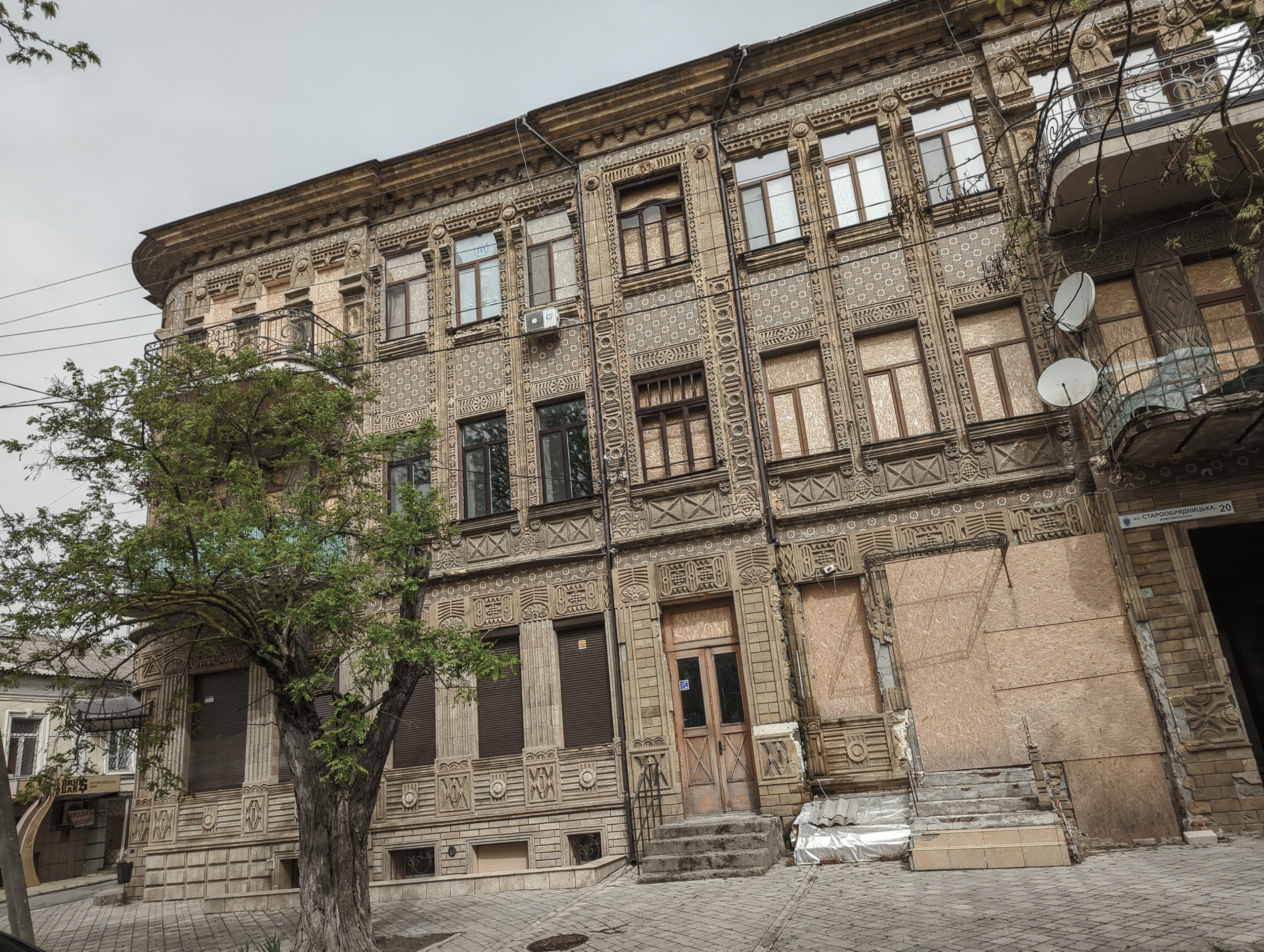
Сначала я встретился с Петром*, Славой*, Кирой* и Матвеем* (*псевдонимы) в студии за полуразрушенным зданием в Шевченковском районе Київа. За время моего пребывания в этой маленькой комнате, через которую проедет много других лиц, я в основном общался с этим квартетом.

Они не являются активистами. Для них политическая организация представляется сектантской игрой в представительство и пустой тратой энергии, которую они просто оставляют другим. К началу русского вторжения Петро был плотником и видеодизайнером, Кира открыла салон красоты, Слава был парикмахером и музыкантом, а Матвей - графическим дизайнером. Российский империализм резко остановил их проекты, и они оказались в Київе благодаря необходимости и случайным встречам, а также потому, что желание противостоять российскому колониализму и проявить солидарность со своими друзьями, ушедшими воевать, заставило их объединить усилия в рамках общего проекта. Петро занимается разработкой электронных устройств и систем, которые помогут бойцам выстоять и выжить на фронте. Матвей помогает выполнять ручную работу, необходимую для реализации проекта, а Слава занимается компьютерной техникой. Другие люди помогают с мелкой работой и логистикой.

Только Матвей пережил Майдан (народное восстание в 2014 году), и для него история начинается с того момента. Для остальных это не играет решающей роли в том, что происходит сегодня. "Российская проблема" не нечто новое, она всегда где-то существовала. Слава кажется наиболее привязанным к своей украинской идентичности, которую он строго отделяет от русской идентичности: для него это два мира, которые имеют мало общего. Он легитимизирует украинский национализм, который он противопоставляет европейским формам национализма, которые он описывает как фашистские. Для него украинский национализм не имеет намерения или цели угнетать расовые и гендерные меньшинства, в то время как нацизм - это европейское зло, которое нельзя переносить на Украину. Как и остальные участники группы, он имеет знакомых-мигрантов и квиров, часто посещает альтернативную музыкальную сцену и не испытывает презрения к антифашистским активистам, которых он неоднократно называет одним из нескольких одинаково легитимных компонентов общества. Когда слушаешь его, его национализм кажется совместимым с демократией, а также открытостью миру и Европе. Украинская идентичность определяется просто - привязанностью к культуре украинского народа и его сильным стремлением к самоопределению. Слава объясняет, что эта специфика выражается в украинском слове "ВОЛЯ", которое представляет собой сочетание понятий "свобода", "воля" и "желание".

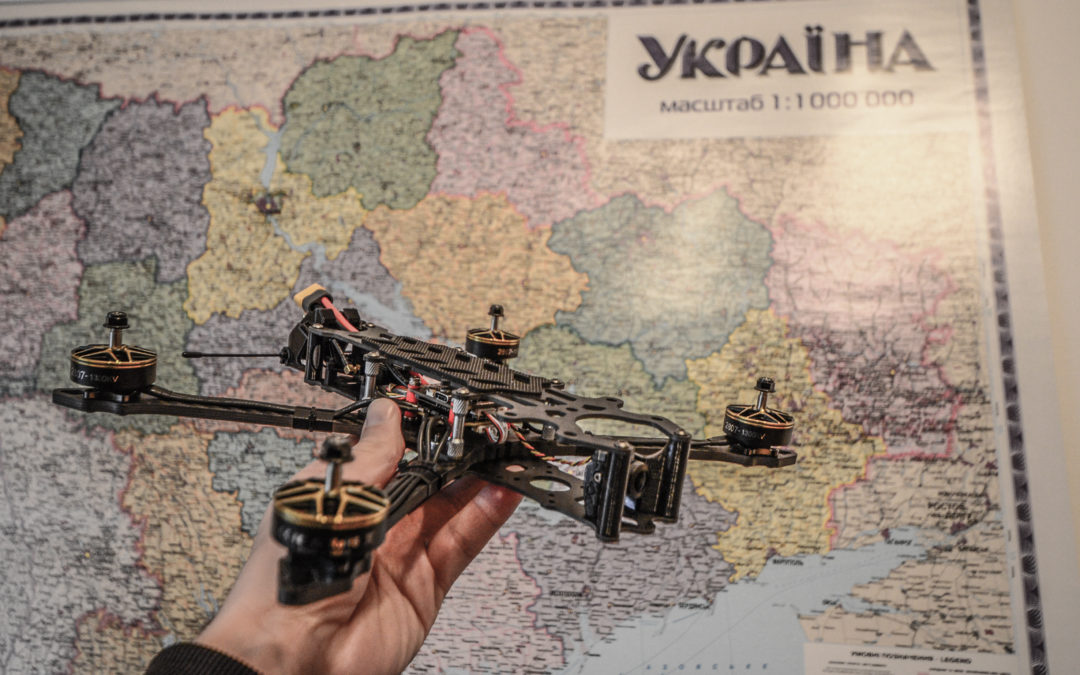
Для группы в целом сопротивление является само собой разумеющимся, и те, кто уклоняется от него, ставят под угрозу свободу всех. Вместо того чтобы быть на фронте и сражаться, они организуются для материально-технической поддержки бойцов и оказания гуманитарной помощи тем, кто остался в регионах, непосредственно пострадавших от российских бомбардировок. Это их вклад до тех пор, пока их не призовут на фронт. Когда приходит время, они говорят, что пойдут без раздумий, несмотря на страх, который они испытывают. Матвей колеблется больше всех: он менее рьяный и не верит, что его личное участие в качестве солдата изменит ход войны, которая в большей степени зависит от технологий и мощи используемых нечеловеческих средств, а значит, и от политических решений, которые не зависят от нас. Он считает, что был бы полезнее без оружия, в логистике или строительстве инфраструктуры. Слава советует ему научиться управлять беспилотниками (БПЛА), чтобы не участвовать в прямых боевых действиях, потому что их использование стало обычным делом в этой войне. Поскольку союзники Украины не поставляют им оружие, необходимое для нанесения решительного ответного удара, беспилотники-убийцы заменяют ракеты и снаряды. С фронта приходят кадры под музыку, как эти маленькие дистанционно управляемые устройства сбрасывают снаряды и гранаты прямо на головы вражеских солдат. Это новая парадигма современной войны: сотни беспилотников ежедневно строятся гражданскими лицами и отправляются солдатам на фронте. А поскольку последние все еще недостаточно обучены их использованию, вклад опытных пилотов очень ценится.

Однако, поскольку добровольцы должны вступать в регулярную украинскую армию, их специализация не учитывается, когда они прибывают на фронт, и люди, с которыми я разговаривал, критикуют этот дилетантизм со стороны отсталого военного персонала. Они объясняют, что в батальоне "Азов" все иначе, там больше возможностей для маневра. Тем не менее, Слава сожалеет о недостатке приверженности со стороны молодых украинцев, которые уже привыкли к этой позиционной войне далеко на востоке страны и продолжают жить обычной жизнью. Он не очень оптимистичен и говорит, что нет другого выбора, кроме как освободить всю Украину и довести войну до Москвы, иначе Россия никогда не перестанет громить своих соседей. Российский колониализм - это константа, с которой нужно покончить раз и навсегда: для Славы и украинцев это свобода или смерть. В словах Славы чувствуется обида на российское общество, которое он обвиняет в том, что оно не дает себе необходимых средств, чтобы покончить с диктатурой Путина и войной. Если бы они действительно были в ужасе от этой братоубийственной войны, они бы поднялись и взяли в руки оружие против правительства. Он не хочет знать, что творится в головах россиян, которых он считает отчужденной массой, смирившейся со своей участью и посылающей тысячи своих людей на убой, не делая ничего, чтобы предотвратить это. Украинское правительство утверждает, что с 24 февраля 2022 года погибло около 180 000 российских солдат, в то время как 31 000 украинских солдат были убиты.

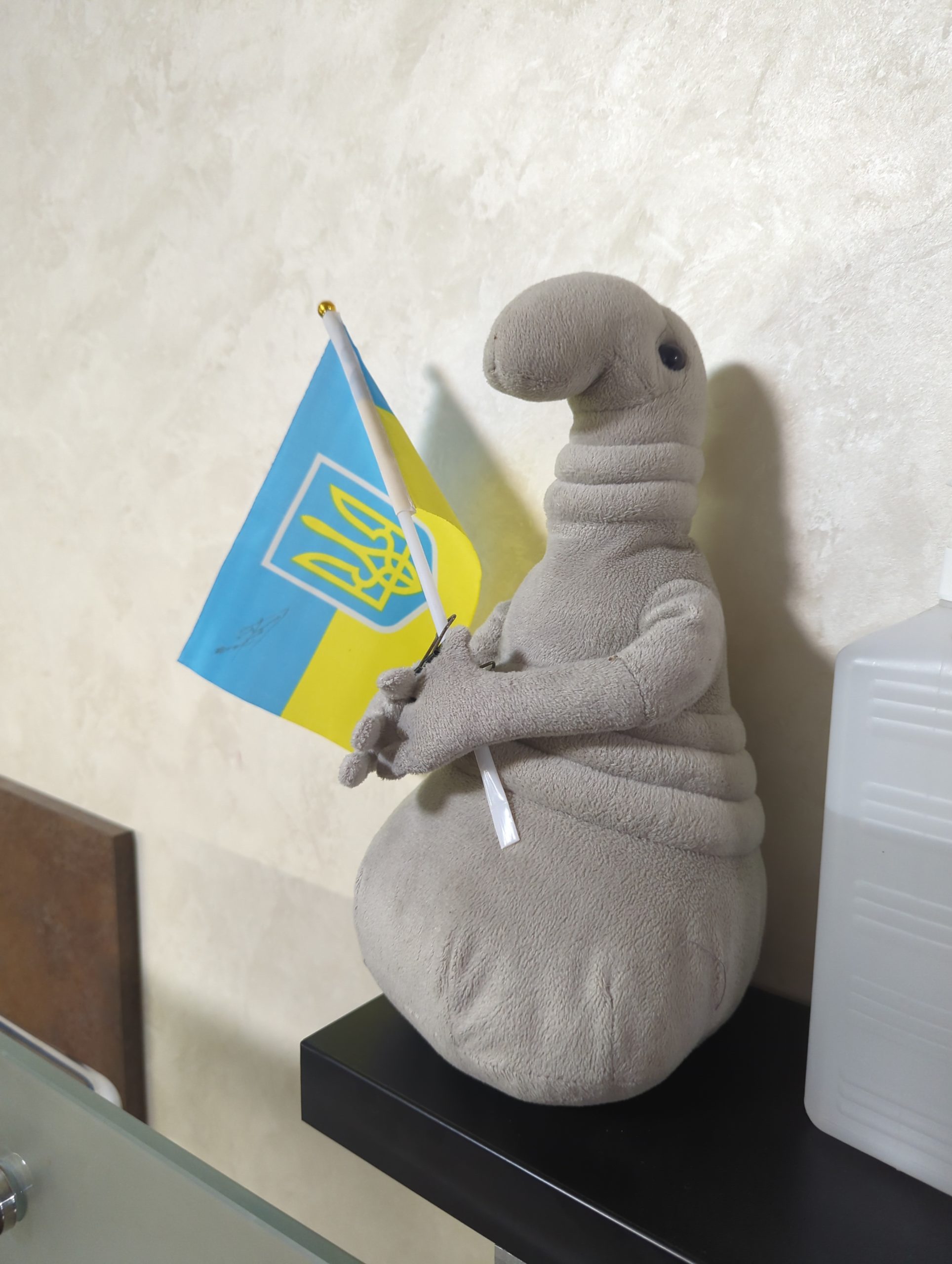
Если Матвей и Слава, каждый по-своему, выражают нравственное стремление и некую внутреннюю рану, состоящую из законного гнева или разочарования, то Петро кажется более прагматичным, стремящимся делать то, что должно быть сделано, не позволяя себе лишних переживаний. По крайней мере, об этом говорит его флегма. Возможно, тот факт, что он вырос в семье военного, способствует этой рациональности. В те несколько дней, что я нахожусь в их мастерской, он всегда активен, работает с 3D-принтерами, паяет и соединяет детали невероятной формы. Когда я начинаю интервью с ним, он с трудом описывает свою деятельность и предпочитает начать разговор об отсутствии иностранной военной поддержки: "Где F16? Далее он рассказывает о чувстве заброшенности и коллективной беспомощности целого народа, который беспомощно наблюдает за падением ракет, поскольку у него нет оружия, способного предотвратить падение бомб на украинские города. Это наблюдение разделяют многие украинцы, которые называют себя "ждунами", ссылаясь на знаменитую скульптуру, созданную для больницы в Лейдене (Нидерланды) художницей Маргрит ван Бреворт, другими словами, "обычными пациентами, спокойно ожидающими диагноза в приемной врача и надеющимися на лучшее". Тем временем украинская армия теряет позиции.

В двух шагах от дома Кира организовала собственный художественный и гуманитарный проект: она создает всевозможные произведения искусства из предметов, найденных в руинах или подобранных тут и там, которые помогают финансировать усилия коллектива и инициативы по оказанию помощи людям, находящимся за линией фронта. Она также ездит в Европу на выставки и информационные мероприятия, сотрудничая с коллективом независимых кинематографистов, « Free Filmers », и фонд поддержки Украины, « Medychka Fundraiser ». У меня также была короткая встреча с Сашко, директором коллектива "Свободные кинематографисты" из Мариуполя. Он рассказал мне об их разнообразной деятельности: показе своих фильмов и повышении осведомленности на Западе, поддержке перемещенных цыганских общин в Запорожье, восстановлении домов за линией фронта и отправке медикаментов участникам боевых действий. Он дает мне очень прагматичный и эффективный список гуманитарных потребностей, вскользь объясняя, что международные НПО часто не имеют отношения к реальности этих потребностей. Интервью было коротким, Сашко уклонился от моих вопросов о его личном анализе, который он считает слишком абстрактным. Я понимаю: в таком контексте не обязательно заблуждаться в теоретических оборотах. К сожалению, с Кирой мы тоже не успеем обсудить ее взгляды, но именно благодаря ей я нахожу контакт с жителями Херсона. Слава убеждает меня поехать туда, чтобы "по-настоящему понять", а также потому, что, по его мнению, мне нужно испытать этот страх, чтобы понять, где я нахожусь в контексте войны. Он говорит, что это как "отрезвляющая таблетка".

Київ, « Колективи Солідарності »

Перед отъездом из Київа я также встретился с членами другой сети, активно сопротивляющейся российскому империализму, - Collectifs Solidarité. Расположенный в помещении фонда в Соломянском районе, коллектив придерживается леворадикальных взглядов, то есть анархистских, либертарно-коммунистических и антифашистских. Они поставляют оборудование, транспортные средства и медикаменты бойцам либертарианского фронта, а также ударные беспилотники, которые заказываются по частям и собираются на месте. Хорошо связанная с европейскими и международными сетями сторонников левых политических сил, их логистическая организация была создана в начале российского вторжения, а в июле 2022 года сменила название. Они поддерживают связи с рядом либертарианских бойцов в различных фронтовых батальонах, а также организуют гуманитарные миссии в различных населенных пунктах в неоккупированных зонах.

19 апреля я встретился с тридцатью активистами на Шекавицкой горе, чтобы посадить дубы в память о трех бойцах-интернационалистах, погибших 19 апреля 2023 года в бою под Бахмутом, Дмитрии Петрове, Финбаре Кафферки и Купере Эндрю. Среди присутствующих были и другие бойцы-либертарианцы, временно вернувшиеся с фронта. Отец Дмитрия поделился своими чувствами и благодарностью по телефону, и момент был одновременно скромным и дружеским.

Finbar Cafferkey
Dmitry Petrov
Cooper Andrew

Сергей, один из активных членов "Колективи Солідарності", беседует со мной за несколько часов до моего поезда в Херсон. Он рассказывает об огромной работе солидарности, которая была организована за последние два года, и о своем анализе текущей ситуации. До войны он руководил антифашистским политическим СМИ и знает, что жизнь и свобода таких активистов, как он, и значительной части населения Украины окажутся под серьезной угрозой, если Украина будет оккупирована российской армией. Он считает, что у него мало шансов пережить российскую военную оккупацию. Интернационалист, эгалитарист и пацифист, Сергей не отказывается от своих принципов, но с готовностью признает, что изменил порядок приоритетов: вчерашняя социальная борьба и политические разногласия были частично отложены из-за российской агрессии. Ему и тем, кто его окружал, не оставалось ничего другого, как примирить свои ценности с реальностью войны, приняв участие в вооруженном сопротивлении, с одной стороны, и поддержав регулярную армию - с другой, даже если это означало смириться с милитаризацией сознания, которую это подразумевало.

Однако решение отдать предпочтение поддержке либертарианских товарищей отражает желание не поддаваться националистической логике и участвовать в "военных действиях", не отказываясь от своего антифашизма. Он признает преобладание реакционного мышления в украинском обществе, но считает, что капитуляция Украины, которую Путин представит как победу, приведет к усилению правого экстремизма, а также к полному разрушению социальной ткани и угрозе для прогрессивных кругов. На данном этапе украинское общество уже устало от войны, и если Сергей сохраняет оптимизм, то только потому, что не исключает перелома ситуации, который, к сожалению, зависит только от политических решений, находящихся вне его контроля, и в частности от поставок оружия, способного заставить российского агрессора отступить.

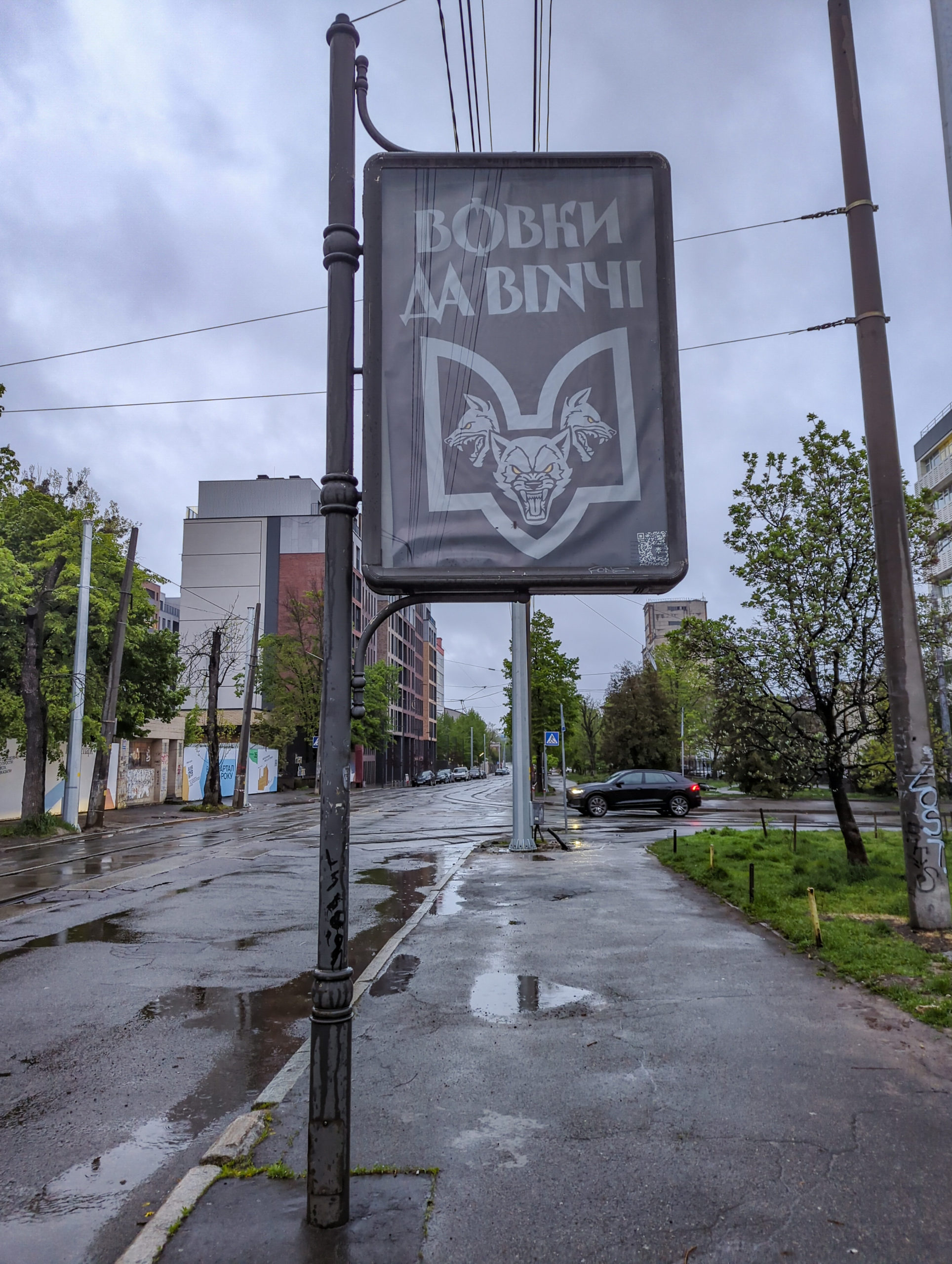
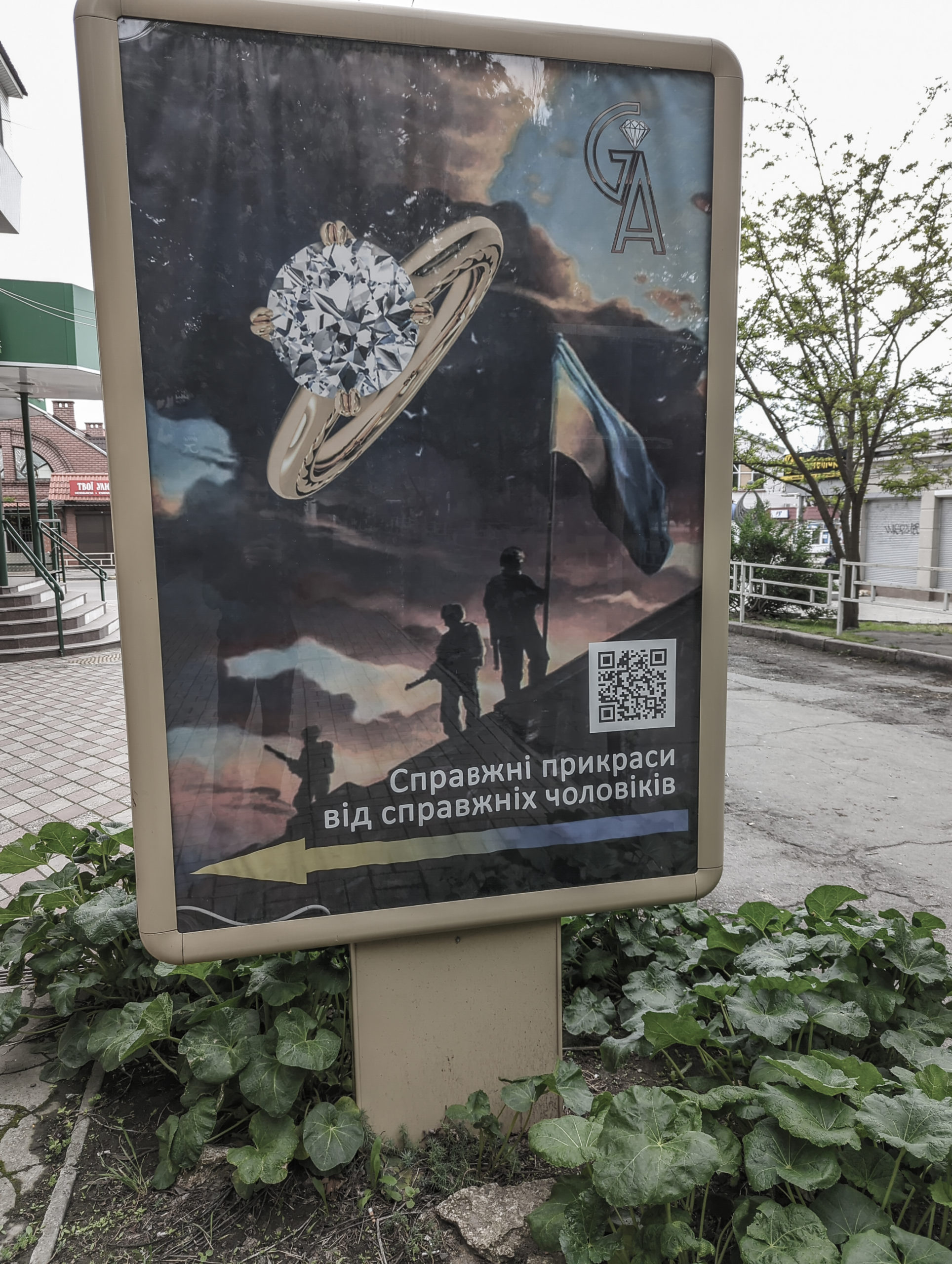
Поднимаясь по великим аркадам Київа к вокзалу, я продолжаю с недоумением смотреть на плакаты с рекламой полков и военной техники вдоль тротуаров: "Слава Вооруженным силам Украины (ЗСУ)", "Смерть врага начинается с нас: стань частью великой истории", "Служба безопасности (СБУ): вместе к Победе! ", "Защищай своих, вступай в ряды Вооруженных сил Украины", "Непоколебимый Київ для непобедимого народа". Умирать за страну, где ты родился, для меня никогда не имело смысла. Умирать за свои идеи - возможно, но нация - это не идея. Свобода и социальная справедливость гораздо важнее. Но в глубине души я считаю, что если ты можешь и должен быть пацифистом, чтобы предотвратить начало войны, то глупо (и поздно) сохранять эту позицию, когда война уже пришла на твой порог. Пацифисты и кемписты, которые, сидя в европейских креслах, осуждают либертарианцев, сопротивляющихся российскому вторжению, кажется, забыли, что самооборона лежит в основе принципов политической автономии. И даже если западные державы поддерживают украинское правительство, это ни в коем случае не означает, что народная самооборона становится пособником их империализма: бойцы на украинской стороне участвуют не в завоевательной войне от имени украинского государства, а в освободительной войне от имени народа. Борьба с империализмом начинается с предотвращения колонизации там, где она осуществляется силой оружия. Затем, когда с военной угрозой будет покончено, появится достаточно времени, чтобы сосредоточиться на борьбе с капитализмом, коррупцией и государственным авторитаризмом. И здесь, увы, нет уверенности, что мы сможем добиться успеха без оружия...

Херсон, город за линией фронта

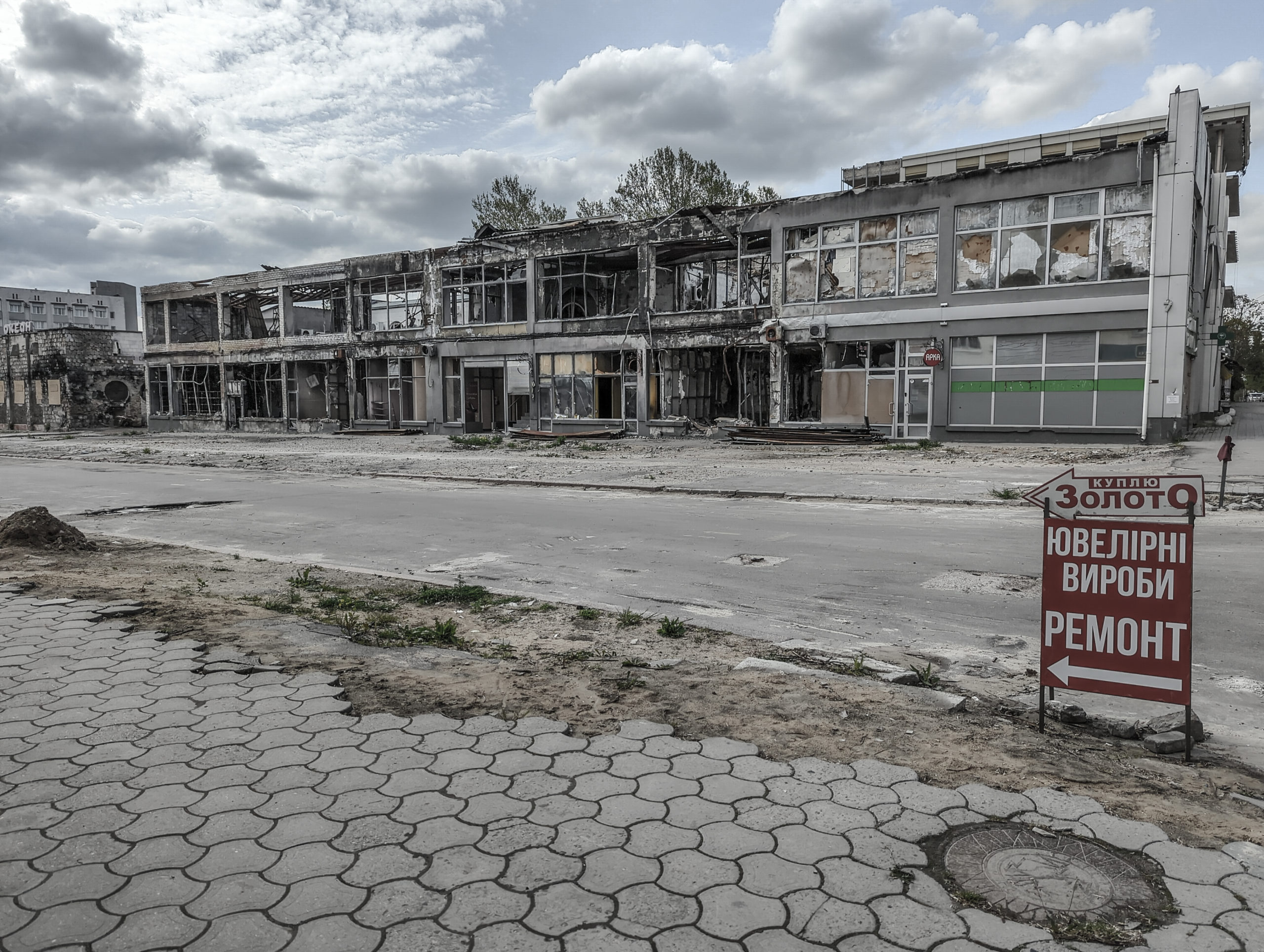
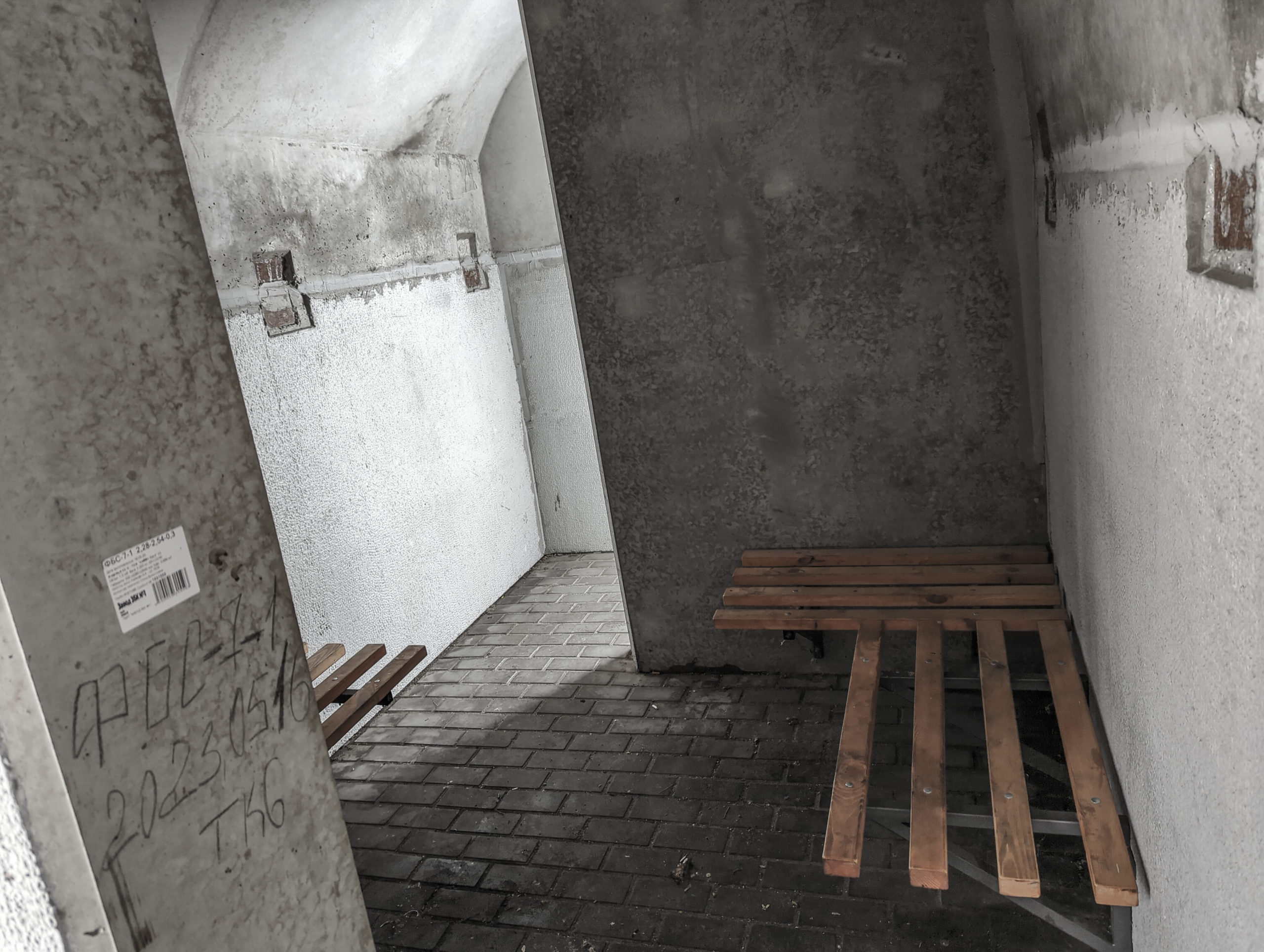
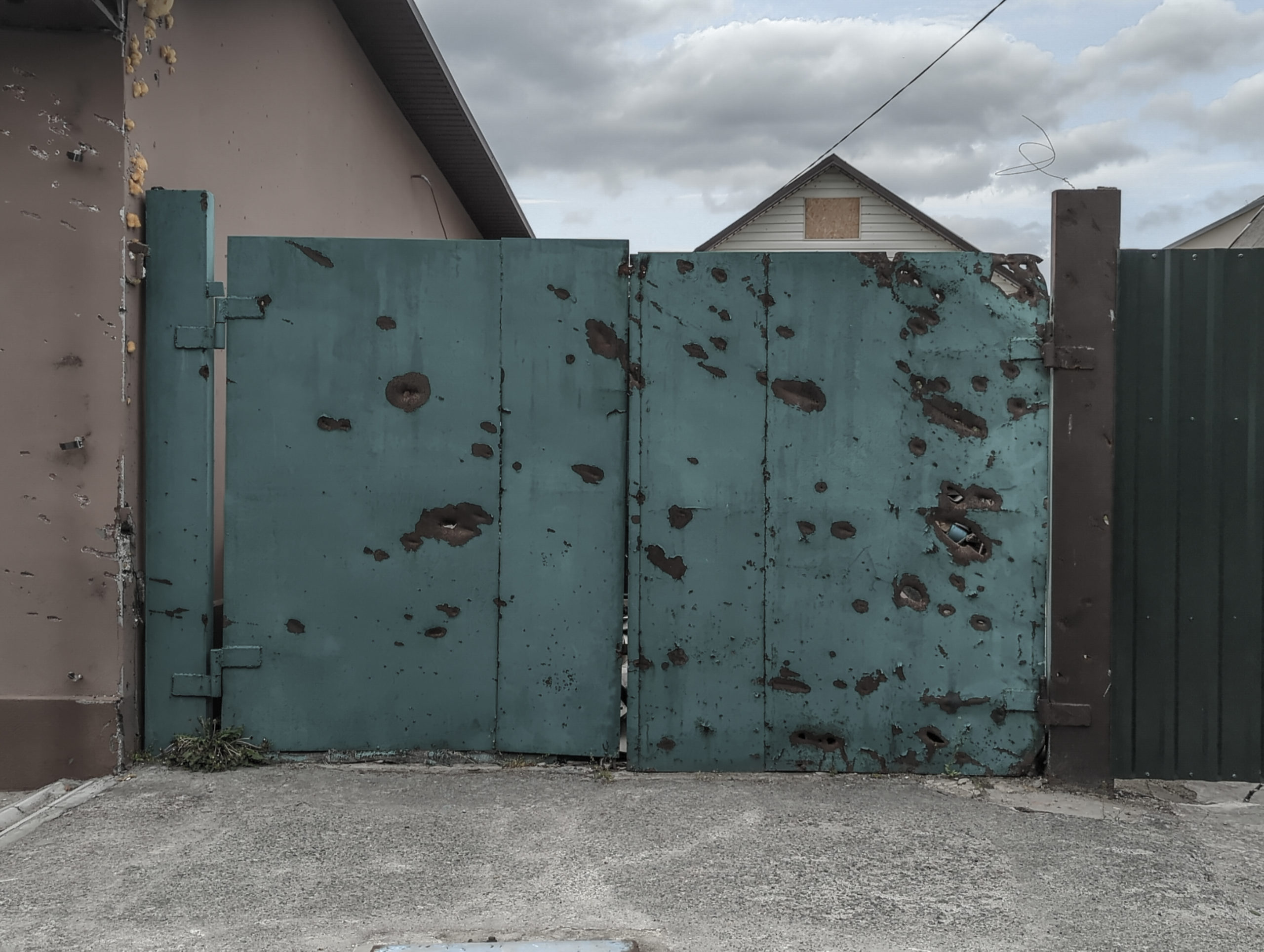
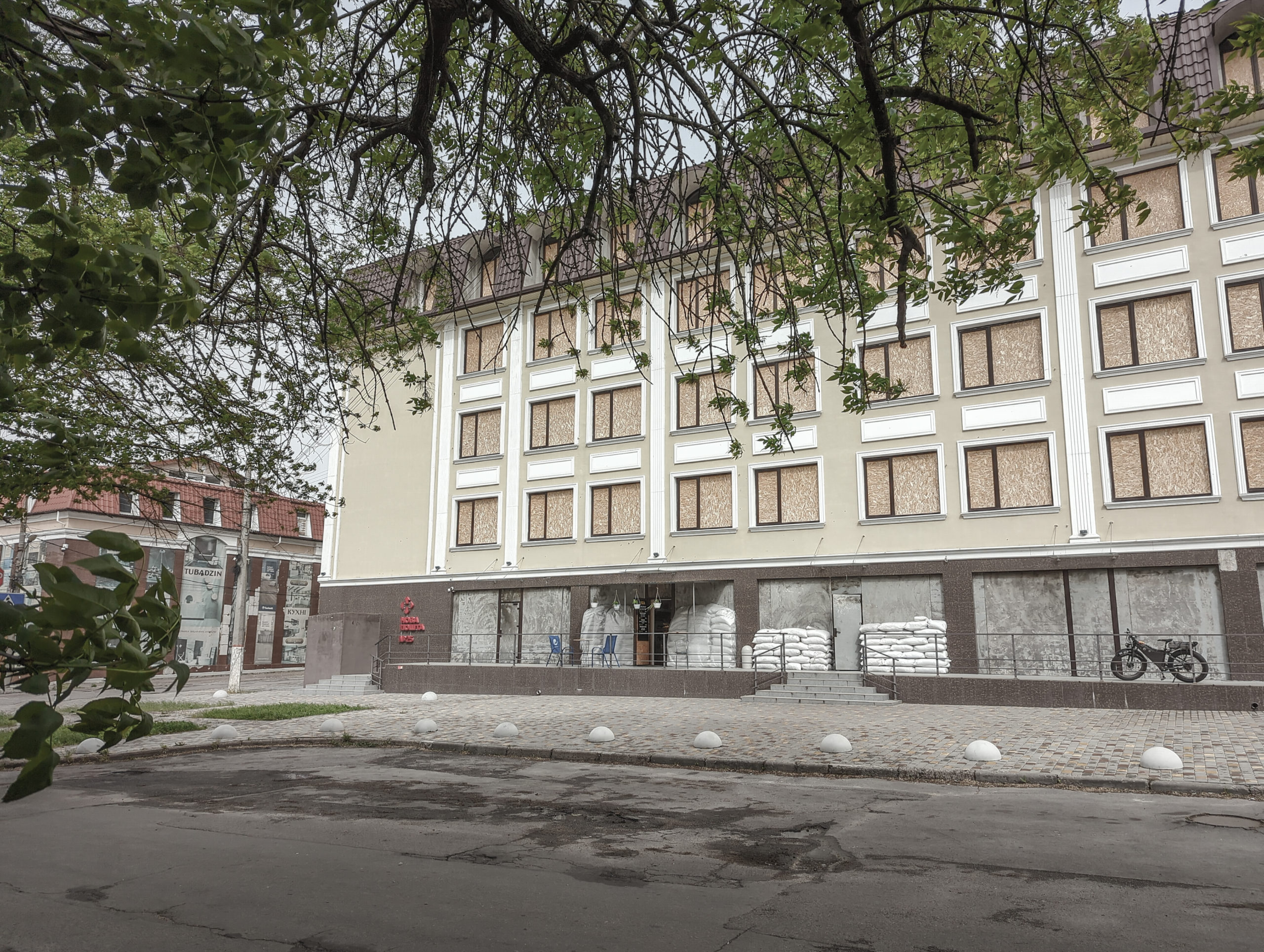
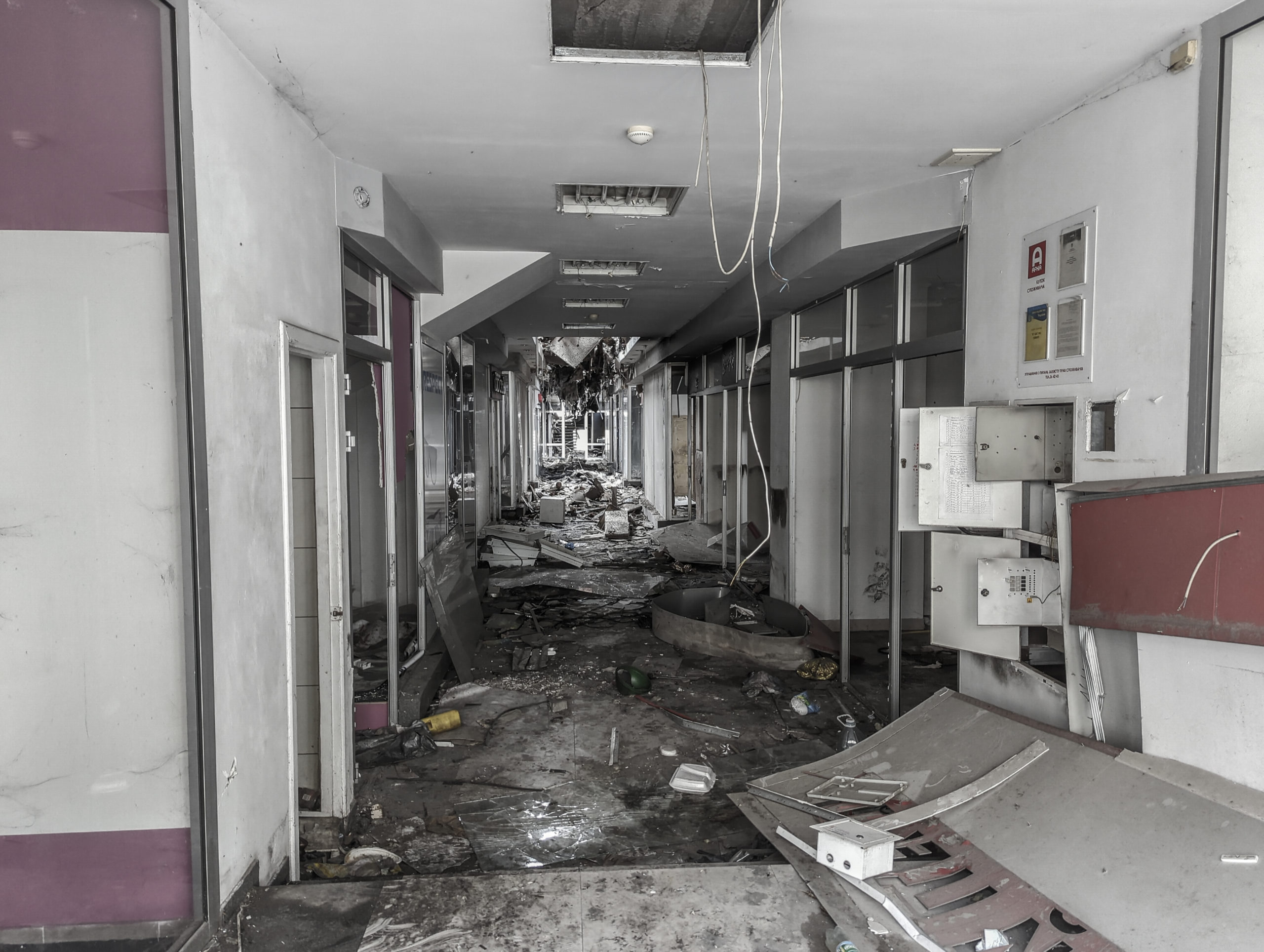
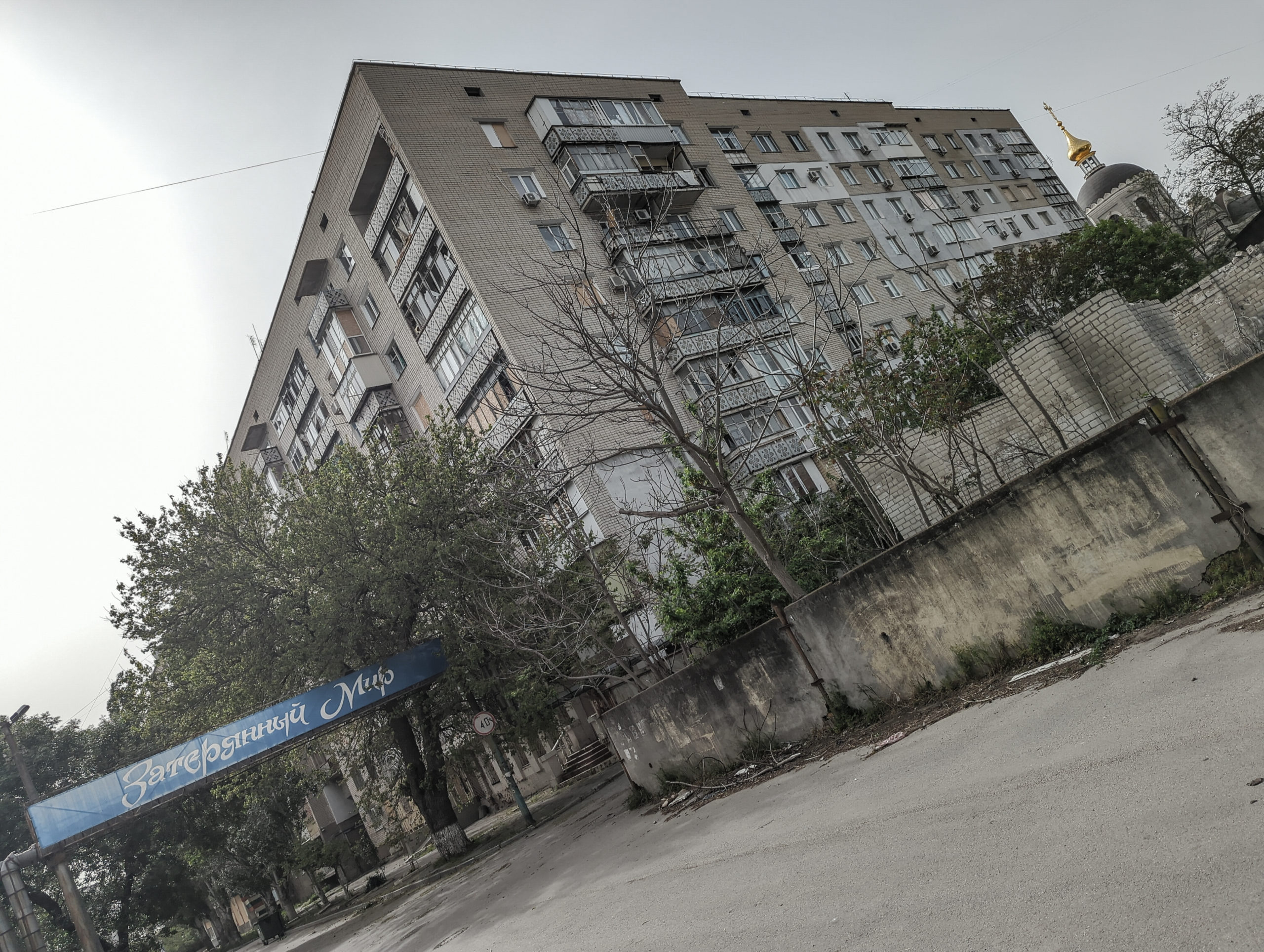
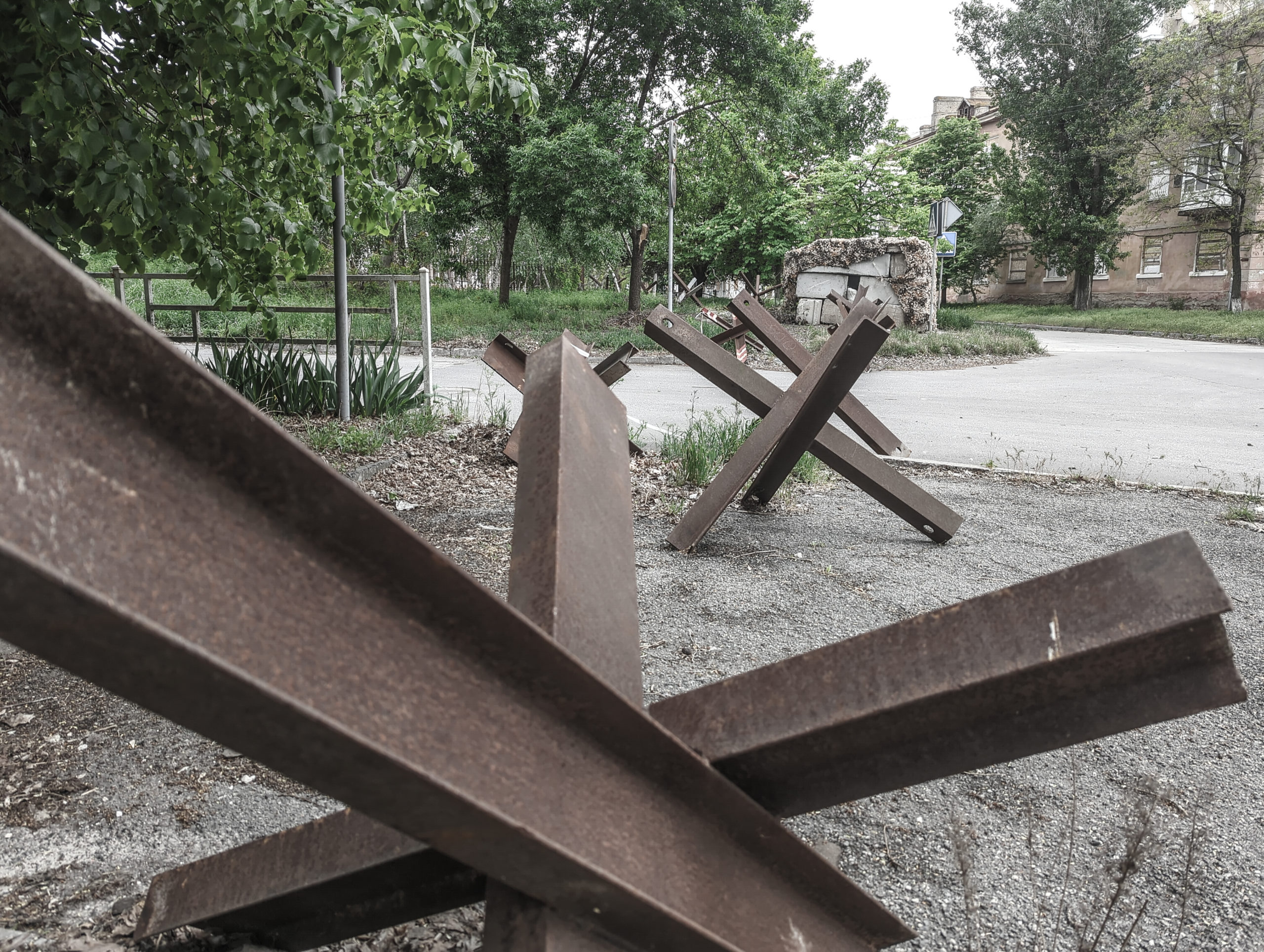
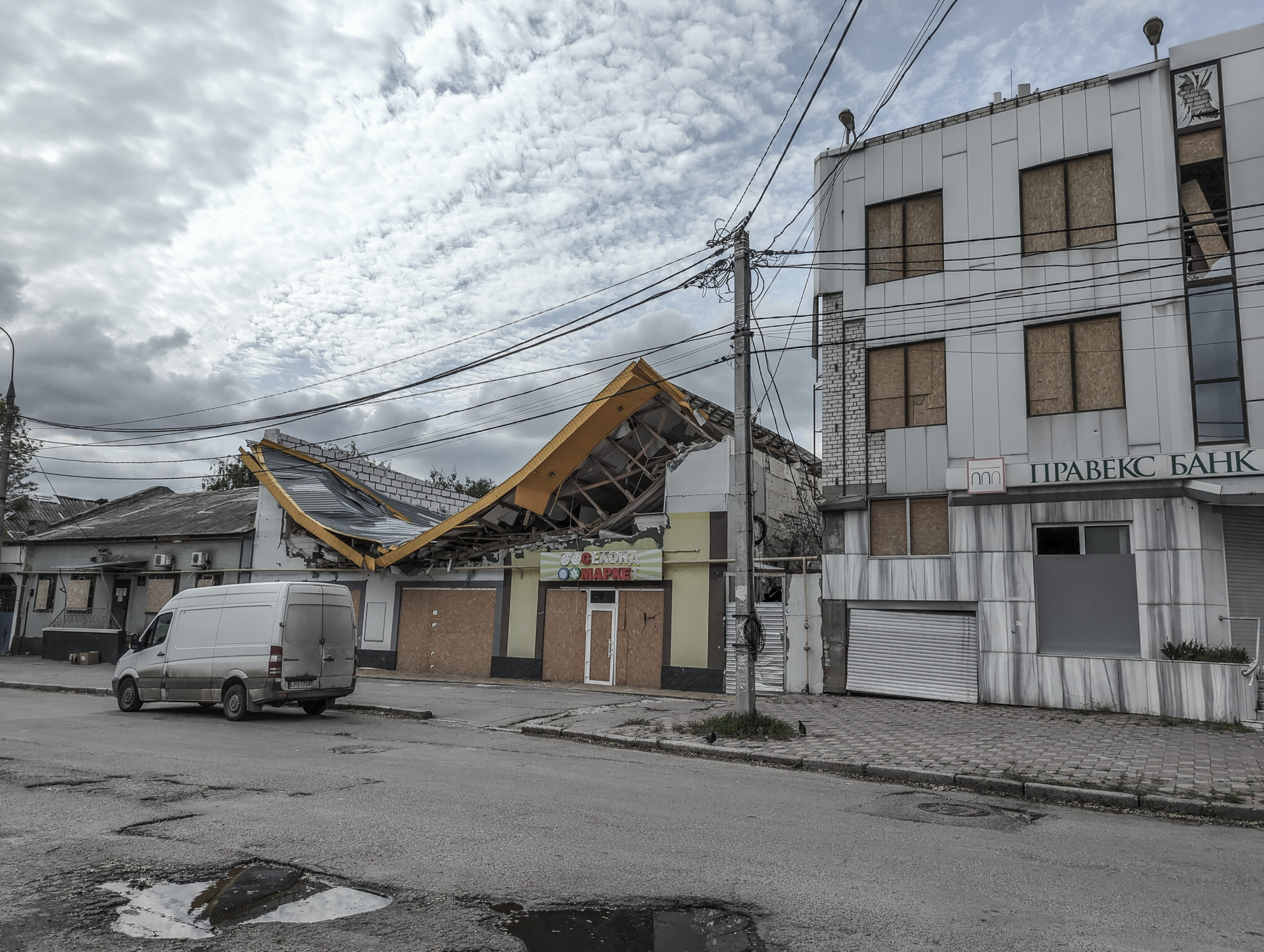
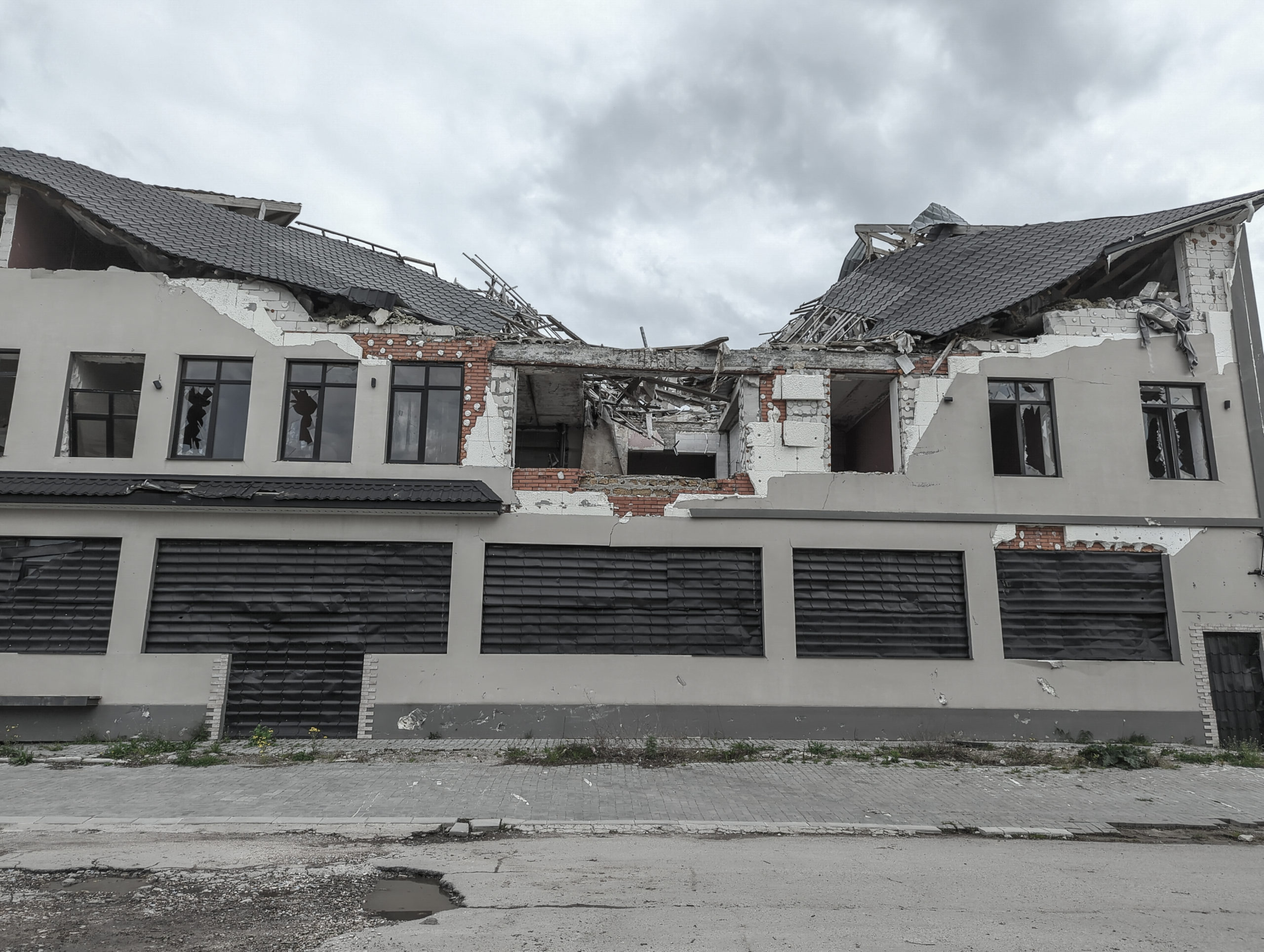
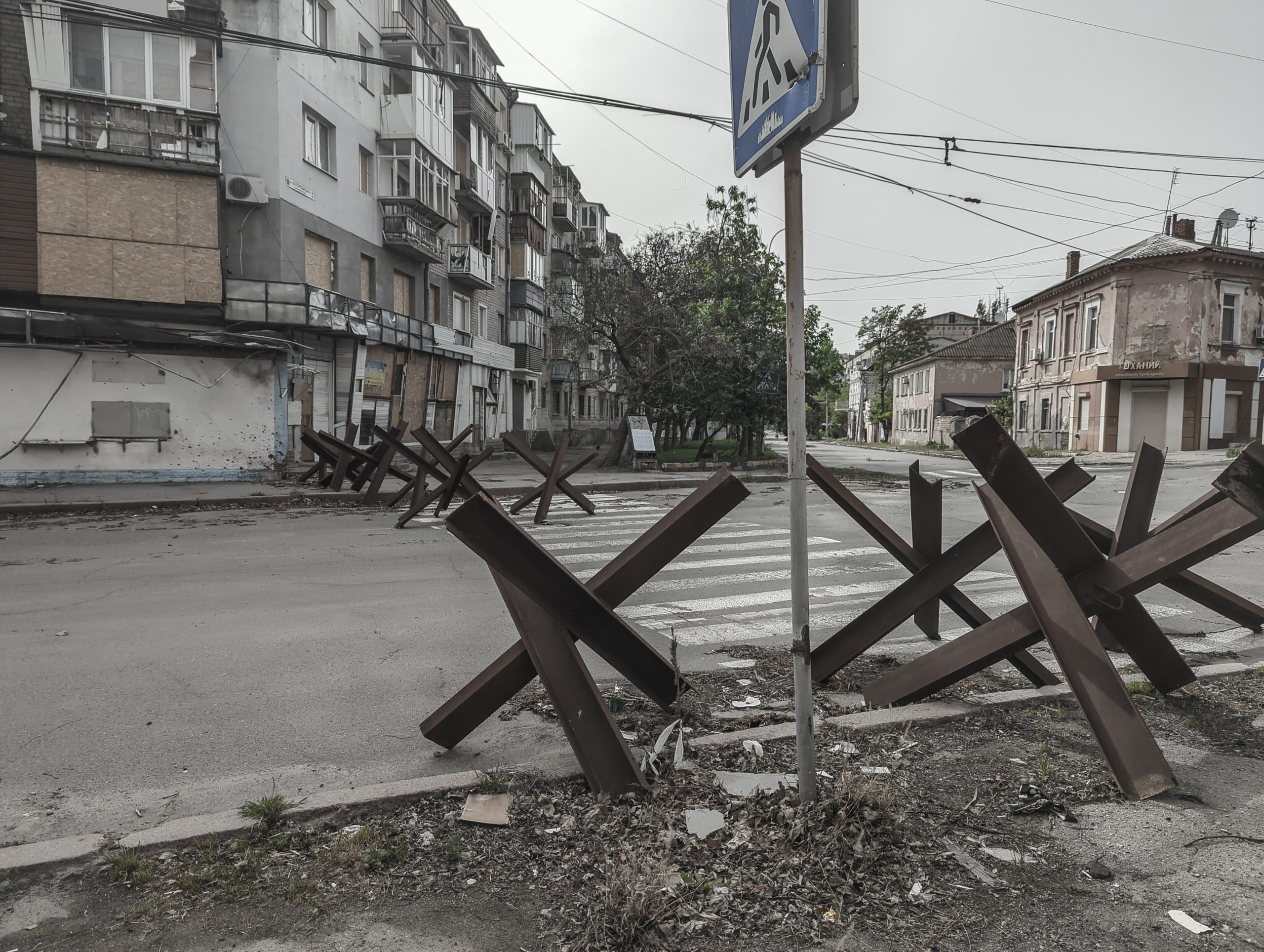
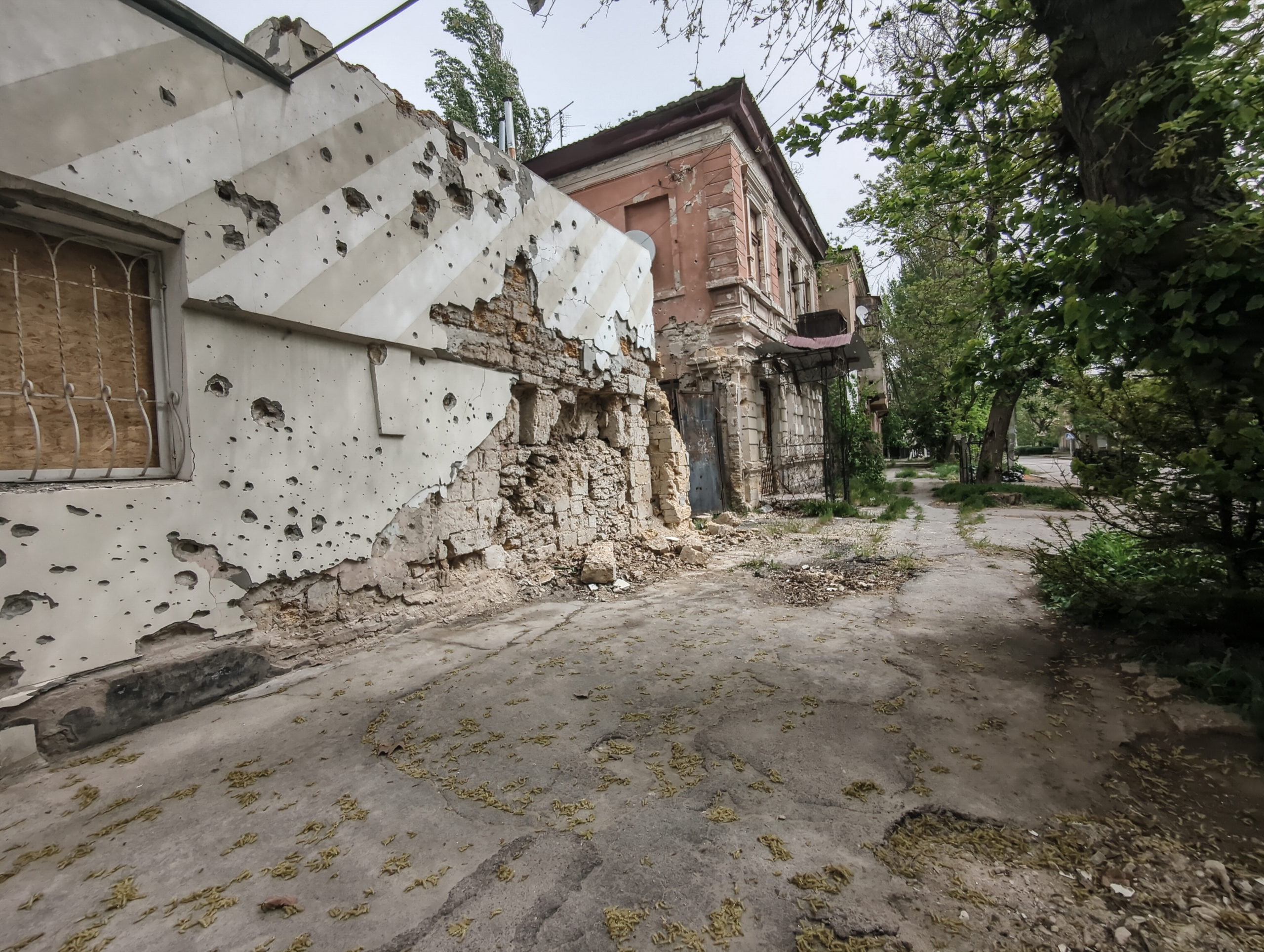
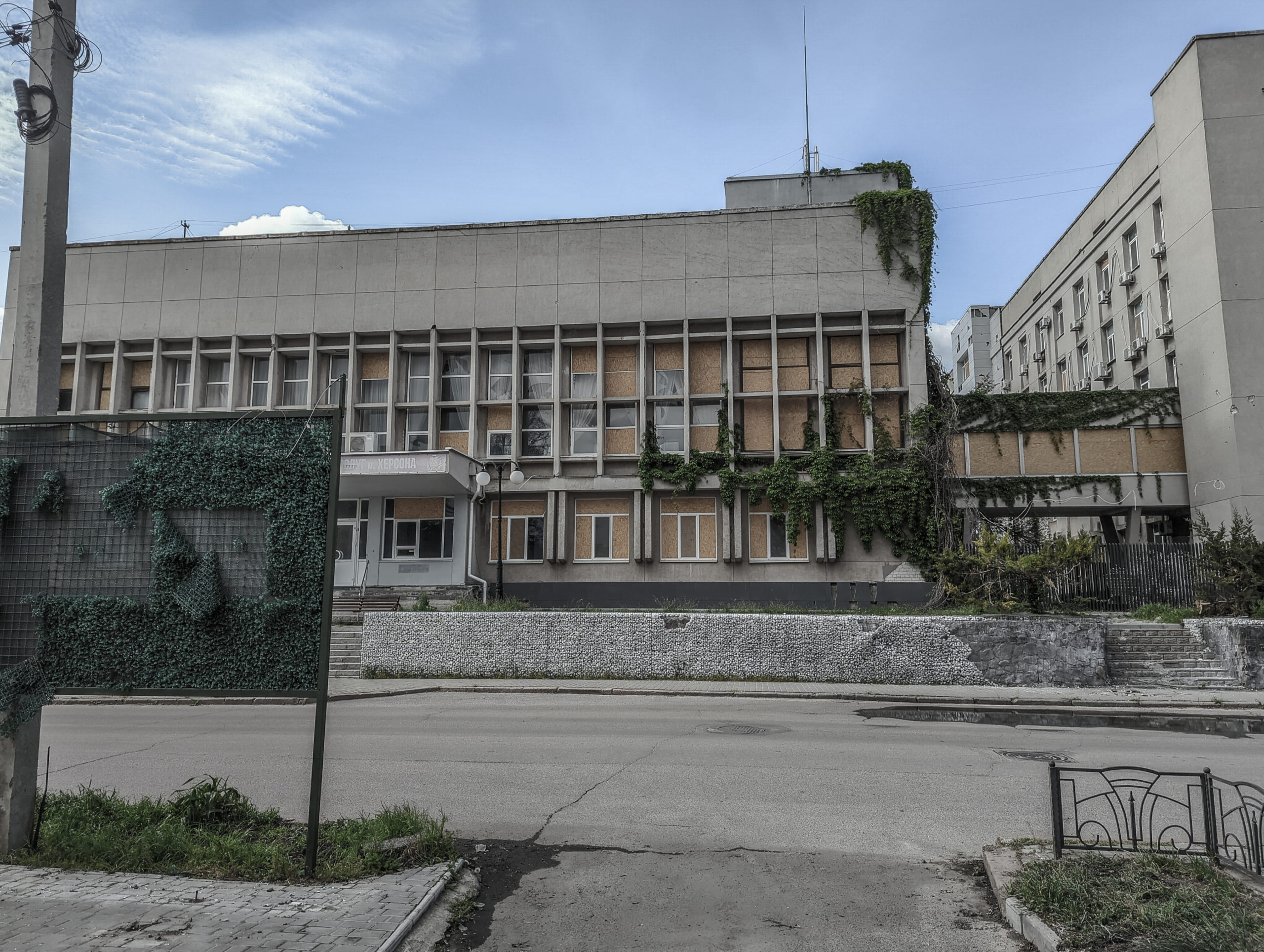
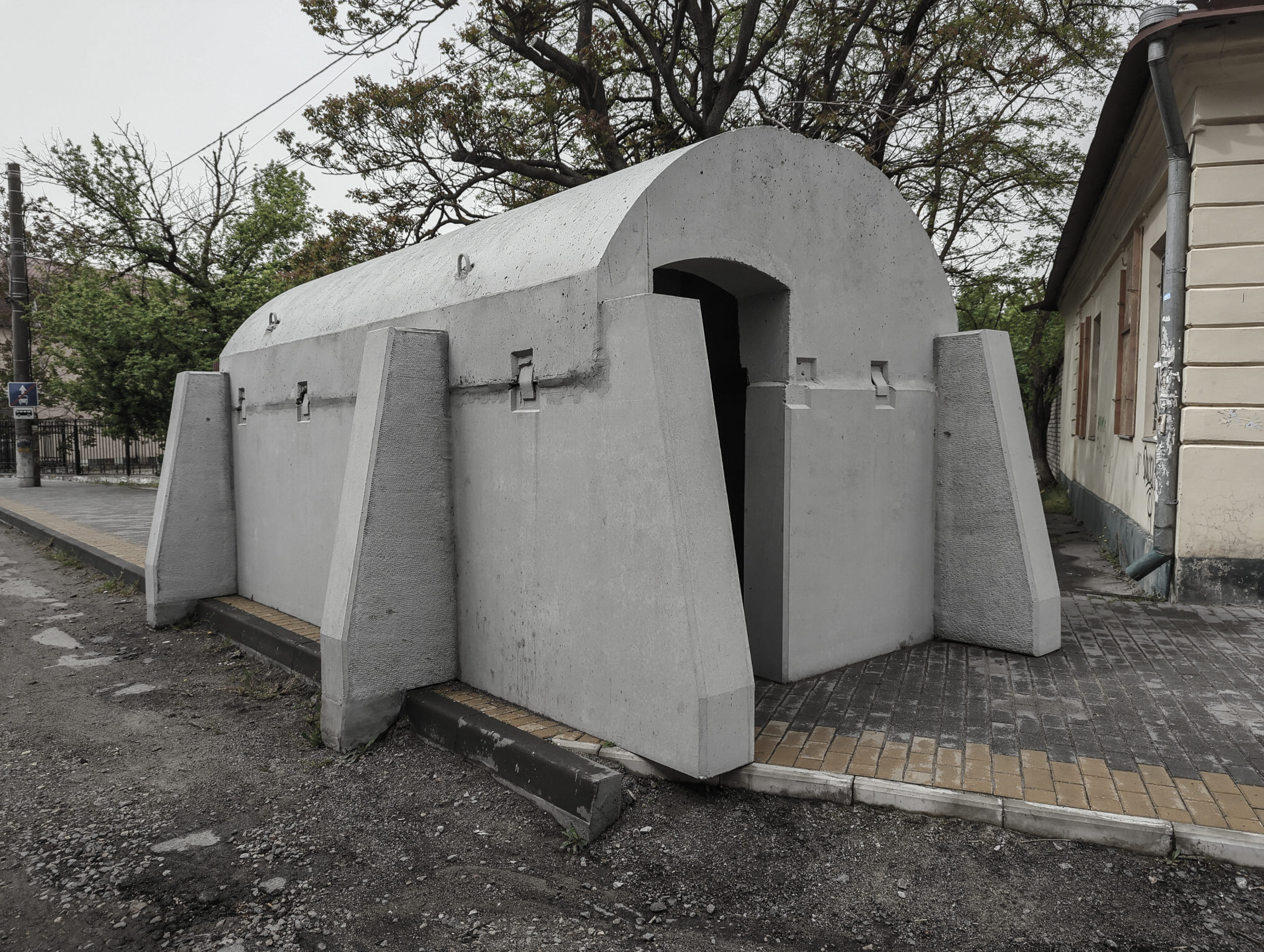
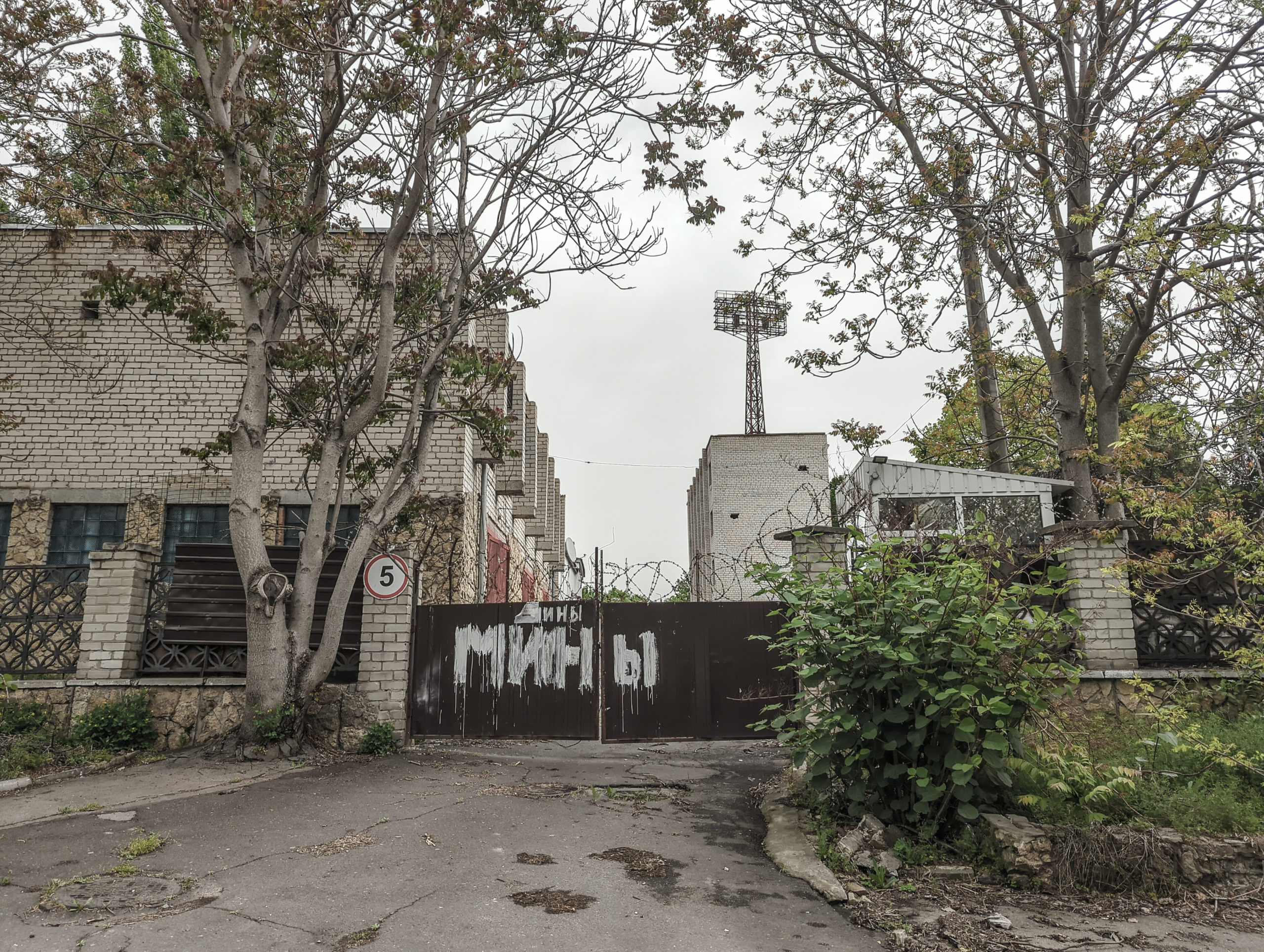
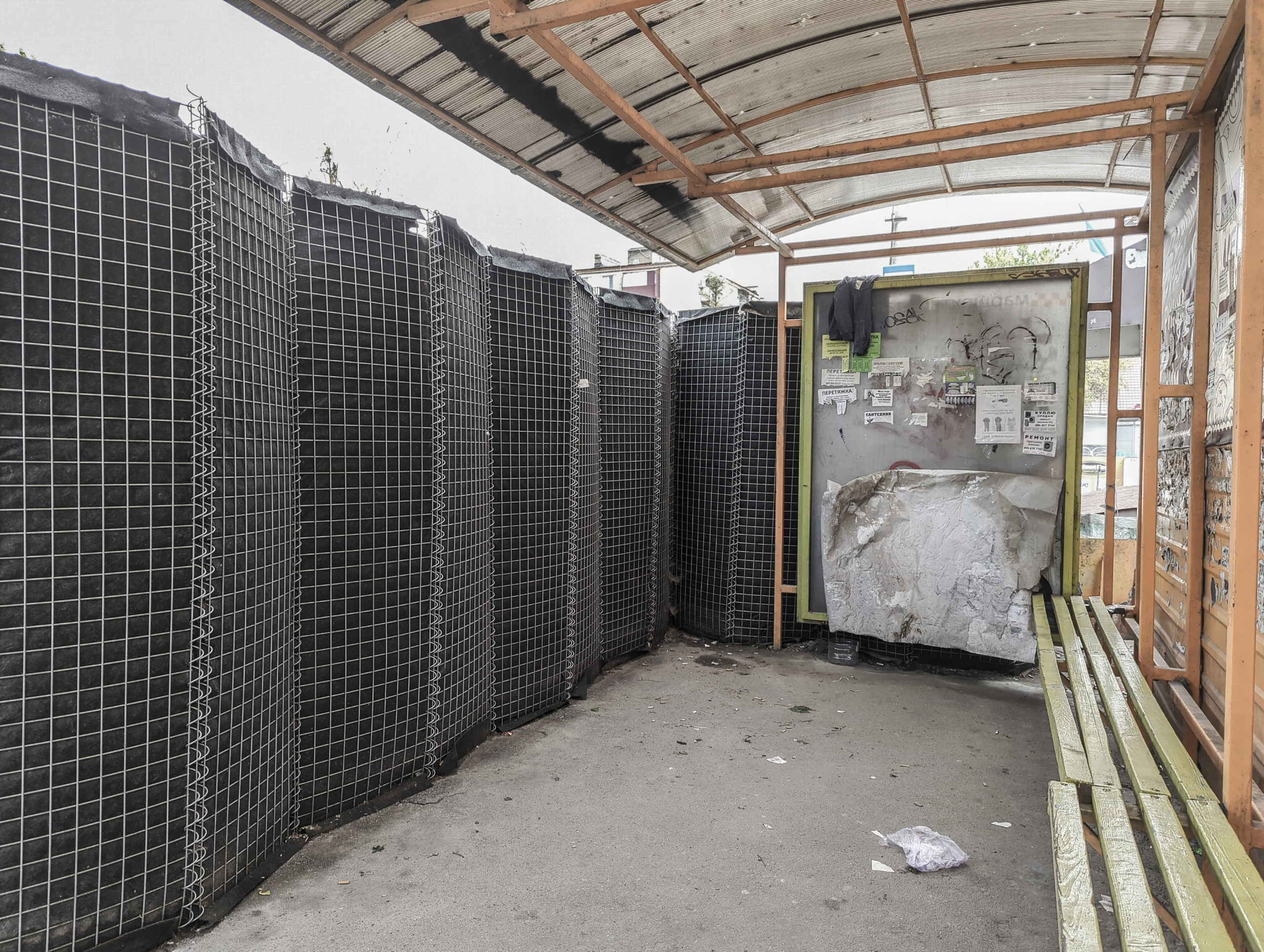
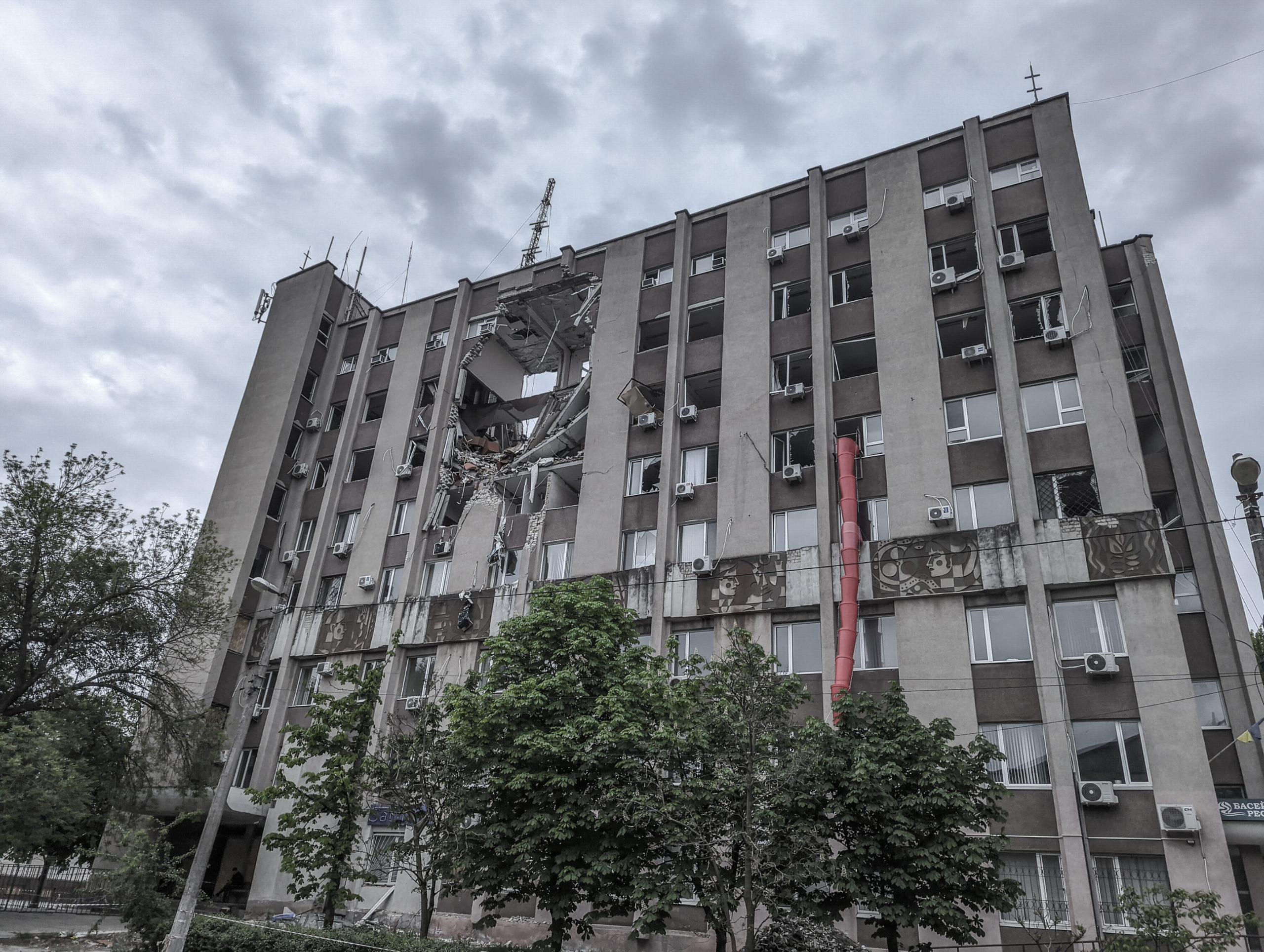
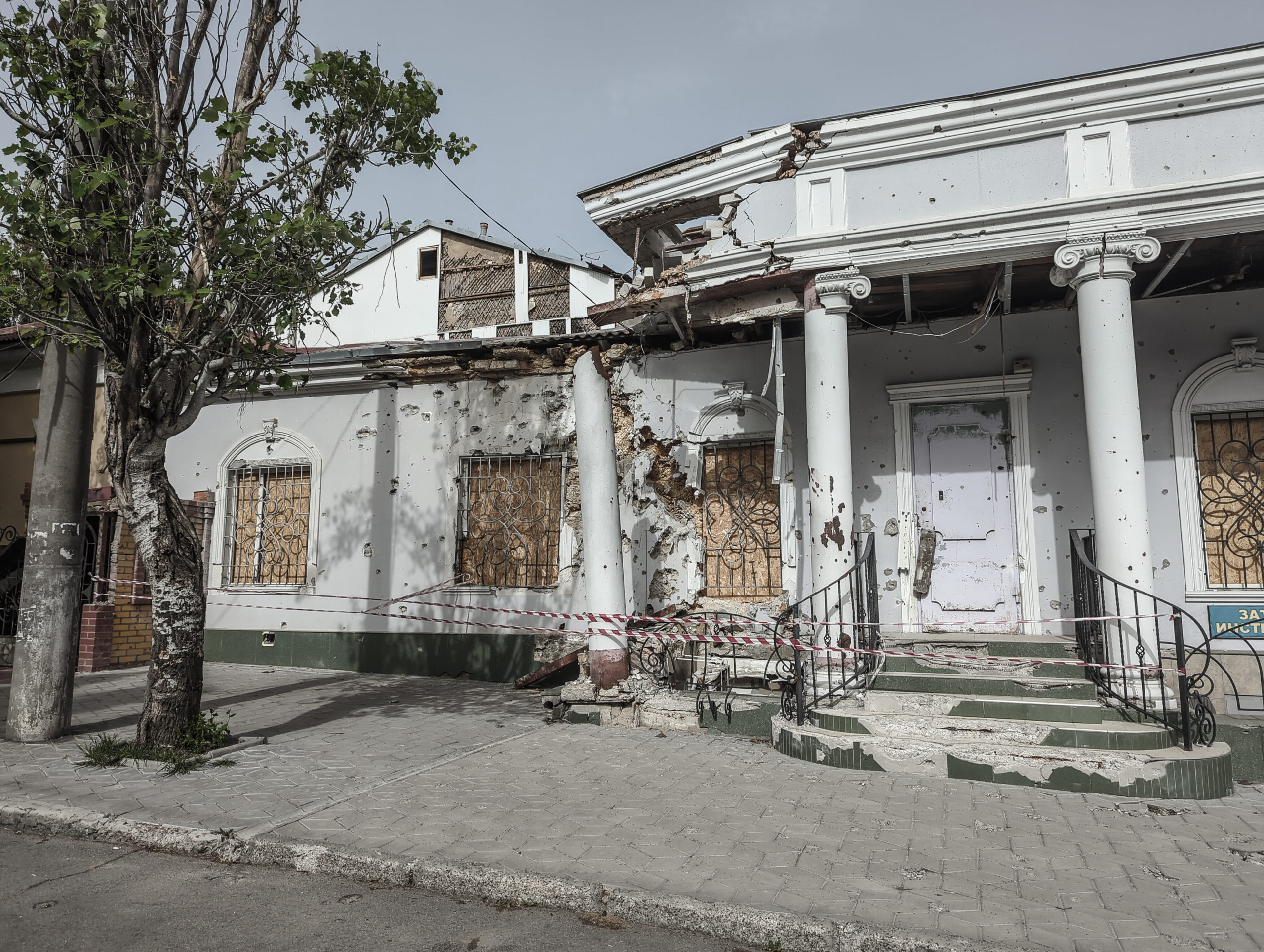
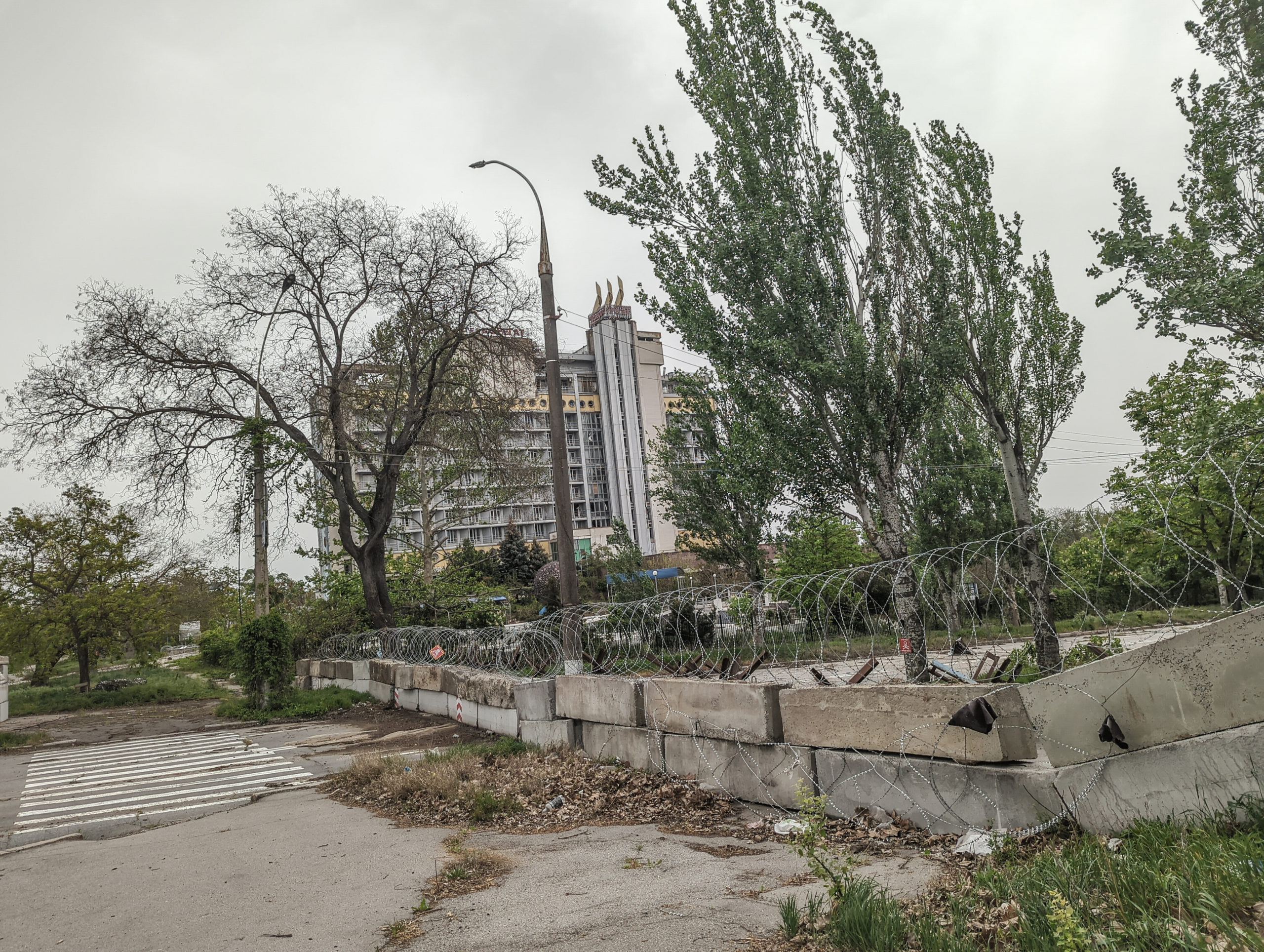
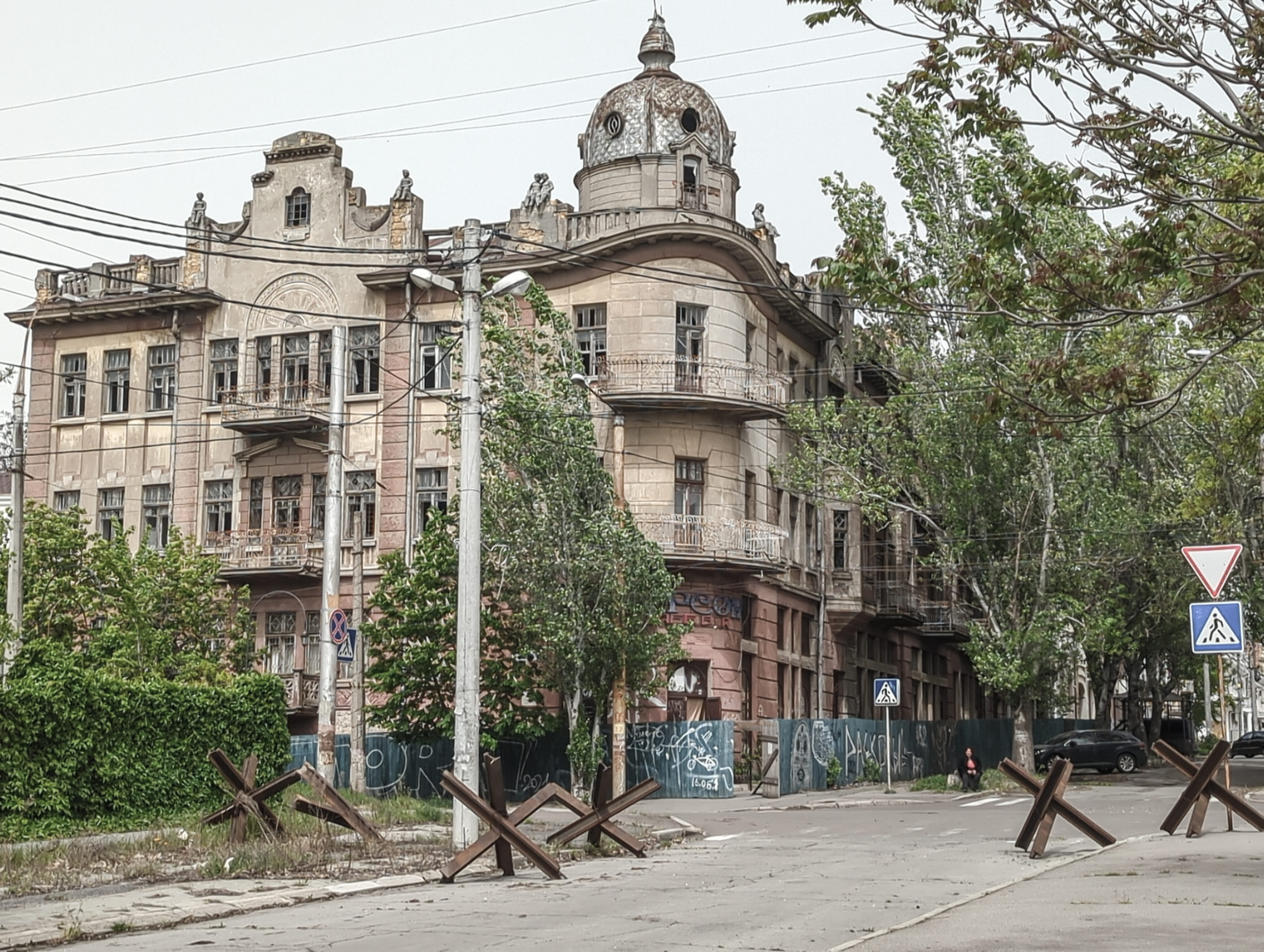
В поезде до Херсона у меня в голове крутились все эти мысли: национализм, милитаризация, беспилотники... Я приехал, потому что мне нужно было услышать от людей, что они думают, чтобы лучше понять проблемы и прояснить свою позицию. Во время ночного путешествия (9 часов) я делил каюту с пожилой женщиной и офицером спецназа. Он дал мне свой номер телефона и сказал, чтобы я обращалась к нему, если у меня возникнут проблемы в Херсоне. Я согласился из вежливости, не собираясь выполнять его предложение о помощи, тем более что он спонтанно и без спроса отсканировал мой номер в приложение, чтобы проверить, не сообщили ли обо мне власти. После четырехчасовой остановки в Николаеве я снова сел в поезд и ехал еще полтора часа. В Херсоне поезд спустился между двумя толстыми стенами песка под взглядами нескольких вооруженных до зубов солдат. Сразу же сработала сирена воздушной тревоги и раздались два громких взрыва. На привокзальной площади, а затем и на всем пути к гостинице, где я встретился со своим связным, здания были изуродованы и выпотрошены, их окна разбиты или заколочены деревянными досками, а улицы усеяны ямами от снарядов, засыпанными песком и обломками. Время от времени город сотрясает детонация, и невозможно определить, как далеко упал снаряд. У меня сразу же возникает жуткое ощущение в позвоночнике, как будто постоянная угроза висит прямо за спиной и призывает меня как можно скорее покинуть общественное место.

Я остановился в последнем отеле в городе. В нее попали беспилотник и ракета, но она все еще стоит рядом с центральным рынком. Здесь я встречаюсь с другим Сергеем, который управляет и гостиницей, где живут в основном внутренне перемещенные лица (ВПЛ), и гуманитарной помощью, которая предоставляется то тут, то там, везде, где есть потребность. Спросив меня, зачем я, собственно, сюда приехал, он берет меня с собой в свой фургончик, чтобы отвезти за питьевой водой. Он набирает воду на севере города, у огромной церкви в Таврическом районе, которая была передана американской христианской неправительственной организации "Samaritan Purse", а затем везет ее на восток города, в Склотарненский район, где в одном из зданий находятся пункты выдачи продовольствия под эгидой Всемирной продовольственной программы (ВПП). По дороге он рассказывает о различных ракетах и снарядах, падающих на город: 500-кг управляемые бомбы "КАБ", 500-кг сбрасываемые бомбы "ФАБ" и 122-мм ракеты "ГРАД" класса "земля-земля". Каждый день российская армия также посылает беспилотники-камикадзе "Шахед-136", запатентованные в Иране, а затем произведенные в России под названием "Герань-2", чтобы они врезались в мирных жителей или движущийся транспорт. Сергей показывает мне воронку, оставленную ракетой в асфальте: "Видите, она упала три дня назад. Если бы мы тогда проехали, то были бы два трупа".

Во время моего короткого пребывания там я жил с постоянной тревогой, и прежде всего я понимал, что здания не защищают меня. Здесь никто и ничто не защищено, и российская армия ведет обстрелы, не выбирая в качестве цели объекты военной инфраструктуры. Около двадцати сел на правом берегу ежедневно подвергаются обстрелам российскими ракетами, как и окраины и центр Херсона. Каждый день разрушаются дома, ранены или убиты мирные жители. 26 апреля были взорваны две школы. Я слежу за местными новостями в нескольких Telegram-каналах: @suspilnekherson, @kherson_monitoring, @kherson_non_fake и @hueviyherson. Каждый сигнал сирены и каждая бомбежка передаются в этих новостных лентах, и регулярно транслируются изображения с обоих берегов реки. На другом берегу солдаты обеих сторон ведут окопную войну, в результате которой от некогда существовавших там деревень не осталось и следа. Во время моего пребывания украинская армия отвоевала Кринки, но на снимках оттуда виден лишь выжженный язык земли, усеянный дырами от снарядов и руинами.

Я не подошел к Днепру ближе чем на 350 метров, это было уже слишком близко. Российские войска находятся за рекой, в 5 километрах, в селе Олечки. Чем ближе к реке, тем больше улицы приобретают атмосферу города-призрака: я чувствую себя как в постапокалиптической видеоигре Fallout или в Чернобыле. Здесь ужасающе тихо, а улицы пустынны. Тем не менее в этой ничейной стране старик регулярно ходит к реке с пакетом покупок или пропалывает газоны и тротуары мертвого города. Когда не слышно взрывов боев и бомбежек, тишину словно заполняют птицы и собаки. Особенно ночью, когда бомбардировки усиливаются, кажется, что между двумя взрывами лают сотни собак. Но люди молчат. До войны население Херсона составляло 360 000 человек. Сегодня более двух третей уехали.

Через Сергея я познакомился с Игорем, который создал местную НПО под названием « Сильні, бо вільні » (@strong_because_free). Их помещения занимают цокольный этаж двух многоквартирных домов в районе Корабельный. Игорь до войны работал на стройке в Польше. В июле 2023 года он основал свою ассоциацию, которая сегодня выполняет значительную работу : эвакуация из районов бомбардировок, помощь семьям, чьи дома были повреждены в результате взрывов, помощь пожилым людям и инвалидам, помощь животным-жертвам войны, помощь семьям, чьи дома были затоплены после взрыва на Каховской ГЭС раздача ежедневных обедов и хлеба, раздача лекарств, одежды, средств гигиены, занятия и занятия для детей… В сотрудничестве с "христианским центром Святого Мартина" и « Save Ukraine » им предоставляется микроавтобус и автомобиль 4х4 с бронированными стеклами, на которых они регулярно выезжают в районы, непосредственно пострадавшие от бомбардировок, для эвакуации жителей, особенно стариков, которые остались в ловушке под обстрелом. огонь противника. Автомобиль 4x4 уже получил несколько ударов, в том числе пробил стекло со стороны водителя.

Несмотря на бешеный ритм его дней и постоянные просьбы по телефону, Игорь находит время, чтобы показать мне их помещения. В нем я рассказываю о масштабах работы, проделанной за год, и о динамизме их команды, которая к моему приезду разбирает десятки пакетов с одеждой. Затем он ведет меня в небольшое кафе, которое его спутница только что открыла на проспекте, недалеко от помещений ассоциации. Несмотря на обстановку, несмотря на давление, меня встретили сердечно. Но Игорь говорит мне, что он измотан, и что им понадобится гораздо больше добровольцев, чтобы добиться всего, чего они захотят. Он также объясняет мне, что ему пришлось скрываться под российской оккупацией и что перспектива их возвращения вызывает беспокойство у всех.

Меня отвезли в отель на автомобиле 4х4 с бронированными стеклами. После очередной ночи под звуки взрывов Сергей провожает меня на автовокзал. Перед моим отъездом полиция и военные проверяют мою личность и содержимое моего телефона. Один из офицеров подробно объясняет мне, что было бы более уместно сообщить обо мне местным властям и предложить свою помощь в качестве добровольца-гуманитария через них. Однако двумя днями ранее те же власти ответили мне, что предпочитают не привлекать иностранных добровольцев из соображений безопасности и ответственности в случае инцидента.

После остановки в Одессе, где по прибытию также звучат сирены, я возвращаюсь ночью в Бухарест. Конец экспедиции. Теперь мне нужно будет вернуться и обработать всю эту информацию, а затем подумать о том, что делать дальше.

Несколько исторических заметок о двух часто упоминаемых деятелях украинской независимости.

Украинский национальный пантеон состоит из двух противоречивых фигур: Степана Бандеры (1909-1959) и Нестора Махно (1888-1934).

Путинская пропагандистская риторика использует сложную историю Украины, чтобы очернить украинцев, в том числе обвиняя их в том, что они в целом симпатизируют нацизму. Помимо того факта, что этот ярлык является полностью клеветническим и гротескным, он основан на том факте, что националисты решительно выступили против прогрессистов и либертарианцев после жестокого подавления демократического восстания 2014 года. В частности, это касалось движений "Свобода" и "Правый сектор", участие которых в восстании на Майдане в целом приветствовалось антиправительственными силами. Обе ультранационалистические партии с гордостью заявляют о своих претензиях на наследие Степана Бандеры. Для многих украинских патриотов, если Бандера был склонен сотрудничать с нацистами в период с 1934 по 1943 год, это можно понять только в контексте освободительной борьбы против российского (советского) империализма, ответственного за гибель миллионов украинцев в период с 1929 по 1933 год (раскулачивание и голодомор). Этот анализ, хотя и объясняет антисоветские мотивы Организации украинских националистов Бандеры (ОУН-Б), тем не менее отрицает причастность ее бойцов к массовому убийству тысяч польских и еврейских мирных жителей во Львове в 1941 году (около 8000 погибших). Версии об этом участии ОУН в погромах расходятся: Бандера был арестован немцами накануне массовых убийств и содержался под домашним арестом в Берлине, а затем был отправлен в концлагерь Заксенхаузен в январе 1942 года. Двое из его братьев были убиты в Освенциме в сентябре того же года, когда украинские националисты открыли новый фронт против немецких оккупантов в дополнение к фронту против советских оккупантов. Несмотря на отрицание украинских националистов, существует ряд документов, подтверждающих ответственность Бандеры за планирование и одобрение антиеврейских и антипольских массовых убийств. Поэтому не может быть и речи о реабилитации Бандеры под предлогом противодействия российской пропаганде. Тем не менее, необходимо учитывать влияние ультранационалистов на политический ландшафт Украины : на парламентских выборах 2014 и 2019 годов "Свобода" и "Правый сектор", на которые претендуют около 25 000 членов, набрали не более 6% голосов, что в целом остается очень незначительным. Что касается консерватизма и традиционализма, религиозного фундаментализма и антикоммунизма, то это еще другие проблемы, которые не характерны для украинского общества...

Было бы гораздо интереснее раскопать наследие Нестора Махно. В период с 1917 по 1921 год Нестор Махно, а также Мария Никифорова (которая, несомненно, менее известна, потому что она была женщиной) возглавили тысячи украинских крестьян в их вооруженном восстании против российского империализма (монархического, а затем большевистского). В районах, освобожденных украинской повстанческой революционной, Либертарианской и анархистской армией, почти 7 миллионов украинцев временно пережили коммуналистскую политическую систему без государства. "Зеленая" и " черная армии "объединили до 100 000 бойцов в ожесточенной борьбе против реквизиций и разграбления украинских аграрных ресурсов аутрогерманскими," белыми " и русскими оккупационными армиями, а затем против большевистской диктатуры. Ошибочно обвиненное в антисемитизме, что было отвергнуто рядом историков и не подтверждено никакими историческими документами, махновское движение в конечном итоге было разбито в кровь большевиками, которые затем применили беспощадные репрессии по отношению ко всему населению и украинскому крестьянству. Сегодня город Гуляйполе, который был нервным центром махновщины, расположен за линией фронта после того, как был оккупирован Российской армией менее чем на неделю в марте 2022 года и с тех пор подвергался постоянным бомбардировкам.

The highly opportunistic opposition of the liberal-nationalist Navalny

The highly opportunistic opposition of the liberal-nationalist Navalny

Cedric Domenjoud

by Cedric Domenjoud | Feb 2, 2021

Please note: this article was written in 2021, before Alexey Navalny's death in detention (2024).

Starting from 2009, a new opposition figure emerged in Russia, gaining attention for his staunch anti-corruption stance: Alexei Navalny. Here is a brief look at the career of an ambitious man whose reputation as a liberal does not quite match the substance of his ideology.

If there is one thing that unites Russians, it is their chronic aversion to corruption. Popular culture, comedians, cinema, and music openly mock and criticize corruption—whether by the police, oligarchs, or high-ranking officials (chinovniki)—as well as its presence at every level of Russian society. The most common manifestations include bribes (vzyatki) paid to traffic police for often fabricated offenses, or gifts in kind to teachers and instructors to secure a diploma. Even Kremlin-approved comedians do not hesitate to ridicule Vladimir Putin himself, often in front of audiences made up of the very people who are the biggest accomplices and beneficiaries of his corrupt system. They are the modern-day "court jesters."

Russian social life is indeed riddled with corruption, and promises to eradicate it are the rallying cry of every opposition figure, including so-called "paper opponents" like Vladimir Zhirinovsky, the infamous ultra-conservative populist leader who regularly makes headlines by mocking the inconsistencies of those in power. Yet, he has never faced physical repercussions for his public statements, which help maintain the illusion of pluralism that Putin has carefully cultivated since he was crowned tsar of all the Russias.

Starting in 2009, a new opposition figure emerged in Russia, gaining attention for his staunch anti-corruption stance: Alexei Navalny, then an advisor to the governor of Kirov. Over the next decade, he became the only credible opposition to Putin, running in Moscow’s municipal elections and later in presidential elections, all while facing numerous judicial summonses designed to break his resolve.

If one were to compare Navalny to other political leaders fiercely opposed to corruption (at least while in opposition), one might look to Ukraine’s Petro Poroshenko, Yulia Tymoshenko, or Vitali Klitschko. All three campaigned for power on promises to end endemic corruption, basking in the aura of integrity that surrounds populist leaders opposing dictatorship—only to later lose their way in the labyrinth of ambition and cronyism.

A conservative political background

A brief look at Alexei Navalny’s platform is enough to see that his politics draw inspiration from the ultra-liberal doctrines that, since the 1970s, have championed individualism and competition while dismantling social protections and public services wherever they are imposed by force. Navalny thus follows directly in the footsteps of Thatcher, Reagan, and Sarkozy, and his political program is virtually identical to Macron’s: promises of growth, privatization, the expansion of self-employment, tax exemptions for small businesses, a technological gamble, deregulation of transport, increased military budgets and personnel, and the regionalization and decentralization of government…

There is nothing innovative or progressive in Navalny’s approach, which merely reproduces the precepts that have repeatedly brought populations to their knees under the harsh prescriptions of market economics—enforced by the World Trade Organization, the World Bank, and the International Monetary Fund—around the world. Beyond his neoliberal aspirations, Navalny is also a nationalist. Russian realists will argue that one must be a nationalist (or at least a patriot, if you prefer) to win the hearts of Russians. This is not entirely untrue. But it also condemns Russian society to be endlessly overtaken by its reactionary demons—where racism, homophobia, Islamophobia, and antisemitism are openly tolerated.

Navalny makes no secret of having co-founded the “Narod” movement (transl. “The People”) in 2007, whose principles and values are deeply rooted in the far right. His political platform includes opposition to immigration, and in his speeches, he does not hesitate to associate foreigners with crime. He regularly downplays the dangers of far-right extremism and nationalism in Russia, echoing Vladimir Putin’s positions on Crimea and the Caucasus, regions with Muslim majorities. Having forged multiple alliances with ultranationalists and proudly participating in the annual “Russian March,” he advocates for “national renewal,” speaks of “national betrayal,” “organic unity with the past,” and “Russian civilization,” and supports the expulsion of foreigners “who do not respect our laws and traditions” and the imposition of visa requirements for citizens of the former USSR—specifically those from Central Asia, whose communities are the primary targets of racism in Russia.

In a 2008 blog post, Navalny referred to immigrant workers as “metics” (tchutchmeki), suggesting that one could understand the violence of skinheads against them when hearing them “hammering metal with an infernal roar at dawn.” He has also published articles on his platform insulting Jews and people from Central Asia and the Caucasus. Furthermore, Navalny’s program calls for the decriminalization of Article 282 of the penal code, which punishes “incitement to hatred or discrimination, as well as offenses against human dignity,” advocates amnesty for Russian soldiers involved in the Chechen wars, and supports the widespread right to bear arms in the name of “self-defense.”

Popularity among the “White Russian” diaspora

Navalny left the social-liberal Yabloko party in 2007 due to his ties with the nationalist right. Yet, many of those now taking to the streets outside Russia to demand his release and protest Putin’s regime were predominantly Yabloko voters in elections over the past decade. Today, widespread frustration with the authoritarian status quo imposed by Putin—at the expense of both the Russian people and a small bourgeoisie with few opportunities—combined with Navalny’s effective communication, has led Russian liberals to rally behind this new “herald of democracy.”

For several years now, Navalny’s YouTube channel has been releasing incisive investigative reports exposing the “Putin system,” denouncing its corruption and violence with rigorous, hard-to-dispute evidence: the facts speak for themselves. Navalny does what no one else has dared to do, because in Russia, speaking the truth can cost you your life. Over the past two decades, numerous opposition figures have been assassinated: Anna Politkovskaya, Natalya Estemirova, Stanislav Markelov, Anastasia Baburova, Boris Nemtsov, Alexander Litvinenko, Paul Klebnikov, Sergei Magnitsky, Sergei Yushenko, Mikhail Beket, and others. Still more, such as Sergei Udaltsov or the anarchist activists convicted in the “Network” case and the dismantling of the “Narodnaya Samooborona” (People’s Self-Defense) social network, have been tortured and/or imprisoned in labor camps for allegedly threatening state security. Navalny himself was poisoned, as were Vladimir Kara-Murza, Viktor Yushchenko, Alexander Litvinenko, and Sergei Skripal before him…

In Europe, particularly in France, a significant portion of the Russian diaspora hails from the bourgeois or even aristocratic classes—the so-called “White Russians”—who fled to France after the 1917 Revolution and later Stalinism (an estimated 400,000 in France at the time, including 150,000 in the Paris region). On one of the diaspora’s Facebook pages, “Russkie v Parizhe” (Russians in Paris), which counts 40,000 members, one finds a mix of posts about the “good life” in Paris—luxury, fine dining, cultural outings, rental and job listings—as well as revealing exchanges and comments on how this diaspora views itself within French society, and by extension, the contemporary world. There, one often criticizes insecurity and dirt, rails against immigration and social movements, complains about public transport and bureaucracy (both French and Russian)—all fertile ground for the ideas espoused by someone like Navalny…

In the family and social circles of this exiled elite, revolution is hardly held in high regard, and left-wing revolutionary ideas even less so. Instead, there is a preference for liberal entrepreneurs with a youthful, charismatic image, such as Nemtsov or Navalny, or even for romantic rogues and libertarian gentleman thieves like Pyotr Pavlensky (though his reputation is more predatory than romantic) or Eduard Limonov, the former founder of the red-brown “National Bolshevik” movement, whose provocative, iconoclastic performances owe more to artistic shock value than to any coherent political project. The populist audacity of these “provocateurs” naturally earns the admiration and support of a diaspora that viscerally despises Putin’s austere, vulgar regime—a regime built on the ruins of the USSR by recycling Soviet-era bureaucrats.

The spirit that animates these “paper dissidents” is liberal, even libertarian, driven by the aesthetic mirage of free enterprise, which promises—sooner or later—to allow them to build and invest their European gains back in their home country, without having to contend with the mafia or Putin’s intractable police bureaucracy.

A binary understanding of the world

This mindset, shaped by the idea of change initiated through social media—naively reformist and deeply hostile to any form of revolutionary violence—has come to dream of a world where Good would naturally triumph over Evil. If one subscribes to this binary and candid worldview, which never questions capitalism as a system of oppression, it is hardly surprising to find oneself supporting a Navalny or a Poroshenko simply because they represent the only visible, demonstrative opposition to Putin, and to overlook the potential consequences of this “default” choice: the perpetuation of the very system that produced and promoted them. Navalny, of course, enjoys the backing of all the major Western democracies, with Emmanuel Macron’s France at the forefront. But is the choice really between Macron and Putin?

Meanwhile, a significant portion of the Russian people—many of whom believe Putin is not responsible for the social ills plaguing the country and who vote for him, beyond the very real election rigging designed to inflate the “consent rate”—nonetheless yearn for change. They blame an oligarchy of businessmen and high-ranking officials, whom no one dares to name, even though a closer look reveals most to be close associates of the president or their proxies. One doesn’t need Navalny’s self-promotional videos to see this.

Widespread frustration and endemic social chaos are driving more and more Russians into the streets whenever calls to protest spread on social media, only to be met with massive police repression (3,500 arrests on Saturday, January 23, 2021, mostly in Moscow and St. Petersburg) and extremely harsh judicial sentences. Yet, these movements remain far from achieving the hoped-for overthrow, and as long as this revolt stays superficial, Putin’s power will not waver. It is built on a repressive apparatus now a century old. Navalny in power would only change the roof and repaint the facades; the foundations and pillars would remain the same…

Some Russian dissidents in exile—political refugees, not the well-behaved students of the diaspora—attempted to expose this charade with humor during the Brussels rally for Navalny. The young liberals shouted “Shame on you!” at them: https://mobile.twitter.com/pepel_klaasa/status/1353004265489498112?s=09 

As for political pluralism and criticism under a Navalny regime, the outlook is bleak…

About the author: Cédric Domenjoud is an independent researcher and activist based in Europe. His research areas focus on exile, political violence, colonialism, and community self-defense, particularly in Western Europe, the former USSR, and the Levant. He is investigating the survival and self-defense of Syrian communities and developing a documentary film about Suwayda, as part of the Fajawat Initiative.
The Chechens, between extermination, exile, and counterterrorism

The Chechens, between extermination, exile, and counterterrorism

Cedric Domenjoud

by Cedric Domenjoud | Apr 18, 2017

Since the beginning of April and the publication by the Russian opposition newspaper Novaya Gazeta of an article mentioning dozens of arrests of people for their actual or supposed homosexuality, we are (finally) hearing once again about what is happening in Chechnya.

Satellite images have proven that Chechen strongman Ramzan Kadyrov has imprisoned, tortured, and even disappeared numerous individuals in his secret prisons in Argun and Tsotsi-Yurt. The international press is quick to refer to these as “concentration camps” for homosexuals, adding horror to horror, while the original article in Russian merely reveals what has already existed for decades: secret bases where Kadyrov's militias have always been active.

This massive attack on homosexuals accompanied attempts by LGBT activists to organize several gay pride events in four cities in the Caucasus. Requests to this effect were made on March 9, 2017 (see Novaya Gazeta article) to local authorities by Nikolai Alekseev and Vladimir Klimov, announcing the participation of several hundred people. A new wave of persecution immediately followed the announcement, which was merely a new pretext for attacks already initiated earlier by the government militias against homosexuals.

Some information from the mainstream media is available here and there in French.

This “cleansing” campaign is part of a long history of arbitrariness and violence.

The Chechen context

Since the official end of the second Chechen conflict, the inauguration of Ramzan Kadyrov, and the definitive withdrawal of Russian troops from the Chechen Republic in 2006, Kadyrov's militias have been waging a systematic policy of terror that leaves little choice but to flee or suffer for those who survived Russia's unspeakable 10-year war on the small republic. Kadyrov's arbitrary power means random violence against anyone who does not publicly pledge allegiance to the tyrant.

After conscientiously eliminating all opposition, assassinating human rights defenders (Anna Politkovskaya, Natalya Estemirova, Stanislas Markelov, Anastasia Baburova, etc.) and closing their offices in Grozny (Memorial Association), Kadyrov launched a sinister vendetta against all the families of those who fled abroad or who, directly or indirectly, certainly or allegedly, helped or participated in the armed rebellion against the pro-Russian government. Torturing and murdering people in his secret prisons, burning down the houses (sources: 1, 2, and 3) of the parents of suspected combatants, he even went so far as to have the only person who dared to file a complaint against him directly with the European Court of Human Rights, Umar Israilov, assassinated in the heart of Europe, in Vienna, in January 2009. the only person who dared to file a complaint directly against him with the European Court of Human Rights, Umar Israilov. His assassin, Lechi Bogatyrev, is now police commander of the Pobedinskoe district of Grozny. For several months now, Kadyrov has also been staging weekly public humiliation sessions on local television, in which he and his lieutenants lecture people who bow down to them, accusing them of everything and anything (see 1, 2, 3, 4, 5, 6, 7...). Many of those lectured in this way subsequently disappear without trace. Finally, since 2014, Kadyrov has been sending his own men, willingly or by force, to fight in eastern Ukraine alongside Russian forces (see Euronews report).

Consequently, the murderous frenzies of Chechen “Ubu the King” benefit from the complicity of the Kremlin, preventing any Chechens from seeking refuge elsewhere in the Russian Federation. Kadyrov is the Kremlin’s ruthless puppet, whose iron fist guarantees Russia’s continued domination over the Chechen Republic.

An unbearable exile

Fleeing the country in their hundreds, Chechens first cross Belarus, which has still not reestablished its borders with Russia, before being screened at the Polish border in Terespol. For the past year, Poland has decided to drastically restrict access to its territory, turning back the vast majority of Chechens at the border crossing, causing hundreds of people to become stranded in Brest, in western Belarus. This is at the request of the European authorities and Frontex, who care little about the fate of asylum seekers who are turned away at the gates of the Schengen area.

Those who make it to Poland, despite the fact that there seems to be enough space in shelters for asylum seekers, quickly realize that it is a dead end and that they will never be granted any status that would allow them to live decently in the country. Not to mention that in Poland, as in Austria, Kadyrov's men are everywhere and regularly resort to pressure, threats, and aggression. As a result, Poland is often only the beginning of the road that leads Chechens to Germany, Scandinavia, the Benelux countries, or France.

Once they arrive in Paris, most Chechen asylum seekers are placed under the Dublin Convention and forced to hide for 6 to 18 months while France tries to send them back to Poland (or another country considered responsible for their asylum application). During this interminable period of hiding, the Paris Prefecture sends them summonses to the 8th office (N.B.: other prefectures also have their own “deportation offices”), which are nothing more than ambushes designed to try to put them on a plane before they can file their asylum application in France.

And even when their asylum applications are registered, the Code on Entry, Stay and Asylum Application (CESEDA) has become increasingly strict over the past four years, leading to an exponential increase in rejections by the French Office for Refugees and Stateless Persons (OFPRA) or the National Court of Asylum (CNDA) . The further away the official end of the war in Chechnya becomes, the less likely Chechens are to have the threats they face if they return to their country recognized. This is despite the fact that the huge Chechen diaspora, the international community, NGOs, and journalists are (almost) unanimous in saying that Chechnya is an open-air death trap. This does not matter to asylum judges, who insist without blushing that applicants must provide them with “new evidence” and “be more persuasive during hearings.”

An increase in deportations means an increase in refusals of residence permits and orders to leave French territory. We know what happens next: the plane. But after that, we don't know: Europe cares little about the fate of those who have been handed over, bound hand and foot, to the Russian police.

Counterterrorism and racist stereotypes

Disdainful of the plight of thousands of Chechen refugees who have been struggling for more than a decade in the Schengen Area, European authorities have decided to impose a double punishment on the Chechen diaspora since the start of the war in Syria.

In France, following the attacks in January and November 2015, the Central Territorial Intelligence Service (SCRT) and the General Directorate for Internal Security (DGSI), both newly established in 2014, have further tightened surveillance of Muslims, particularly Chechens.

The paranoid and fabricated notes of the intelligence services, fueled by a striking ignorance of the Muslim religion and its practices, but also by indifference to the history and experiences of the Chechen community since the 2000s, serve to justify administrative measures that allow for the harassment and arbitrary deprivation of liberty:

On November 20, 2015, Lioma, a 41-year-old refugee since 2007, was placed under house arrest at his home in Ingré. His house arrest was finally overturned by the Orleans Administrative Court more than 10 months later, in October 2016.

On November 21, 2015, at around 2:30 a.m., RAID police officers raided the home of Magomed, a 32-year-old refugee since 2006 and father of nine children, in the Cité des Chaumes neighborhood of Montauban. He was immediately placed under house arrest. The order was finally revoked two months later.

At the same time, two other Chechens were placed under house arrest in Montauban, in the Beausoleil and Montplaisir neighborhoods. Their house arrest orders were also lifted after two months.

On November 26, 2015, at 7 a.m., around 20 GIGN police officers raided the home of Saïd Ahmed Itaev, a 33-year-old father of five who had been naturalized as a French citizen in 2007, in Sarreguemines. He was immediately put under house arrest.

On November 30, 2015, at 6 a.m., around 20 police officers from the SWAT team raided the Madiev family home in Rouen and conducted a search as part of the state of emergency. The search proved fruitless.

On January 25, 2016, at around 11 p.m., several dozen police officers from the SWAT team conducted simultaneous searches of the homes of Aslan, Ibragim, and Issa, three Chechens aged 32, 24, and 29 living in the Croix-du-Sud neighborhood of Reims, who had been refugees in France since 2010.
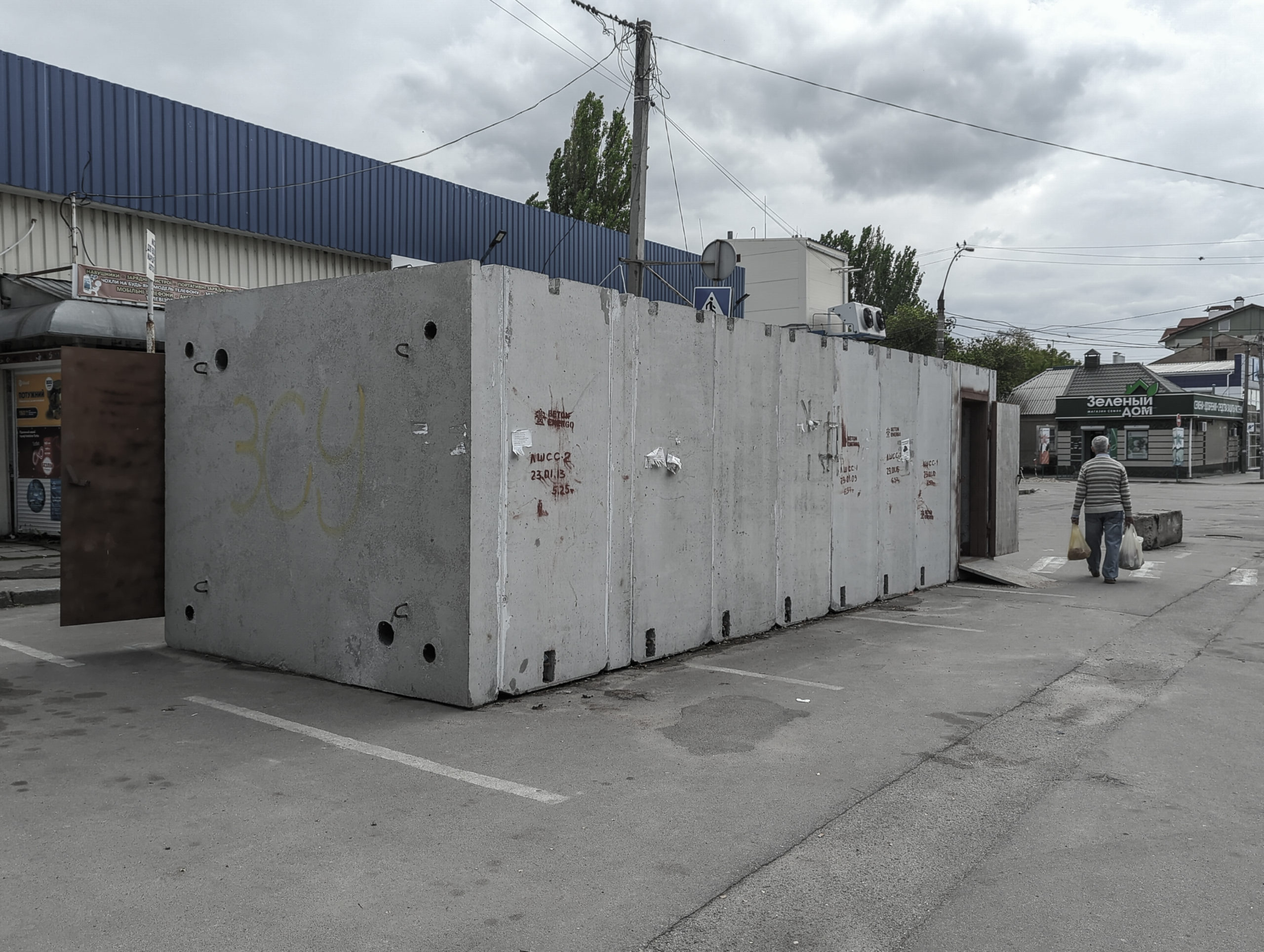
On September 9, 2016, Mansour Koudousov, 25, was deported to Russia after being placed under house arrest in Die (Drôme) since 2012, following the Merah case.
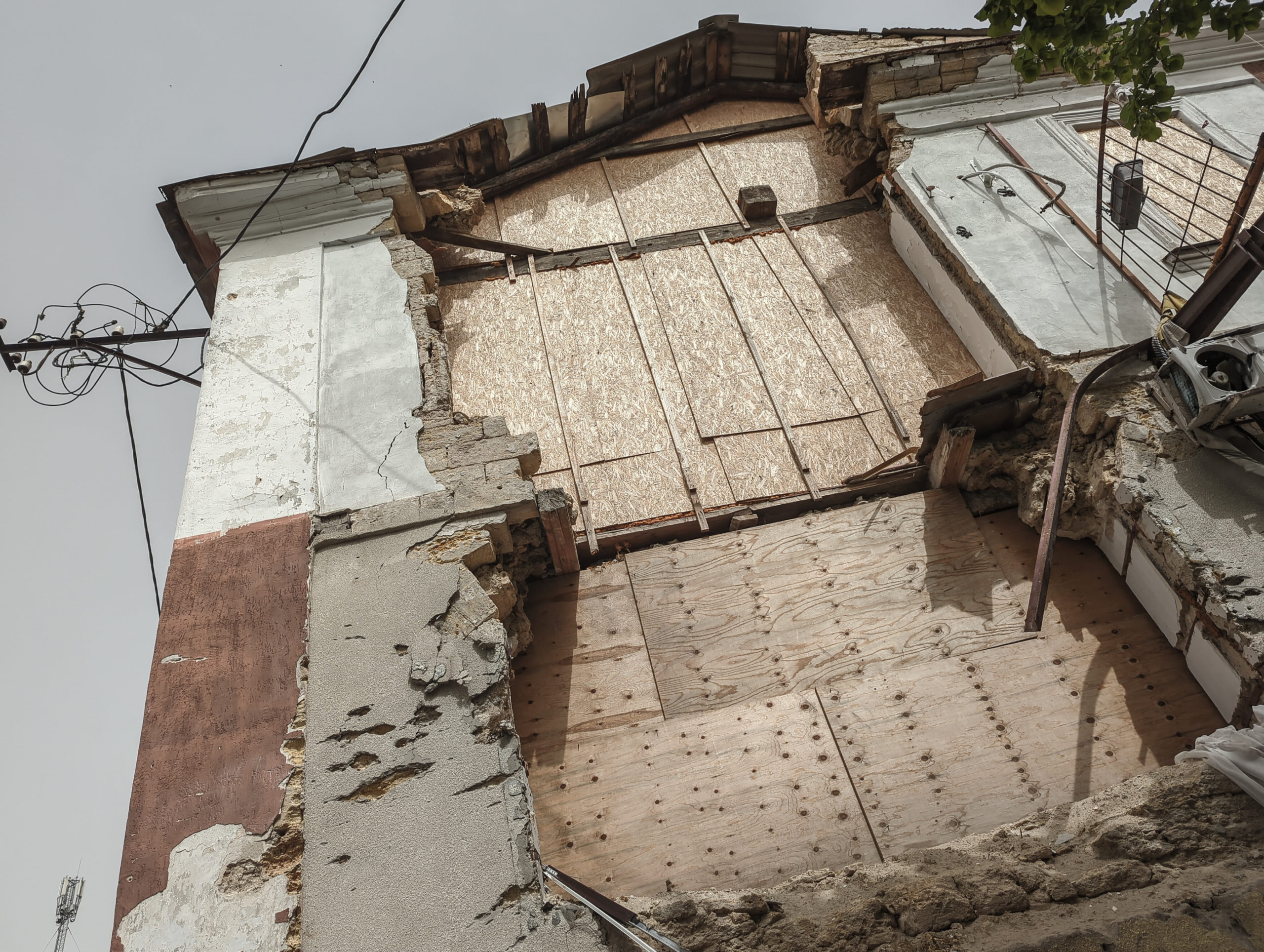
There are dozens of stories like these. Among the more than 3,000 home searches and 400 house arrests carried out during the state of emergency, many Chechens were affected. In almost all of these cases, there has been no legal follow-up, no solid evidence, but rather baseless speculation, referring to “alleged links” and “signs of radicalization,” “trips” to Turkey and Ukraine, or even visiting “Islamist websites.” In this case, Chechen news sites such as Checheninfo, Kavkaz Center, Chechen Press, Nohchicho, Chechen News, Golos Ichkerii, Ichkeria Info, and Waynakh.com, which are visited by the diaspora, are not Islamist websites, but community news sites, even though they have religious sections and give a voice to the Chechen rebellion (= opposition).

Extraditions to Russia

Disdainful of the plight of thousands of Chechen refugees who have been struggling for more than a decade in the Schengen Area, European authorities have decided to impose a double punishment on the Chechen diaspora since the start of the war in Syria.

In France, following the attacks in January and November 2015, the Central Territorial Intelligence Service (SCRT) and the General Directorate for Internal Security (DGSI), both newly established in 2014, have further tightened surveillance of Muslims, particularly Chechens.

The paranoid and fabricated notes of the intelligence services, fueled by a striking ignorance of the Muslim religion and its practices, but also by indifference to the history and experiences of the Chechen community since the 2000s, serve to justify administrative measures that allow for the harassment and arbitrary deprivation of liberty:

On November 20, 2015, Lioma, a 41-year-old refugee since 2007, was placed under house arrest at his home in Ingré. His house arrest was finally overturned by the Orleans Administrative Court more than 10 months later, in October 2016.

On November 21, 2015, at around 2:30 a.m., RAID police officers raided the home of Magomed, a 32-year-old refugee since 2006 and father of nine children, in the Cité des Chaumes neighborhood of Montauban. He was immediately placed under house arrest. The order was finally revoked two months later.

At the same time, two other Chechens were placed under house arrest in Montauban, in the Beausoleil and Montplaisir neighborhoods. Their house arrest orders were also lifted after two months.

On November 26, 2015, at 7 a.m., around 20 GIGN police officers raided the home of Saïd Ahmed Itaev, a 33-year-old father of five who had been naturalized as a French citizen in 2007, in Sarreguemines. He was immediately put under house arrest.

On November 30, 2015, at 6 a.m., around 20 police officers from the SWAT team raided the Madiev family home in Rouen and conducted a search as part of the state of emergency. The search proved fruitless.

On January 25, 2016, at around 11 p.m., several dozen police officers from the SWAT team conducted simultaneous searches of the homes of Aslan, Ibragim, and Issa, three Chechens aged 32, 24, and 29 living in the Croix-du-Sud neighborhood of Reims, who had been refugees in France since 2010.

On September 9, 2016, Mansour Koudousov, 25, was deported to Russia after being placed under house arrest in Die (Drôme) since 2012, following the Merah case.

There are dozens of stories like these. Among the more than 3,000 home searches and 400 house arrests carried out during the state of emergency, many Chechens were affected. In almost all of these cases, there has been no legal follow-up, no solid evidence, but rather baseless speculation, referring to “alleged links” and “signs of radicalization,” “trips” to Turkey and Ukraine, or even visiting “Islamist websites.” In this case, Chechen news sites such as Checheninfo, Kavkaz Center, Chechen Press, Nohchicho, Chechen News, Golos Ichkerii, Ichkeria Info, and Waynakh.com, which are visited by the diaspora, are not Islamist websites, but community news sites, even though they have religious sections and give a voice to the Chechen rebellion (= opposition).

On a regular basis, the DGSI submits memos to the Department of Public Freedoms and Legal Affairs (DLPAJ), recommending action against individuals for whom there are “serious reasons to believe” that they “pose a serious threat to public order or state security.” This is where Pascale Léglise enters the picture—a senior civil servant and longtime veteran of the Ministry of the Interior, whose daily work is devoted to building cases against individuals for whom there is little or no substantive evidence, beyond the reactionary beliefs of overzealous ministry officials.

This same Pascale Léglise was, on the evening of November 13, 2015, while the Bataclan attack was still unfolding, drafting the decrees implementing the state of emergency by the light of her desk lamp at 11 rue des Saussaies.

She later appeared before the Melun Administrative Court on December 2, 2015, to argue against C., one of the individuals placed under house arrest during COP21. Described as a “leader of the radical ultra-left political scene,” C. was presented as a threat to public order. The house arrest was upheld, including by the Conseil d'Etat, thereby entrenching the draconian security measures of the state of emergency at the highest legal level.

Pascale Léglise appeared once again before the Paris Administrative Court on February 6, 2017, this time to argue against Kamel Daoudi—described as “Bin Laden’s lieutenant”—who had been under house arrest for nine years on the basis of 16-year-old suspicions (read his blog). Daoudi had already served five years in prison between 2005 and 2008. Since then, despite a residence ban, he has been shuttled from town to town while the authorities attempt to find a country willing to accept his deportation.

The most recent illustration of the DLPAJ’s harmful practices came on April 12, 2017, with the action taken against Vakha Djamalkhanov. Vakha, a 25-year-old Chechen granted refugee status in France in 2010, was arrested at his home in Limeil-Brévannes by dozens of heavily armed, hooded SWAT officers—after which he simply disappeared.

The following day, members of the Chechen community mobilized: around 20 people gathered at Place de la République on the evening of April 13, followed by some 70 people at the same location on April 14.

On Friday afternoon, we learned—not from his lawyer, who had been stonewalled by various government agencies, but from another source—that Vakha had been subjected to a provision of the 2014 law “strengthening the fight against terrorism.” This provision allows the DLPAJ to expel, without trial and without the possibility of appeal, any individual for whom there are “serious reasons to believe” they pose a threat to public order or state security. Further investigation revealed that this practice is far from exceptional.

Vakha was thus secretly deported to Russia on Wednesday and handed over to the FSB, after his refugee status had been revoked in 2014. The justification for this relentless pursuit was a trip to Turkey in January 2014, made using a valid Russian passport he had purchased. The suspicion: that he had joined ISIS. In reality, he was traveling to Turkey to meet his future wife.

Whether this claim is true or not, it is certainly not for the FSB to decide—particularly given that all of Vakha’s relatives were systematically executed by Russian forces between 1994 and 2007, often under especially horrific circumstances.

Even as Angela Merkel and François Hollande publicly feign tension in their relationship with Vladimir Putin—suggesting that sanctions further impoverishing the Russian population are an effective means of resistance—European police forces continue to cooperate with Russian authorities under the pretext of combating terrorism and illegal immigration. As early as April, it was reported that Khizir B., another young Chechen, was awaiting extradition to Russia in the German prison of Büren. A rally was held on April 3, 2017, outside the German embassy in Paris. About fifteen people attended, voicing the same message repeated two weeks later: “Don’t help Russia kill us.”

This apparent contradiction does not seem to trouble the French authorities.

As of Monday, April 17, no news had been heard from Vakha for five days. One can only imagine the anguish of his mother, who was present at his arrest alongside her two nieces, aged seven and nine. As with other raids targeting Chechen families, these hooded operations inevitably revive the traumatic memories of the “cleansing campaigns” carried out in Chechnya.

Update: Vakha has since been located in a prison in Chechnya, where he has been convicted of “participation in an armed organization.” France has finally responded to a request from European authorities, tersely confirming that he was deported on the day of his arrest. Swift and efficient.

About the author: Cédric Domenjoud is an independent researcher and activist based in Europe. His research areas focus on exile, political violence, colonialism, and community self-defense, particularly in Western Europe, the former USSR, and the Levant. He is investigating the survival and self-defense of Syrian communities and developing a documentary film about Suwayda, as part of the Fajawat Initiative.
Palestine, 2014: War from the other side of the wall

Palestine, 2014: War from the other side of the wall

Cedric Domenjoud

by Cedric Domenjoud | Jul 30, 2014

At the end of June 2014, I traveled to Palestine for the second time, less than nine months after having to interrupt my previous trip to see my father before he died. Little did I know that just a few days after my arrival, a new war would break out. Here is my account.

I've barely arrived and the war begins.

A few days before my arrival in the Palestinian territories, three young settlers from Gush Ezion were abducted on June 12 while hitchhiking along Route 60 between Hebron and Bethlehem. Since then the Israeli army has launched a sweeping “Brother’s Keeper” operation across the occupied territories, pairing mass raids and targeted kidnappings with a heavy bombardment of the Gaza Strip—all officially aimed at crushing Hamas, which the organization denies any involvement in the abductions.

Around Hebron—and throughout the rest of the West Bank—the army has spent day and night searching homes of alleged Hamas members, tightening pressure on the population. In response, daily clashes have erupted, already resulting in the killing of roughly a dozen Palestinians, mostly youths shot during riots or on the margins of unrest:


  • Ahmad Arafat Sabbareen, 21, killed June 16 in Ramallah.
  • Mahmoud Jihad Muhammad Dudeen, 14, killed June 20 in Doura.
  • Hajj Jamil Ali Jaber Souf, 60, killed June 20 in Salfit.
  • Ahmad Sa’id Abu Shanno, 35, killed June 22 in Al Ein (Nablus).
  • Mahmoud Ismael Atallah, 31, killed June 22 in Ramallah.
  • Fatima Ismael Roshdi, 70, killed June 26 in Al Arroub (Hebron).
  • Mustafa Hosni Taher Aslan, 24, died June 26 from Israeli fire in Qalandia.
  • Ibrahim Abu Zagha, 21, killed July 1 in Jenin.

These figures do not include the civilian casualties from the ongoing bombardment of Gaza.

Parallel to these events, Israeli authorities estimate that nearly 600 people have been abducted and several hundred injured. Many observers claim that the level of tension has not been seen since the last Intifada.

The bodies of the three young settlers were finally discovered in a field near Halhul on June 30, just a few kilometres from the site of their kidnapping. Since then, the army’s violence has been compounded by settler vigilantism, with punitive actions carried out—often in the presence of soldiers—such as a child run over near Bethlehem, funeral processions attacked in Ramallah, olive trees felled near the Betar Illit settlement, violent confrontations on the Temple Mount in Jerusalem, and a spontaneous demonstration by extremist Israelis shouting “death to Arabs” in the Old City. Most recently, a 16‑year‑old Palestinian, Muhammad Hussein Abu Khdeir, was kidnapped and murdered in Shu’afat (East Jerusalem).

Israeli officials have added fuel to the fire by promising sweeping reprisals, which began today across the occupied West Bank with the arrest of about fifty suspects and the demolition in Hebron of houses belonging to the families of the presumed kidnappers (Marwan al‑Qawasmi, 26, and Ammar Abu Aisha, 33, who remain missing).

Soldiers now patrol roads and checkpoints throughout the territories, a routine sight in an occupied land where operations and abductions typically occur in the late afternoon.

The international community, in its usual role, condemns the violence while offering Israel excuses. It appears that the lives of three settlers are weighed against those of dozens of Palestinians. Israel has seized upon this incident to undo the recent rapprochement between Hamas and Fatah and to launch a broad offensive aimed at dismantling the Palestinian resistance fabric—whether peaceful or armed.

It should be noted that Israeli forces have been abducting Palestinians with regularity: 2,478 cases have been recorded since the start of 2014. For decades, Israel has imprisoned young Palestinians—often minors—for years, employing tactics in the West Bank reminiscent of the Algerian War and arguably no more respectable than the terrorism it claims to combat.

For the past two weeks the Palestinian territories have reverted to the volatile atmosphere of 2006. The vengeful, belligerent rhetoric of Prime Minister Benjamin Netanyahu and Defense Minister Yoav Gallant offers little hope for a peaceful Ramadan that is now beginning.

Traffic jams and clashes in Qalandiya

Qalandiya—known to everyone for its checkpoint, the wall plastered with Barghouti’s portrait, and the charred watchtower—is the main crossing point between Jerusalem and the West Bank and, above all, a symbolic site that embodies the humiliation of controls, apartheid‑like restrictions, and the inability of many Palestinians to leave their own territory. In Arabic it is called hajez. Israelis control everything that passes into Israel there.

Qalandiya is also something of a knot at the heart of Palestine. Directly below the checkpoint stretches the refugee camp, and between the two runs Route 60, which links Jalame (north of Jenin) and Meitar (south of Hebron), the two checkpoints that bookend the West Bank. It is a bottleneck that rarely clears: cars crawl forward, honk, turn around, and seem to overlap each other in an almost suffocating jam. White and green buses may cross into Israel, as can vehicles bearing yellow Israeli plates. All others—yellow “services” and cars with the green‑white Palestinian plates—must stay within the West Bank. Like all Palestinians without Israeli residency permits, they are barred from their own land.

Young men, armed and exuding a swaggering contempt, carry out the security formalities. Passports and visas, Palestinian ID cards, and residence permits are mandatory. Pedestrians pass through grids that resemble cattle‑holding corridors. Turnstiles constantly jam, opening only at the whim of the adolescent‑looking soldier conducting the checks, while queues can stretch indefinitely. Above each turnstile sit two lights—a red and a green—but a green light does not necessarily mean the gate is open. The endless cycle repeats: you pass, you pass again, you set your bag on the scanner and press your passport against the armored glass. Changing buses costs five shekels; a bus ride from Ramallah to Jerusalem (Damascus Gate) is eight shekels.

Over the checkpoint stand three of those familiar watchtowers that punctuate the Palestinian landscape. The one overlooking the entrance to the refugee camp is blackened with soot. Tires were set ablaze at its base during clashes that, in that spot, occur weekly—and, since the death of Mohammed Abu Khdeir, daily. During Ramadan they usually begin after Iftar, the evening meal that breaks the fast.

I found myself caught in one of those confrontations on my way to Shu’afat. At moments the soldiers moved close to the Palestinians to launch stun grenades, or hid behind barrels on the left sidewalk to fire live rounds. A sniper crouched behind a blue water tank, adjusted his aim, and fired repeatedly—whistling and a faint metallic crack. On the Palestinian side there were about forty people armed with stones and slingshots—the inverted myth of David versus Goliath, minus the victory. In the end, two Palestinians were wounded by gunfire.

Taking advantage of a lull, I slipped away to rejoin the road to Shu’afat…

East Jerusalem rises up following the death of Mohammed Abu Khdeir

After the kidnapping of three young Gush Ezion settlers, Israel’s government—ever quick to blame Hamas—still could not locate Eyal Yifrach, Naftali Frankel or Gilad Shaer alive. The Shin Bet (Israel’s internal security service) now has to admit its failure. The three were found dead in Halhul, north of Hebron, and buried in Modiin on July 1.

The discovery ignited a wave of fury. Within 24 hours, hundreds of extremists flooded the internet with calls for the murder and genocide of Arabs, despite the victims’ parents urging restraint and reminding skeptics that “the same blood runs in the veins of Arabs and Jews.”

On the dawn of Wednesday, 16‑year‑old Mohammed Abu Khdeir was seized by three men outside a shop in Shu’afat. His charred body was later recovered in a nearby forest; the autopsy showed he had been burned alive after being beaten. The next three days saw Shu’afat and several East‑Jerusalem neighborhoods—Beit Hanina, at‑Tour, Silwan, Ras al‑‘Amoud and al‑Eesawiyya—rise in protest.

July 4, the first Friday of Ramadan, was marked by massive funeral rites for Mohammed in Shu’afat, drawing more than 10 000 mourners. Israel barred the ceremony from Al‑Aqsa Mosque, which for weeks had endured violent incursions by Israeli fanatics accompanied by soldiers.

That night, roughly 200 demonstrators clashed with Israeli special forces at the Beit Hanina–Shu’afat junction. Molotov cocktails, stones, rubber‑bullet fire, tear‑gas grenades and water cannons were exchanged. Unlike the earlier episode at Qalandiya, where a sniper perched behind a water tank appeared ready to add another name to the growing list of Palestinian martyrs, the special forces reportedly refrained from using live ammunition.

The Veolia‑Alstom tram line was not spared. Protesters cut the tracks and toppled two poles on the line that connects Jerusalem to the illegal settlements of Giv’at‑Ha Mivtar, Pisgat Ze’ev and Neve Ya’akov, depriving more than 50 000 settlers of tram service. Simultaneously, incidents multiplied across the West Bank: army raids and skirmishes in the Old City of Hebron, the Al‑Arroub refugee camp (Hebron district), the villages of Barta’a ash‑Sharqiyya (Jenin district), Al‑Asakra, Jouret ash‑Sham’a and Um Salmouna (Bethlehem district), leading to further abductions.

From the settler side, new violent episodes were reported: in Osarin (Nablus district), 22‑year‑old Tareq Ziad Odeily was seized by two Israeli vehicles, beaten and left for dead near a field; in Keesan (Bethlehem district), 17‑year‑old Ala’ Mousa Obeyyat was deliberately run over by a settler’s car; and in Sha’aba (Hebron area), 30‑year‑old Bashir Sobhi al‑Mohtaseb was beaten by a group of Kiryat Arba settlers.

A conversation with a group of young Karmi Zur settlers camping outside Halhul revealed once again how misinformation and hatred shape their worldview, prompting them to see every Arab as a butcher and terrorist. Their interaction with me was surprisingly cordial—they even offered chocolate. During our talk I heard them claim that Palestinians have no reason to complain because Israel “generously gave them the Gaza Strip—now full of luxury hotels—and provides water and electricity for free.” They also asserted that Arabs are educated from childhood to kill Jews and that the proportion of fanatics in Israel is infinitesimal. The settlers believe they alone live in fear and view each new settlement as a way to further bind Jews in the occupied territories for protection against Arab aggression. They do not even recognize the label “settlers” applied to them.

When they invited me to wait for a gathering that would be guarded by soldiers for our safety, I declined. I preferred to leave before engaging in any deeper debate with the Israeli forces, opting instead to spend the early evening on a bus packed with “dangerous Palestinians” on my way back to Ramallah.

Mounir Ahmad Al Badareen: a dove has fallen

July 14, pre‑dawn – Between four and five a.m. in the village of As Samuʾ (Hebron district), Israeli army jeeps rolled into the town.

Violent clashes erupted when residents tried to drive the intruders away, pursuing them to the edge of Route 60 at the western tip of the village. The road slices the hill there like an open wound in the landscape, linking the settlements of Otni’el and Shim’a before continuing toward Beersheba beyond the “wall of shame.”

Mounir Ahmad Al‑Badareen, 19, was among those who attempted to resist with stones. Stones against rifles—​the drama and tragedy of an unarmed youth risking his life daily to shake off oppression.

Palestinian projectiles ricocheted down the road; their impact marks were still visible two days later. The youngsters were exposed, standing too close to the road’s lip. A soldier fired two .22 calibre dum‑dum rounds—​ammunition banned under the Hague Declaration of 1899 and prohibited in 2001 for crowd control by the Israeli army’s chief legal officer—​into Mounir’s torso. His friends fled.

Witnesses later described the routine brutality of the adolescent soldiers, who mishandled Mounir’s wounded body and blocked a Red Crescent ambulance from reaching him while his blood drained away. It took forty minutes for him to become a shaheed, a martyr for a desperate cause.

The following day, Ahmad Hamdan Al‑Badareen, an English teacher and Mounir’s father, spoke with humility about his son’s fate. He shared his broader view of the Israeli occupation and his unconditional wish for a just peace—​a vision far removed from the revenge narrative often ascribed to Palestinians. In his view, a fair peace can exist only when walls fall: “No peace without freedom; no freedom without struggle.” The father and the slain son’s memory seemed to converge on that sentiment.

That evening, Mounir’s family welcomed me into their home as if I were one of their own, despite our differences and their grief. Sitting among them in the communal hall, I witnessed a ceremony attended by hundreds of locals and outsiders who came to offer condolences.

Mounir kept a pigeon loft. By killing him, the Israeli soldiers struck at a symbol of freedom itself.

The Palestinian Authority at the service of the settler

Israel appears able to lean on the Palestinian Authority to suppress any spark of popular revolt. Historically, the Palestinian people have been split between those who see a necessary uprising as inevitable and those who cling to the hope of a peace brokered through diplomacy—even at the cost of unbearable compromises. It seems that the prospect of securing crumbs from endless negotiations with the White House motivates Mahmoud Abbas to polish the shoes of the Israeli colonial state.

Fatah’s strategy since Yasser Arafat’s death has shifted dramatically. The comfortable Palestinian elite now seems to have nothing to gain from armed struggle and prefers pacification and compromise. This collaboration between the Palestinian bourgeoisie and the occupier, once again, appears to be a prerequisite for the creation of a new state.

While the Israeli army multiplies operations aimed at decapitating Hamas in the West Bank—carrying out arbitrary nighttime arrests across cities and villages in the occupied territories—the Palestinian Authority assists the occupier in its effort to choke resistance.

Since the beginning of the week, wherever Palestinian youth traditionally take up arms against the occupation, the Palestinian police have intervened to prevent conflict, forcibly interposing themselves between protesting civilians and Israeli soldiers.

That is exactly what happened last night in Al Bireh, when Palestinian anti‑riot forces blocked the road leading to the settlement‑garrison of Beit El, and similarly in Qalandiya, where the Authority’s police took over from the Israeli army to violently suppress rioters.

Following the sniper‑kill of Mahmoud Ismael Atallah in central Ramallah on 22 June, the Palestinian police opted for repression, quashing any uprising in the city. That intervention culminated in an attack on the police station by residents. Palestinians are not fooled.

What does the Palestinian Authority hope to achieve? If Abbas pushes collaboration with Israel as far as he wishes, no peace will ever be acceptable without the dismantling of all West Bank settlements, the implementation of the right of return for refugees, unrestricted movement for all Palestinians, and the removal of the apartheid wall. Conversely, if the Authority stubbornly persists on a path of compromise, it will reap the opposite of what it claims to seek—and a third intifada could prove fatal to it.

Overview of the clashes around Ramallah

The bloody toll continues to climb in the Gaza Strip: 583 Palestinians killed and 3,640 wounded (including many amputations) since July 8. The United Nations even publishes morbid charts, assigning a tiny silhouette to each victim. Every day the local media are flooded with horrifying images—bodies torn apart, videos of snipers executing people live—followed by the unspeakable comments of genocide supporters. The war is waged online as well as on the ground.

Meanwhile, Israeli demonstrators shout loudly for murder in the streets, erecting anti‑Arab, anti‑left checkpoints in Haifa and Tel Aviv. The idea is to force motorists to chant “death to the Arabs,” under penalty of being beaten. The atmosphere is nauseating.

On the other side of the wall, clashes with the Israeli army are daily, and the number of injured is staggering. Israeli soldiers fire live rounds, hitting targets multiple times per hour. In the Ramallah suburbs I have watched stone‑throwers fall one after another, crouching or sprinting from cover to cover. Stones and Molotov cocktails rarely reach their targets, while bullets seem to pierce everything. Rifles sweep the darkness, a metallic snap follows, and a whizzing bullet flies—life and death reduced to a coin toss.

Around Ramallah, several hotspots heat up every night after the evening prayer (Isha), roughly from 10:30 p.m. until three or four in the morning:

OFER – The town is actually called Betunia, but the fighting takes place a few hundred metres from the Israeli Ofer prison and its checkpoint. Ofer, together with Megiddo and Ktzi’ot, is one of the three main Israeli detention facilities holding between 800 and 1,200 Palestinian prisoners. The prison looms in the background; in the foreground a narrow road leaves Betunia toward the checkpoint, where an expansive vacant lot offers no shelter. Atop a hill stands a factory owned by businessman Yasser Abbas—son of Mahmoud Abbas—who manufactures cigarettes. The enterprise, built on wealth accrued since the Oslo accords, underscores how little the Abbas family seems to care about the peace process. Yasser, a Canadian citizen, watches the clashes from a small balcony while his security detail observes. Palestinians use the steep slopes near the factory for cover, hurling stones at vehicles that shuttle back and forth across the vacant lot. They also try to approach the eastern flank of the hill, which looks directly onto the Wall, where soldiers keep a gate ready for counter‑attacks.

QALANDIYA – I have described this site previously. Its terrain is treacherous. The checkpoint is fortified with concrete blocks, behind which soldiers take up firing positions. On either side of the perpetually congested road lie cramped stalls with virtually no shelter. To the right, a massive embankment shelters a restaurant, a metal shed, and construction equipment that can be used as cover. In the centre, traffic streams continuously through the fighting as if nothing were happening. To the left, a covered sidewalk runs past shuttered shops. Clashes usually begin with piles of tires set ablaze on the road, then shift up the hill that skirts the Wall. The layout rarely allows anyone to get closer than 150 metres to the checkpoint—beyond that range only slingshots have a chance of hitting anything.

BEIT EL – What is commonly called Ramallah actually comprises two adjacent towns: Ramallah to the west and Al Bireh to the east, linked by Route 60. Leaving the city at a roundabout, a massive concrete flagpole rises, topped by a Palestinian flag—a defiant banner to settlers and soldiers across the street. To the east, two settlements—Psagot and Beit El—overlook the town; the latter shares half its territory with a military base. Most of the clashes occur near that base, north of the Ramallah‑Al Bireh corridor, behind a cluster of houses and an Al‑Huda gas station. The terrain is largely exposed; only the houses and their low walls provide any cover. On July 20 the fighting there reached a particularly violent peak.

AR‑RAM – This town sits directly above the Qalandia checkpoint to the south. Its main entrance is a wide roundabout on the winding Route 60 that leads to Bethlehem. It was here that 20‑year‑old Mahmoud Hatem Shawamra was killed on July 21. Accounts of his death diverge: some say a settler shot him, others claim Israeli soldiers fired at his back. He died in a military ambulance bound for nearby Hizma. Youth gathered at the spot where he was allegedly shot, surrounded by discarded Israeli medical gear. No evidence confirms a settler’s involvement; the location is precisely where clashes regularly erupt, at the entrance to Ar Ram.

From there a protest marched after news of his death, first toward the center of Ar Ram and then toward armored Israeli units that had been positioned for hours opposite the town’s roundabout. To reach the soldiers, protesters first had to exit the town and get onto the road, but the troops were entrenched behind a concrete barrier and quickly repelled attacks with well‑lit gunfire.

Beyond the Ramallah district, daily clashes are reported from Hebron, Halhul, Beit Umar and Al‑Arrub, where the population endures regular army incursions. Yet the conflict is not confined to a handful of towns or villages that bear the torch of Palestinian resistance; wherever Israeli soldiers set foot, locals respond with stone‑throwing. The intense events of the past month have reignited the anger of a population pressured far too long.

Some Western observers see the non‑violent Friday protests in Bil’in, Ni’lin, Nabi Saleh, Al Masara and Kufr Qaddum as the future of Palestinian insurrection. In reality, everyday resistance is far less visible and receives far less media coverage outside local outlets. Most of it unfolds after dark.

Occupying forces do not like witnesses

Friday, July 18, proved especially tense between Palestinians and the Israeli army. As on many Fridays across the occupied territories, Palestinians stormed Israeli forces and installations—not with weapons, but with the almost suicidal determination that has become their hallmark. Yesterday’s resolve was sharpened by a desire to show solidarity with Gaza’s residents, who have been massacred for weeks by Israeli troops.

In the afternoon I first made my way to Ofer.

The clashes there meet an often disproportionate Israeli response; soldiers do not hesitate to fire live rounds when tear gas and rubber bullets fail to achieve their aims. During these displays of force, the Israeli army frequently makes no distinction between rioter, medic, passerby or journalist. On that day I witnessed a deliberate hunt for journalists. Military jeeps repeatedly approached reporters in a threatening manner, forcing them back into their vehicles before deliberately tossing gas grenades at their feet. Later, a water cannon was used to “clean” the journalists present.

I experienced that targeted violence firsthand. While standing alone ahead of an armored army vehicle, a rubber‑bullet struck me squarely in the chest, even though I was holding my camera at eye level. It is indisputable that, as a witness, I was the direct target of that shot, and the soldier firing from the vehicle’s door clearly knew the projectile would hit me just centimeters from my face.

Late that evening the fighting broke out near the Qalandia checkpoint. Arriving with a photographer friend and trying to get as close as possible to the Israeli soldiers while gunfire raged, we found ourselves alongside Palestinian television journalists under heavy Israeli fire. One of the journalists, Fadi Al Jayoussi, was hit in the leg.

Israel once again displayed blind, indiscriminate violence, even as the Gaza operation—condemned worldwide—has already claimed 316 lives and injured more than 2,200 people, the majority of them children.

Enough is enough: Israel fires on crowd at Qalandiya

On July 24, a collective called for a demonstration to mark the Nakba—the destruction of roughly 400 Palestinian villages and the forced exile of 700,000 Palestinians during the founding of the State of Israel. The protest was slated to depart from the Al‑‘Amari refugee camp, force its way through the Qalandia checkpoint, and continue on to Jerusalem and the Al‑Aqsa Mosque, which had been closed to anyone under 50 for several days even as Muslims prepared to celebrate the end of Ramadan.

Posters posted throughout Ramallah announced a 21:30 start time. Yet thousands of Palestinians were already gathered on Route 60 well before the hour, forming a sea of Palestinian flags and keffiyehs. With a photographer friend I set out to join the head of the march, but it took an hour to catch up with the procession. By then the front of the march had already reached Qalandia, where the Israeli army had, for hours, sealed the checkpoint with concrete blocks and steel grates, waiting resolutely.

The Israeli forces were invisible to us, blinded by a massive floodlight mounted on one of the watchtowers that bathed the entire scene in blinding glare.

The clash had been underway for some time; hundreds of stones already littered the ground. As we arrived the crowd grew denser and dozens of ambulances were already making their frantic rounds. Black clouds billowed from burning tires, and in front of us dozens of Palestinians hurled projectiles at the Israeli convoy, taking cover behind scant obstacles—a central median wall, a tired warehouse, a garbage bin and a metal barbecue grill. Hundreds of people crouched in tight groups, trying to avoid Israeli fire.

From the front of the scene we were thrust straight into the horror: a stretcher carried in the body of the first martyr, his forehead pierced by a bullet. Every two minutes another group pulled a wounded person toward awaiting ambulances. Repeated pleas for medics, thick plumes of black smoke, the crack of gunfire, fireworks and ambulance sirens created an apocalyptic tableau. The Arabic word “SA’AF!” (paramedic) echoed over the chaos.

Having lost sight of my friend, I moved around the battlefield—right beside the separation wall, left onto rooftops, and in the middle of the road—spending about fifteen minutes lying flat against a wall with dozens of others while Israeli shooters fired just above our heads. The green laser sights of Israeli rifles and the high‑pitched whine of bullets were terrifying.

There were a few instances of live fire from the Palestinian side, met with whistles and applause, but overall the fight was waged with stones, Molotov cocktails and fireworks. Repeated Palestinian assaults, shouted with “Allāhu Akbar!”, were answered by bursts of gunfire, bullets whizzing through the crowd and striking moving bodies. The clash left roughly 287 injured and two dead, figures that should soon be confirmed by doctors at the Ramallah hospital. Many of the wounded—and likely one of the fatalities—came from the Al‑‘Amari refugee camp.

I would later find out the identity of the young man I saw on the stretcher: Muhammad al-A'raj, from Qalandiya, killed at the age of 17.

I left the battle around 3 a.m., when the crowd had thinned and staying any longer grew increasingly dangerous. I, like many here, had hoped the march would force the checkpoint open, but the struggle was starkly uneven. Despite the unwavering determination of hundreds of young Palestinians daring to face the bullets, the assault lacked organization: no shields, virtually no barricades, and almost nothing to protect the demonstrators.

Back in Paris, my mind is still on fire

I returned from Palestine this Monday and am trying to put my thoughts in order, to revisit what I saw, the conversations I had, and the sensations I experienced during the 45 days I spent in Israel and the West Bank.

Putting aside Orientalist or exoticising lenses, I found among the Palestinians an incredible hospitality and an openness of mind that is hard to comprehend. After so many years of deprivation and violence, it is astonishing that the Palestinian people can still summon the strength to love the Other and open their doors to strangers. One might expect that a people whose lives are strewn with tragedy would inevitably be driven by their darkest emotions, that a wounded nation’s destiny is to unleash itself in adversity and terrorism. But that is not the case.

Martyrdom is part of Palestinian life, and dying at the hands of the enemy is regarded by the families of shaheed both as a tragedy and an honor. Yet I did not encounter the fanaticism that some attribute to all Palestinians or the assumption that every Palestinian supports suicide attacks.

At the same time, I must admit that I feel neither contempt nor indifference toward those who have chosen to give their lives for freedom, whether out of anger, despair, or hatred. Putting one’s life on the line is never a simple choice; it is often the culmination of a long descent into hell, a slow awareness of life’s futility in contexts where everything obstructs happiness and joy. Israel has created the conditions for its own destruction by continually crushing an entire people under a steel heel, under the pretext of fighting terrorism, while the root of that terrorism lies in the very origins of Israel’s creation: without the demolition of hundreds of villages, without the assassination and expulsion of thousands of Palestinians from their lands, and without the occupation, there would be no terrorism.

In Palestine I was never afraid. The only moments I felt fear were when I was in contact with settlers and Israeli soldiers. They are as fearful as they inspire fear because they are made of fear. Confined to residential enclaves surrounded by walls and barbed wire, armed with automatic weapons and accompanied by armed men, they express distrust and contempt and have forgotten their humanity. Their aggression often extends even to non‑Palestinians. The excuses they might offer to justify their closed‑off stance are false: they are not in danger. A simple comparison of Israeli and Palestinian death tolls since 2000 shows that they are not the ones who need protection and security the most.

But when you speak with them, it quickly becomes clear that they are steeped in myths and prejudices, convinced from a young age that the Arab is a murderer and a liar who only wants the destruction of Jews. Among settlers, it is said that Arab children learn to kill at school, that the notion of peace does not exist for them, that Arab civilization lacks faith and law, and that the Qur’an teaches only violence. Talking with settlers made me hear things I never imagined could come from a people long persecuted and victimised by racism. These Jews have forgotten.

During my month in Palestine I discovered that Israeli societal racism is extreme, capable of taking the form of pogroms comparable to those that caused the deaths of thousands of Jews in Russia between 1880 and 1945. I saw large groups of young Israelis descend into the streets shouting “death to the Arabs,” beating their detractors, expressing murderous desires, and openly insisting on targeting children and pregnant women so that the Arab race would not reproduce. Israeli elites may claim these are marginal positions, but the statements of public figures, the state’s tacit approval of settler violence, and the propaganda surrounding the massacre of Gaza’s population all send encouraging signals to Israeli fascists.

Nevertheless, there are many Israeli voices opposed to the state’s policies: Jewish peace organizations, anti‑Zionist Orthodox Jews, left‑wing activists, anarchists against the wall. They, too, face unparalleled violence, accused of betraying their people and of playing into antisemitic narratives, even though they are merely denouncing Jewish nationalism.

Palestine is undeniably a land of contrasts and dissonances. When I trace the events of the past month, the inconsistencies pile up. Nothing today clarifies, for example, the circumstances of the deaths of the settlers Gilad Shaer, Naftali Fraenkel and Eyal Yifrah, whose bodies were found almost intact after two weeks under a pile of rocks in full sun. Israel rushed to accuse two young Palestinians from Halhul—never located—before demolishing their families’ homes and arresting their relatives. Military operations across numerous West Bank towns, settler violence, the assassination of the young Palestinian Mohammed Abu Khdeir in Shu’afat, and the bombing of Gaza have resulted in weeks of daily clashes in which hundreds of Palestinians have been injured and about twenty killed in the West Bank.

Who bears responsibility? What will become of the fanatics who burned Mohammed Abu Khdeir alive? They have already been released under judicial supervision. What will become of the soldiers who, deliberately, with their advanced weaponry, shot Palestinians armed only with stones? They are praised; they have done their job. Israel thanks its assassins.

Meanwhile in Gaza, the toll stands at 1,422 dead (23 % children) and 8,265 injured as of 31 July—surpassing the casualty counts of previous operations. Israel does not defend itself; it exterminates. Some speak of genocide, a term that should not be used without UN endorsement.

I left Palestine as the Al‑Aqsa Martyrs’ Brigades—the armed wing of Fatah—launched targeted attacks against Israeli forces and settlers in the West Bank, in solidarity with Gaza and in support of Hamas actions. Suffice it to say, the summer is far from cooling down.

About the author: Cédric Domenjoud is an independent researcher and activist based in Europe. His research areas focus on exile, political violence, colonialism, and community self-defense, particularly in Western Europe, the former USSR, and the Levant. He is investigating the survival and self-defense of Syrian communities and developing a documentary film about Suwayda, as part of the Fajawat Initiative.