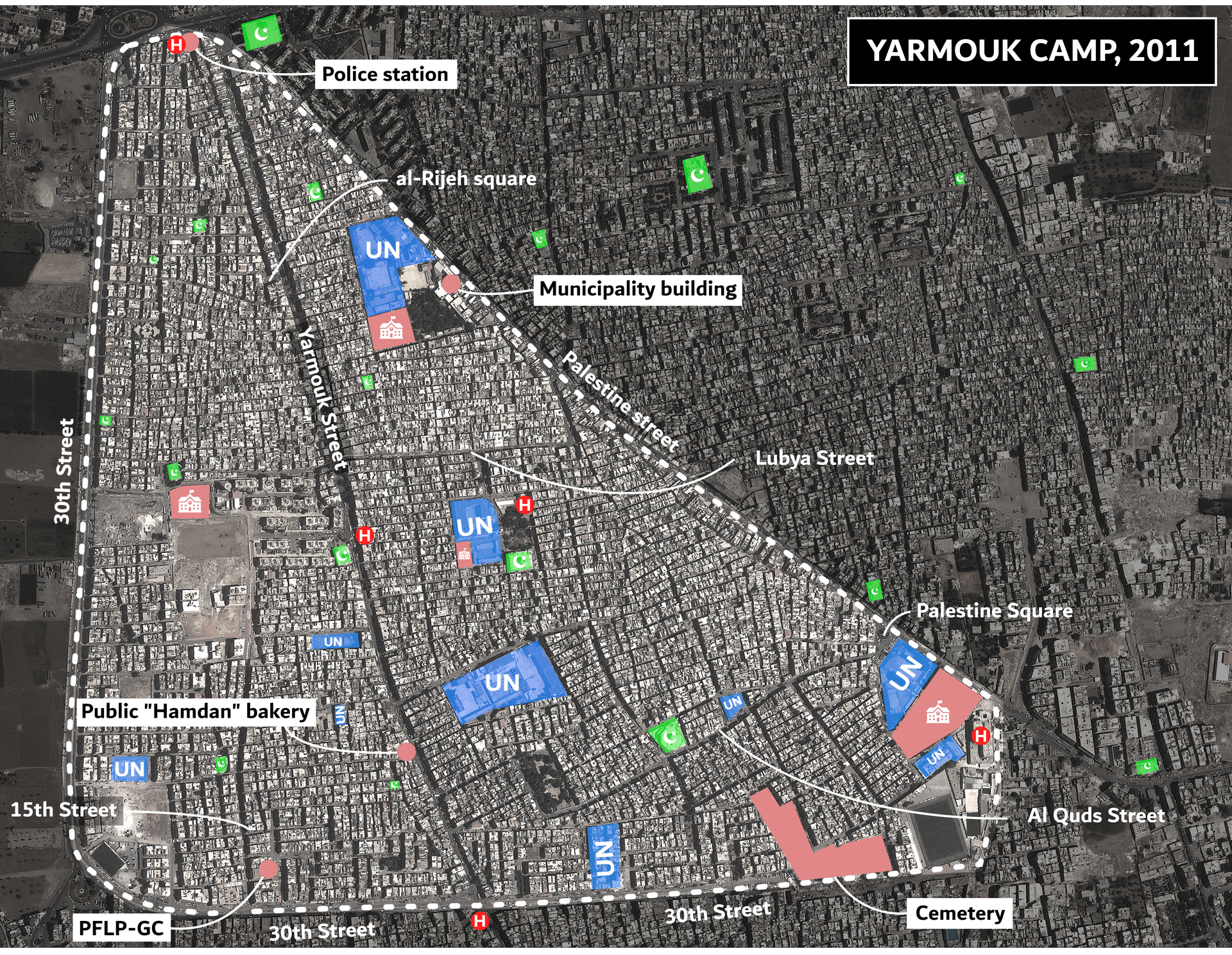
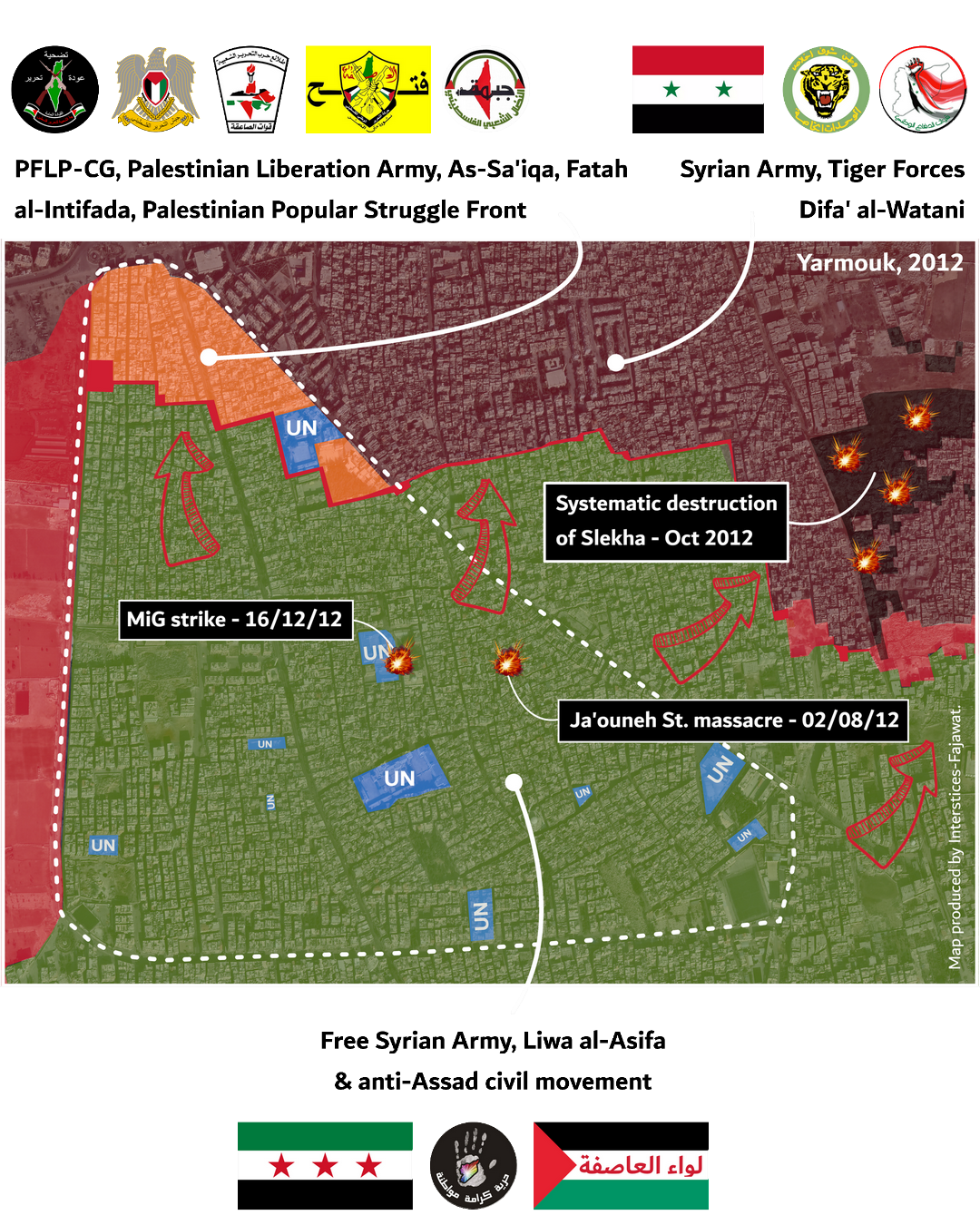
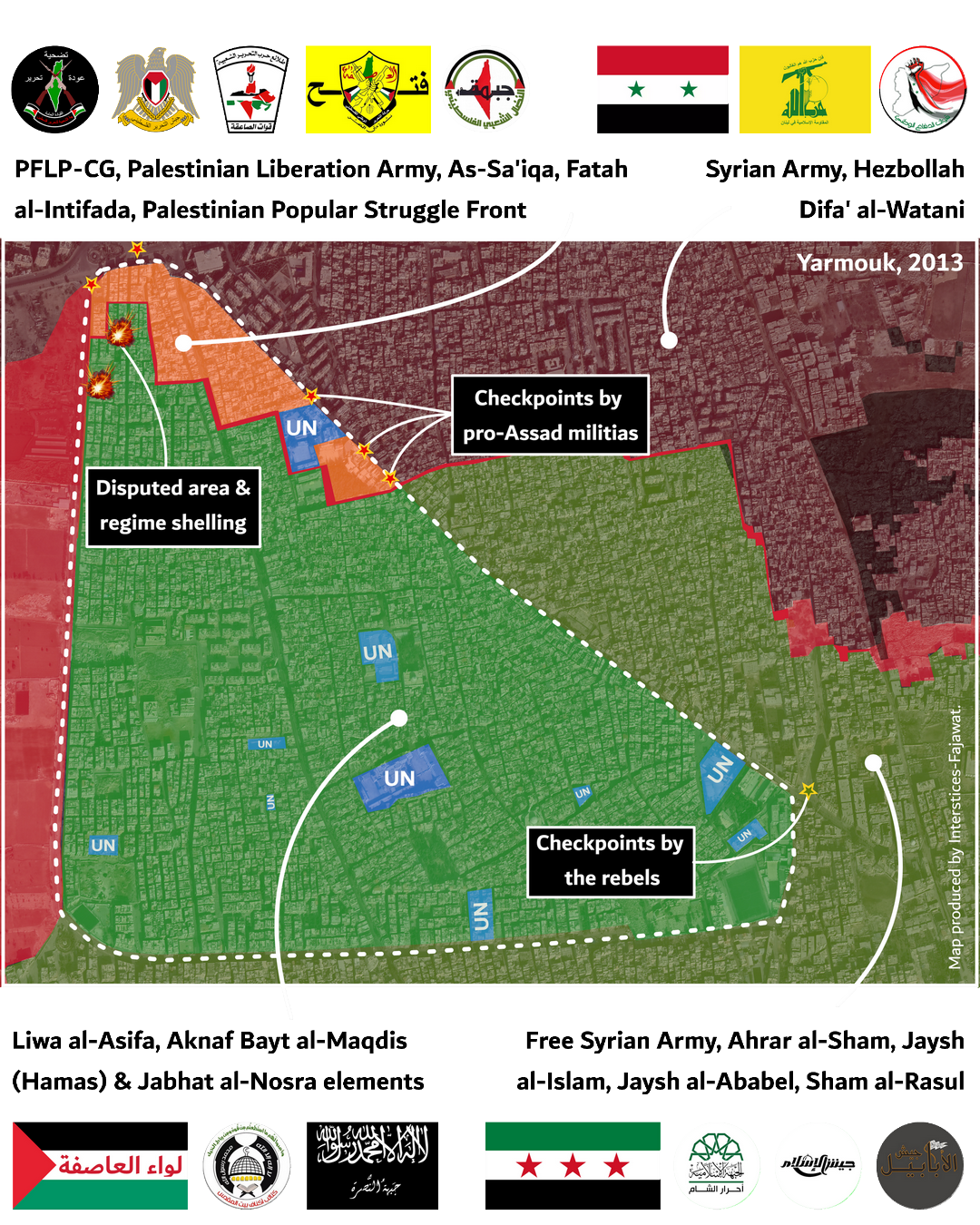
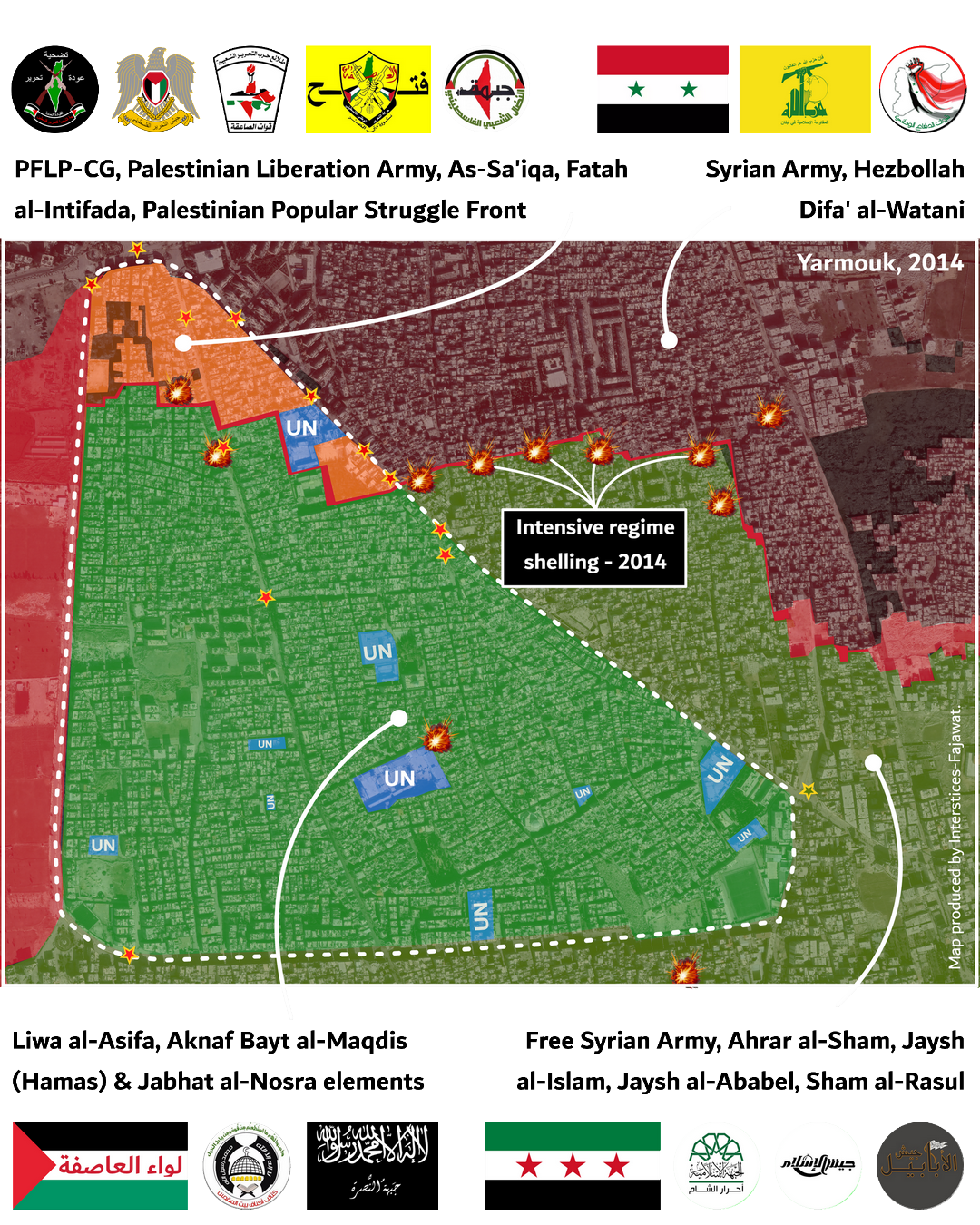
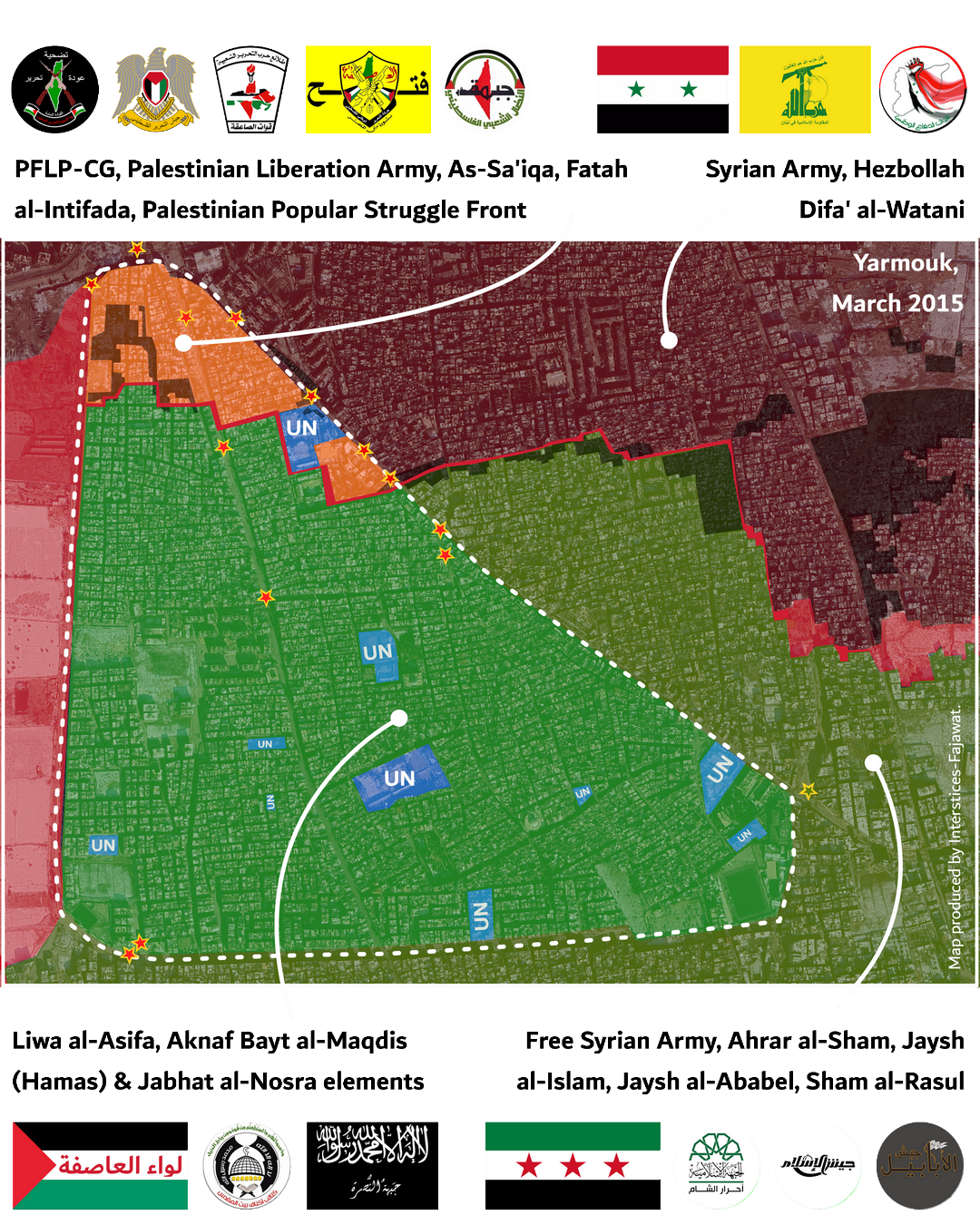
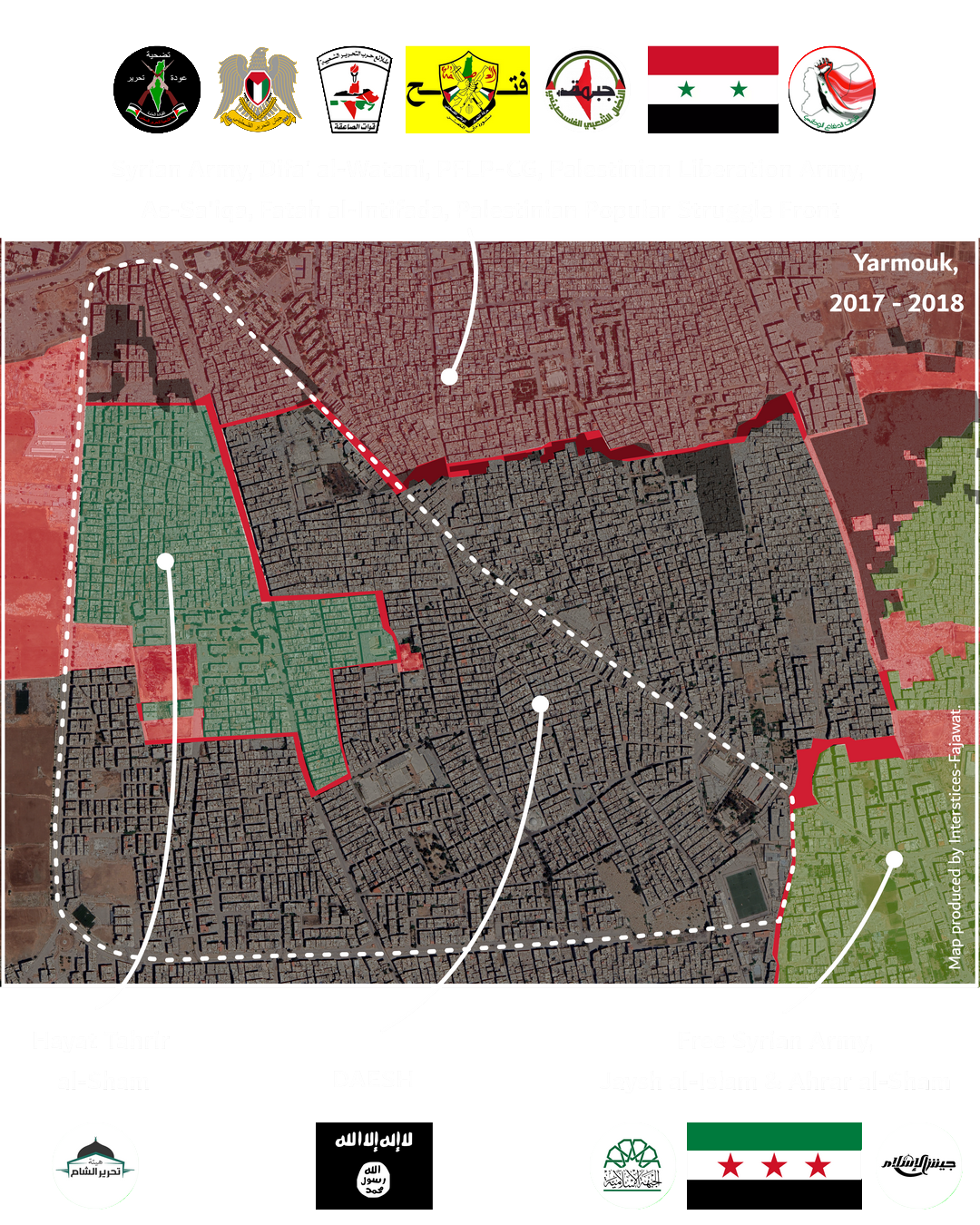
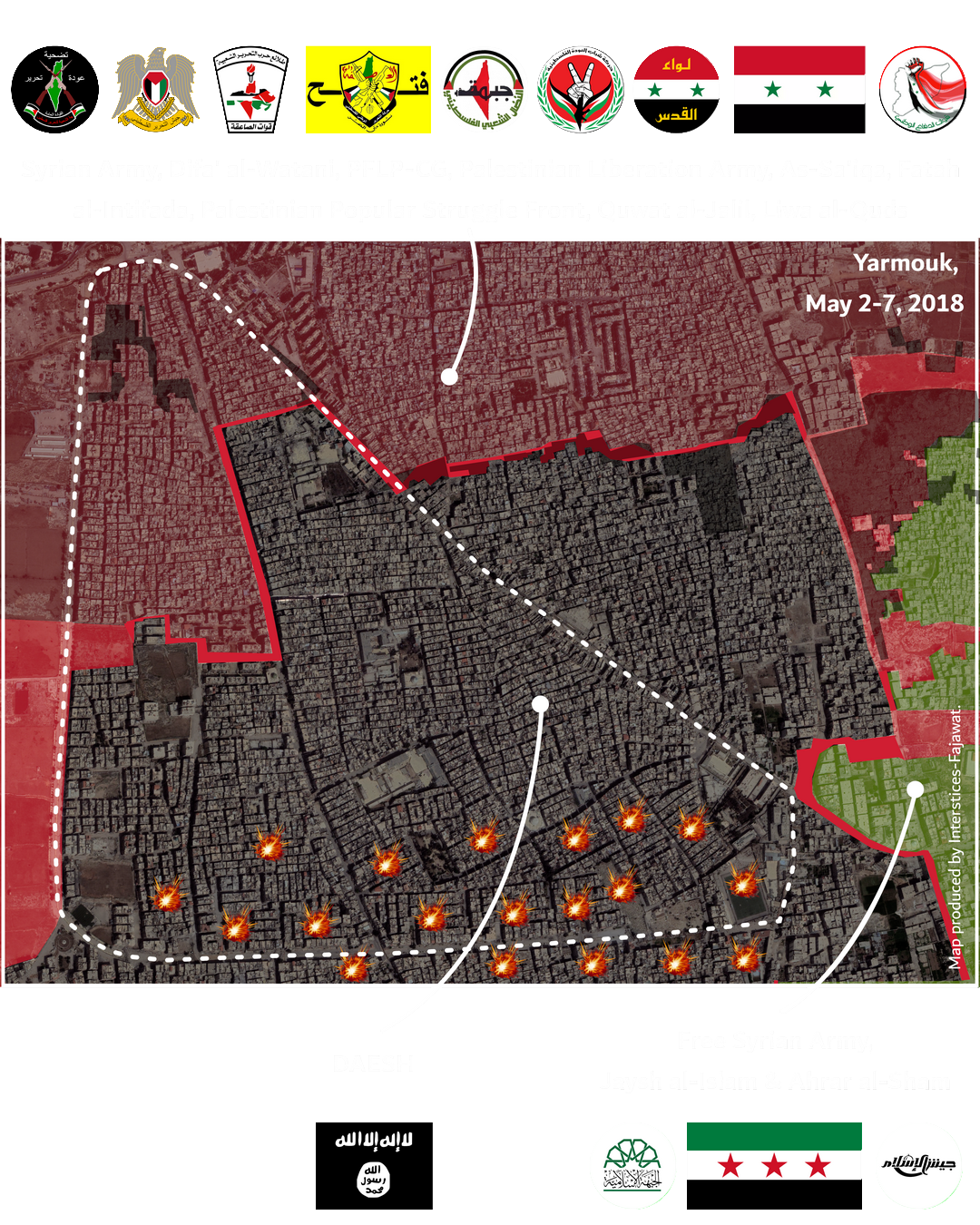
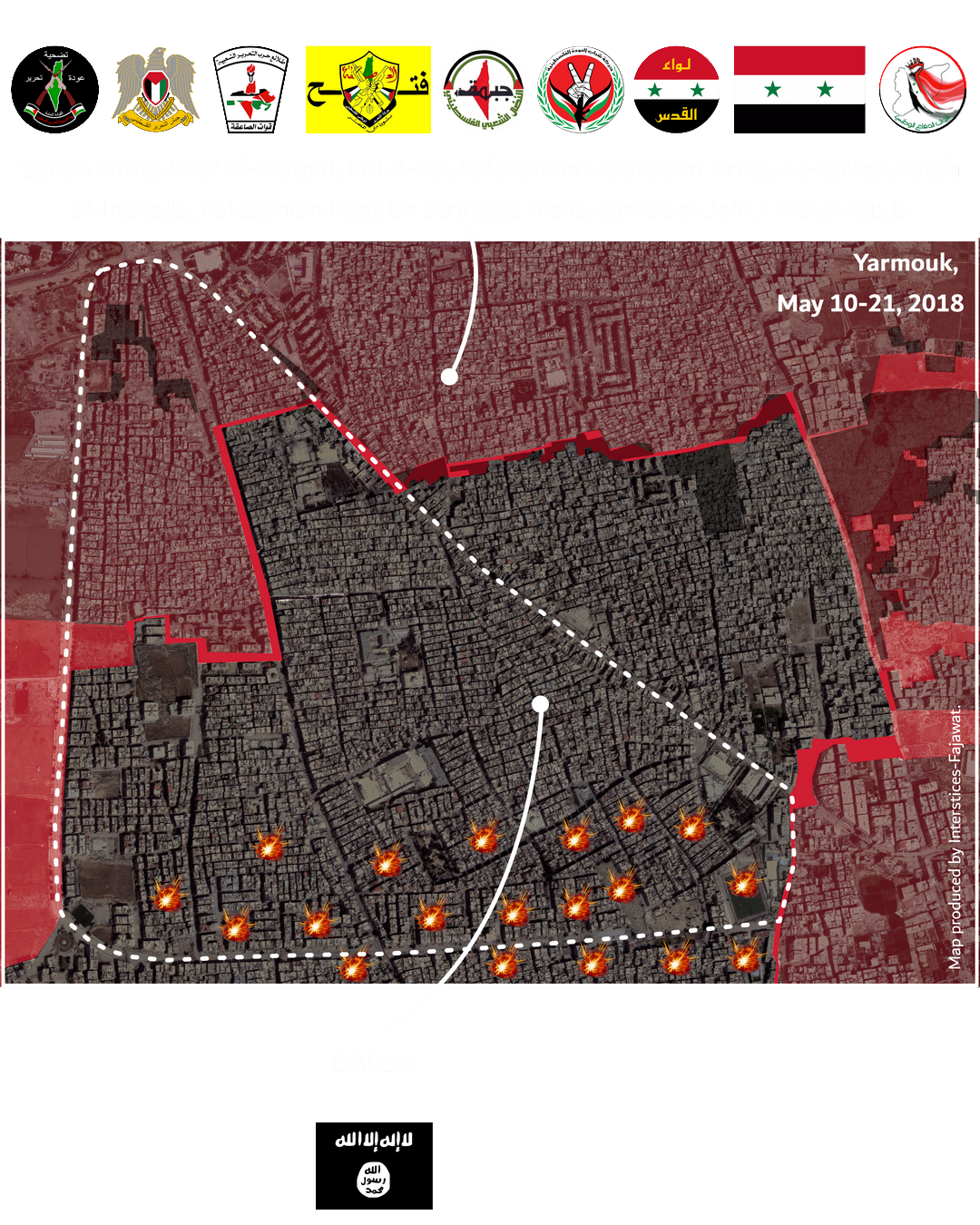
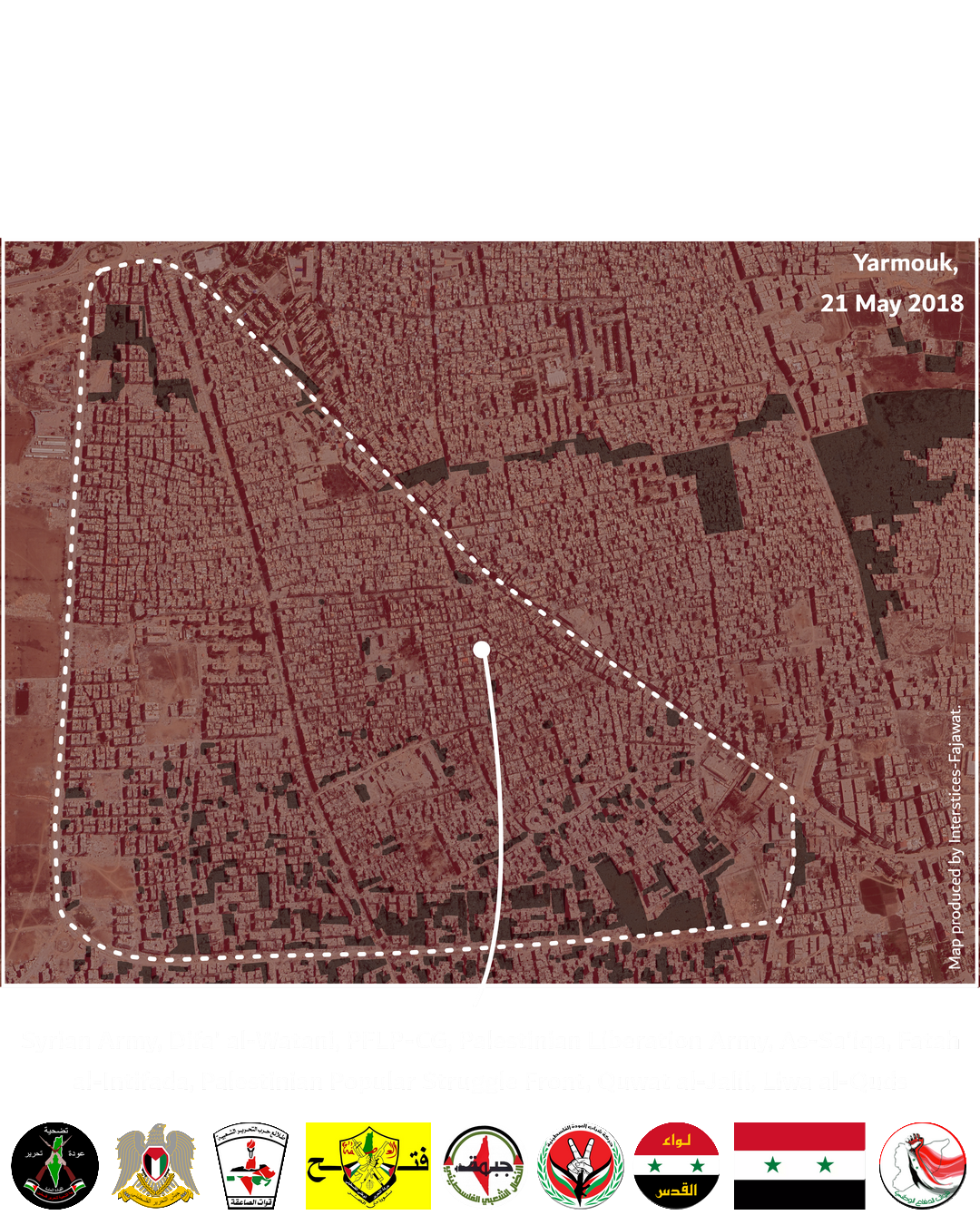
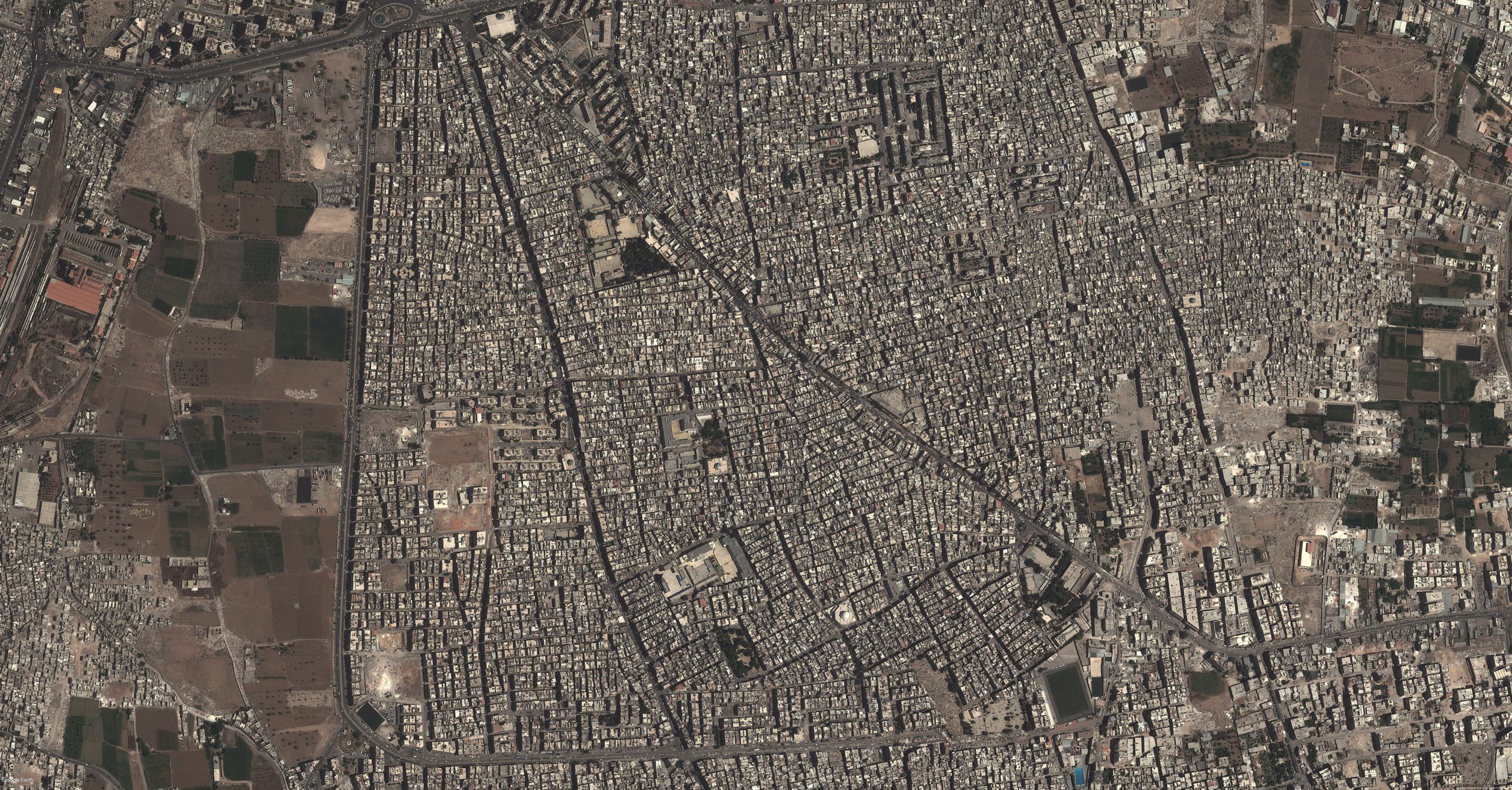
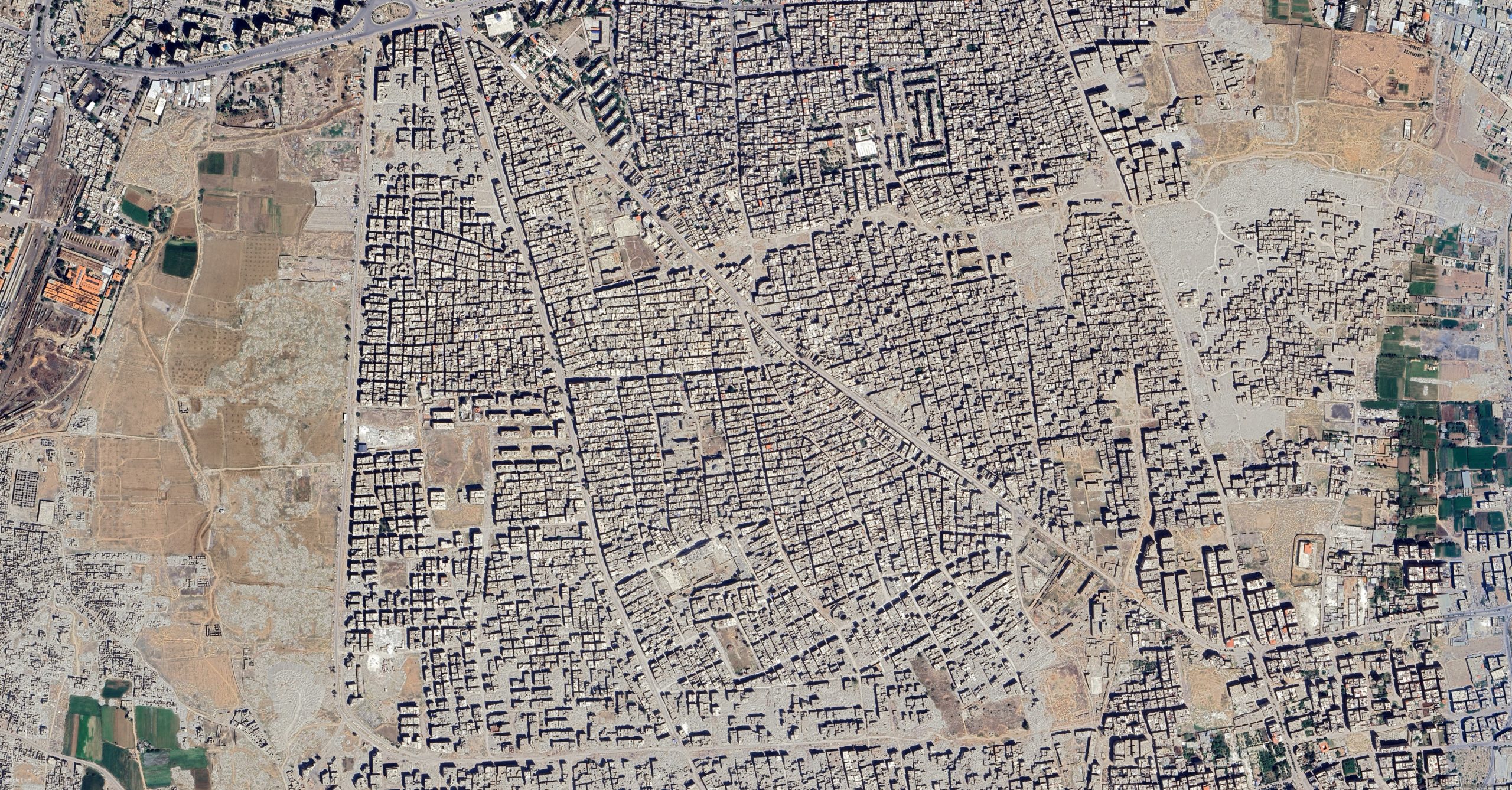
Following its expulsion from Yarmouk, the PFLP-GC established a partial blockade at the checkpoint located at the northern entrance to the camp on the initiative of its leader Anwar Raja, preventing any food or medicine from entering for six months, but initially contenting itself with filtering the passage of people without prohibiting it, except on certain occasions. Food and medicine were then smuggled into the camp in small quantities from the south and sold inside at excessive prices.
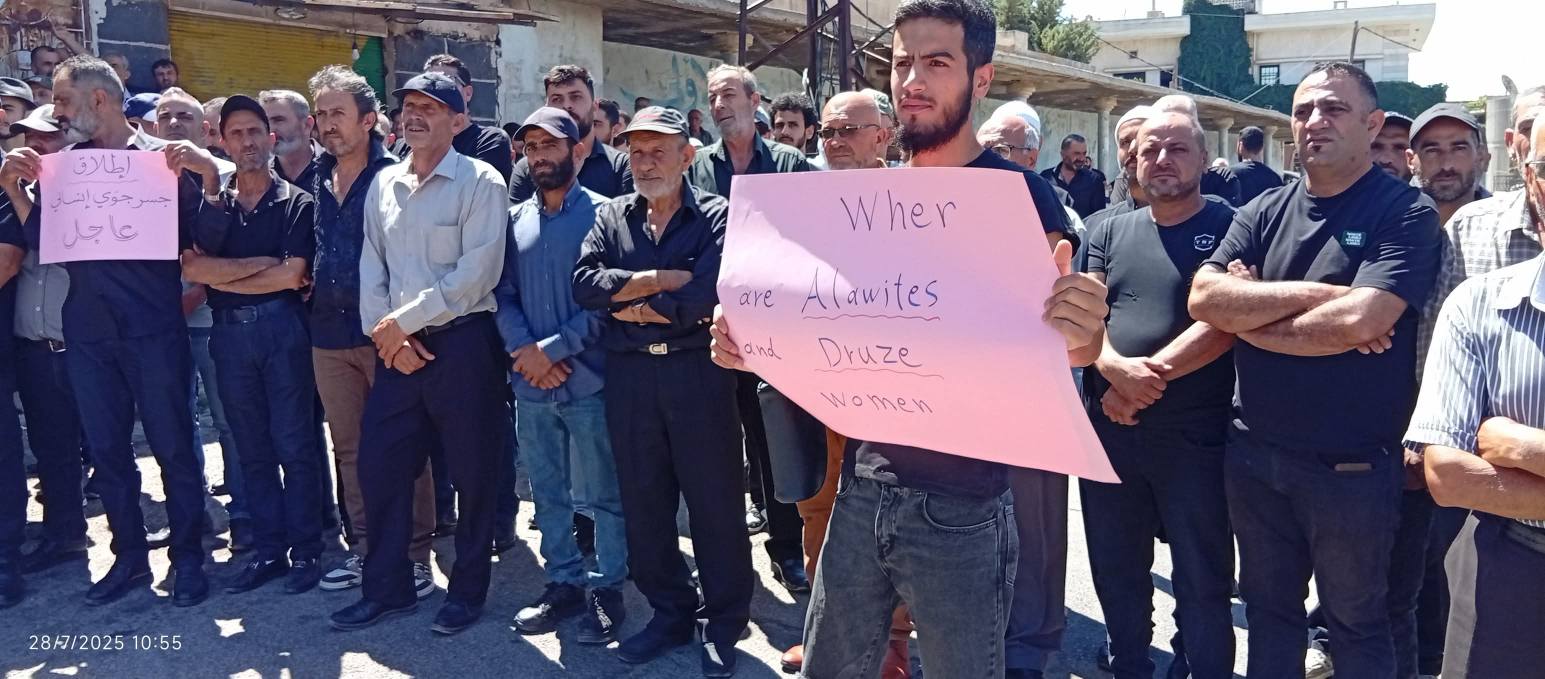
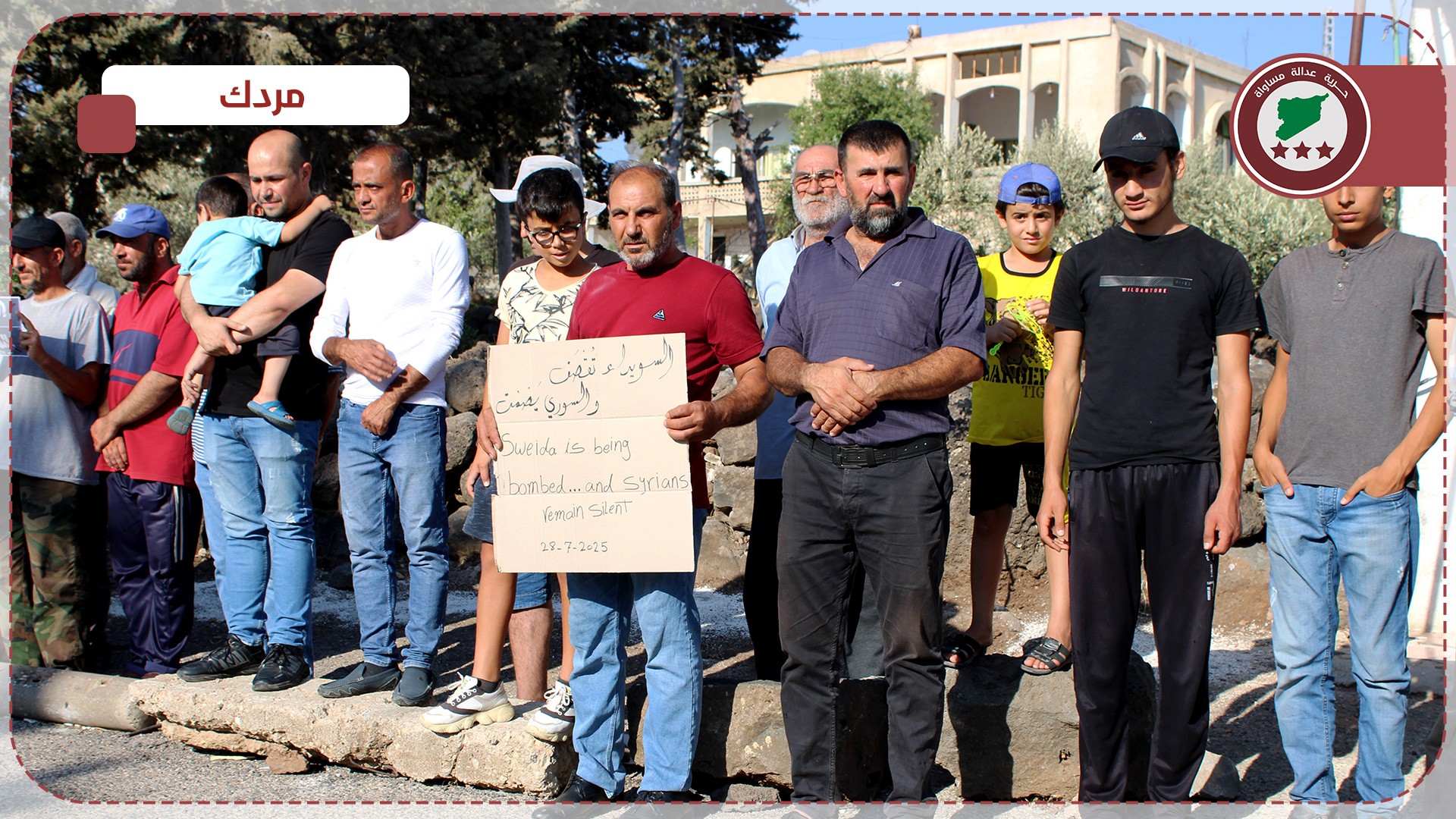
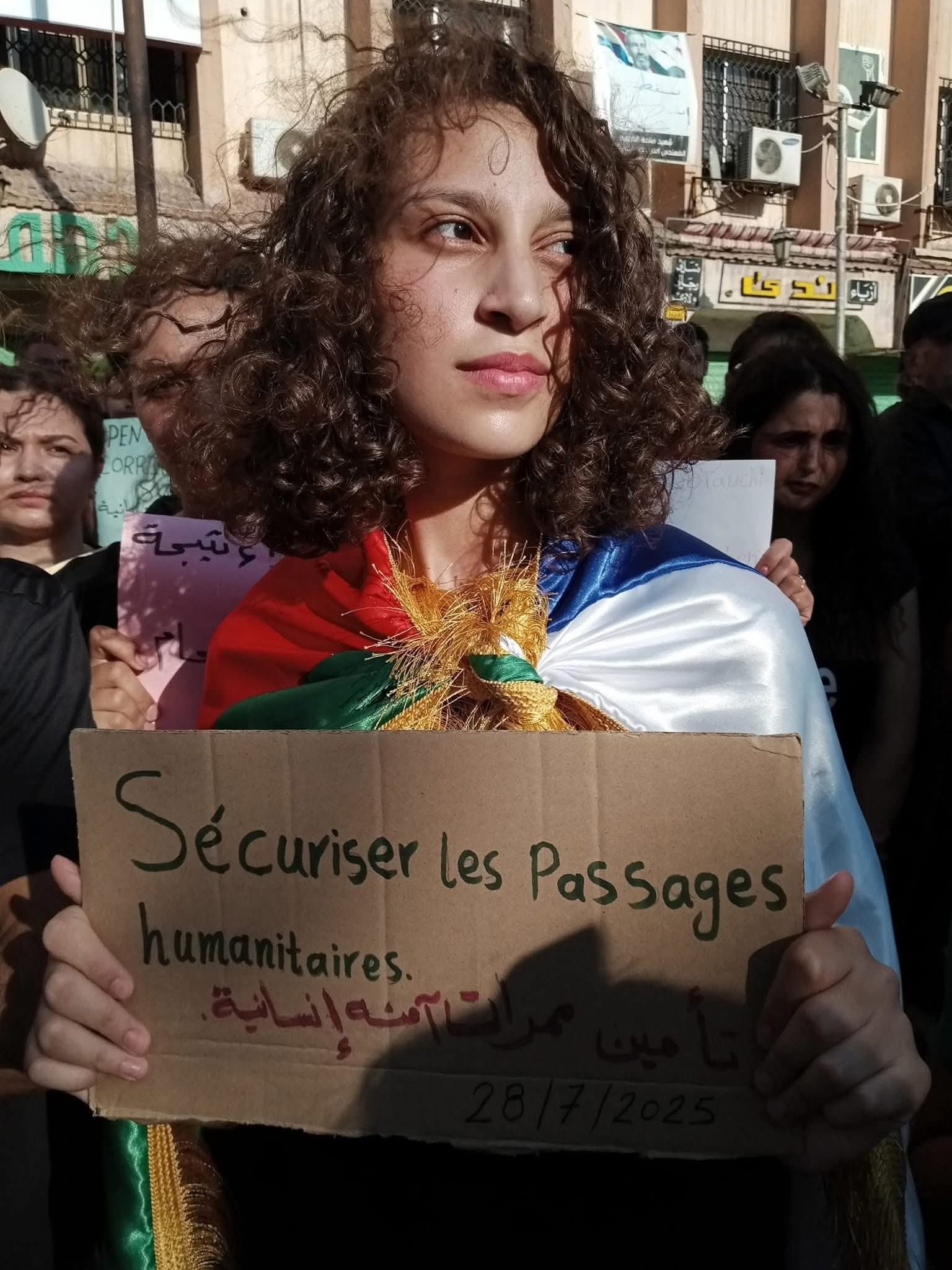
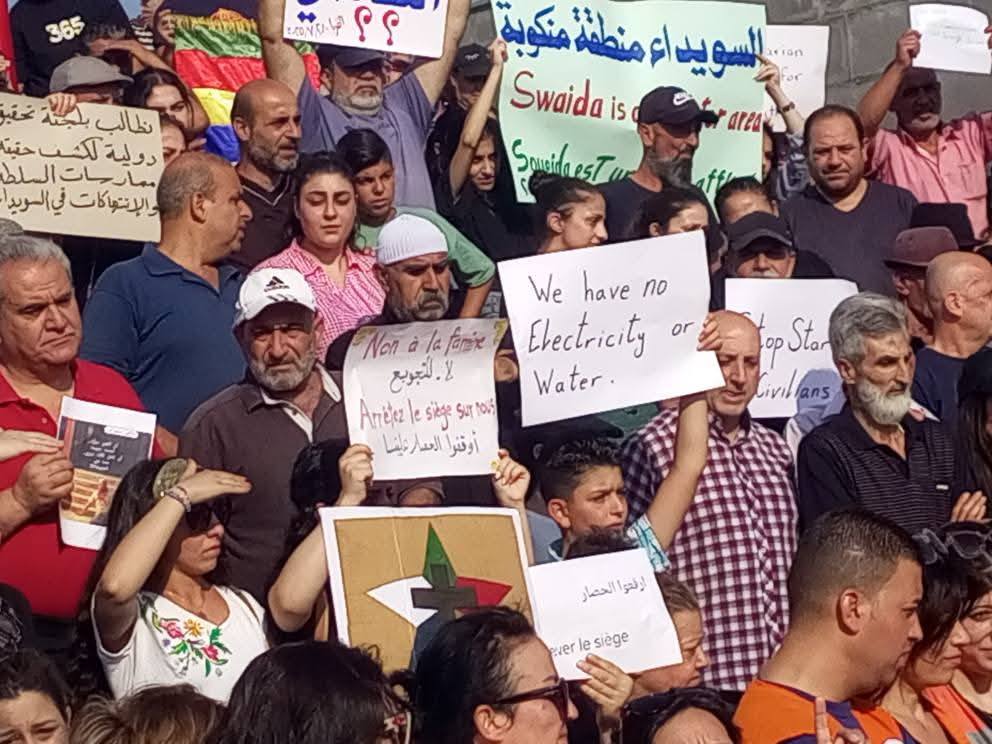
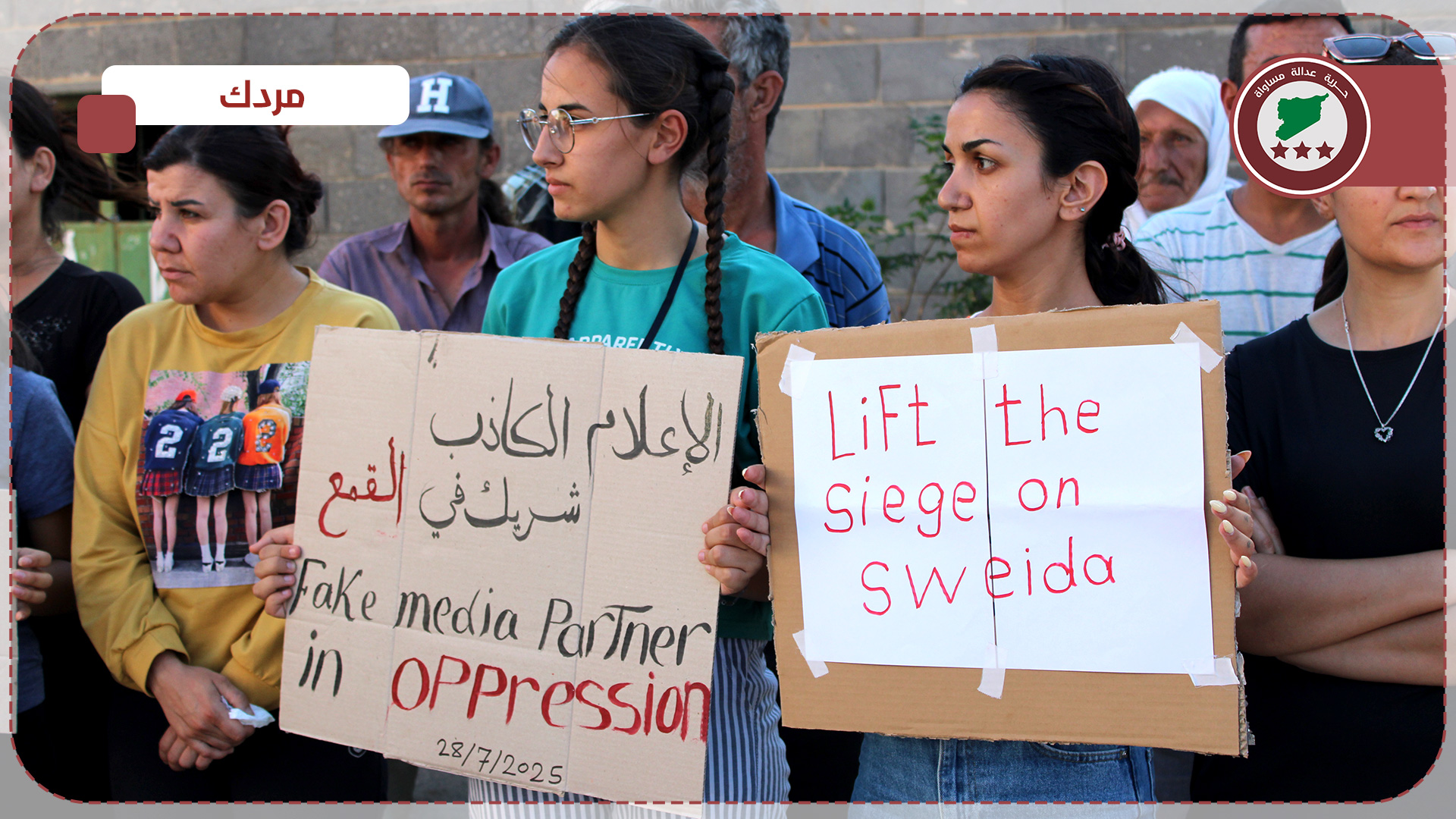
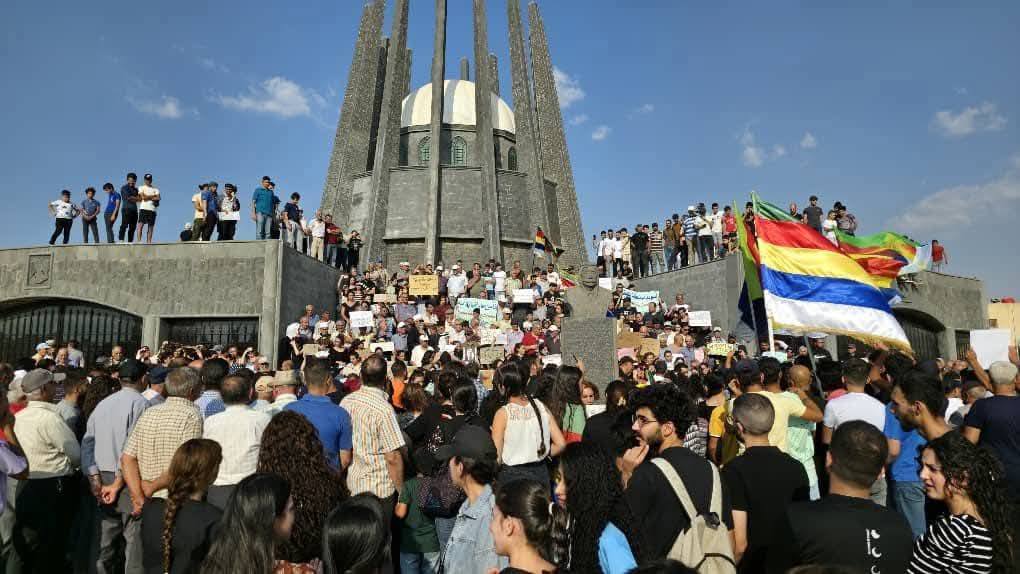
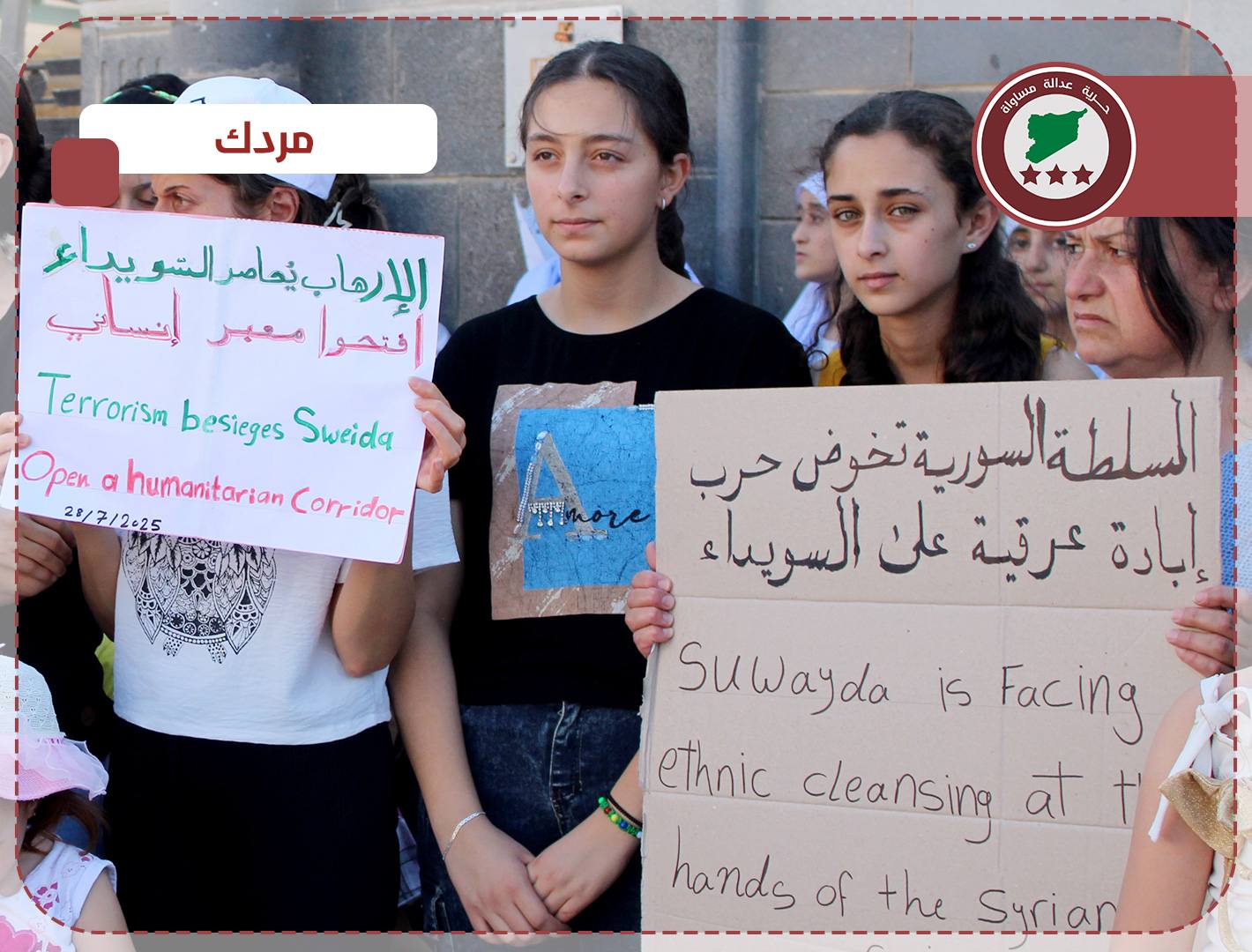
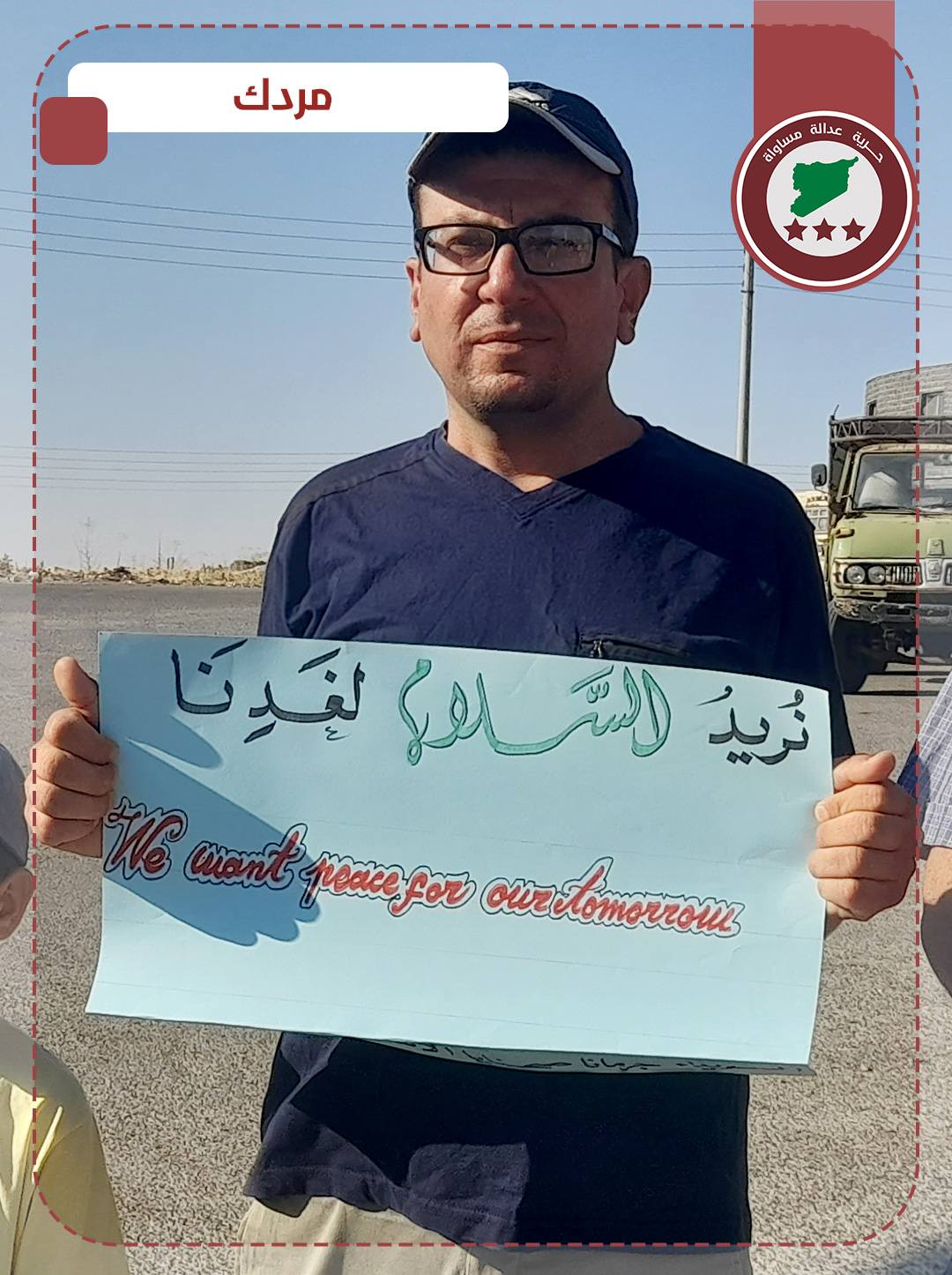
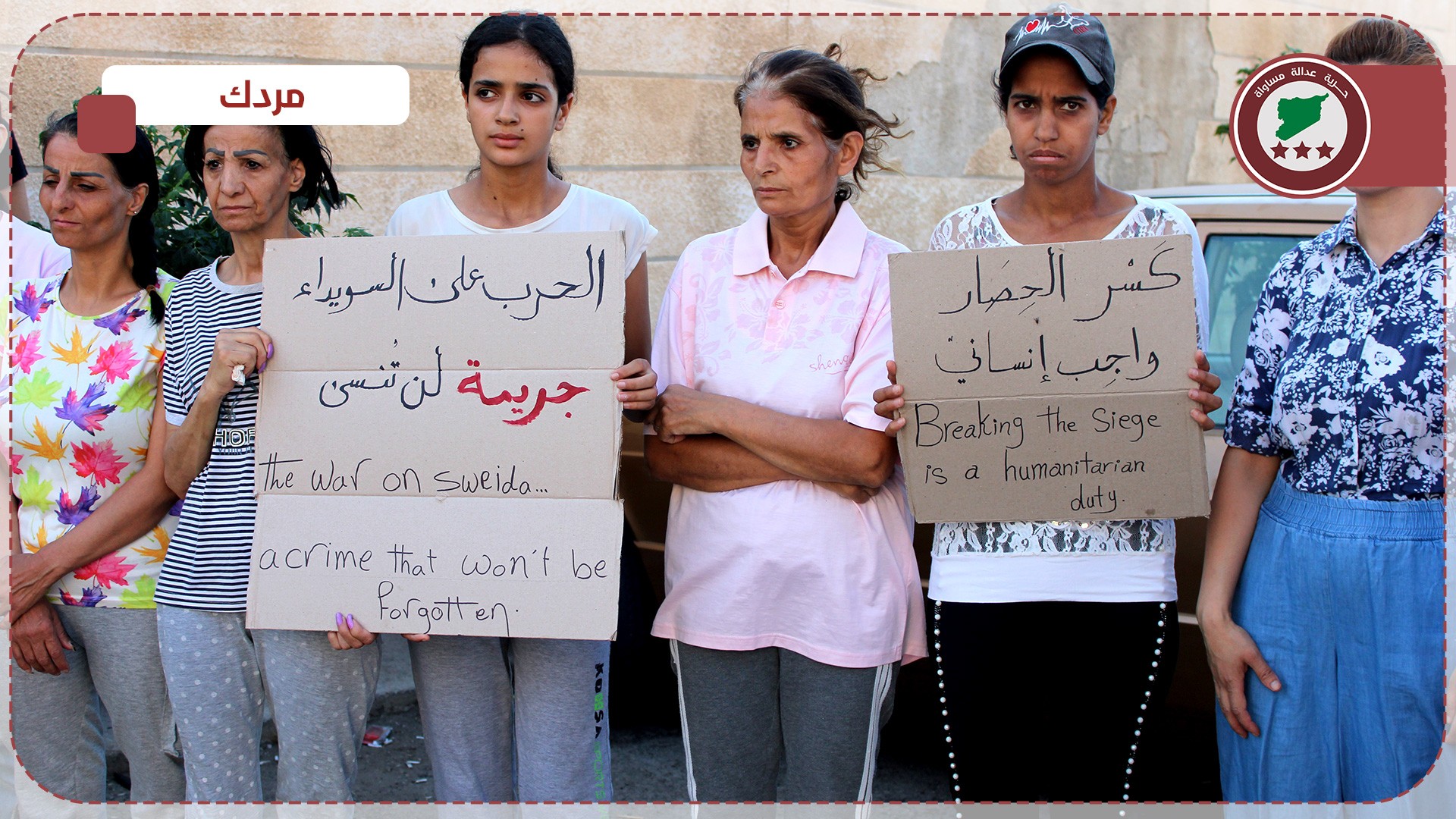
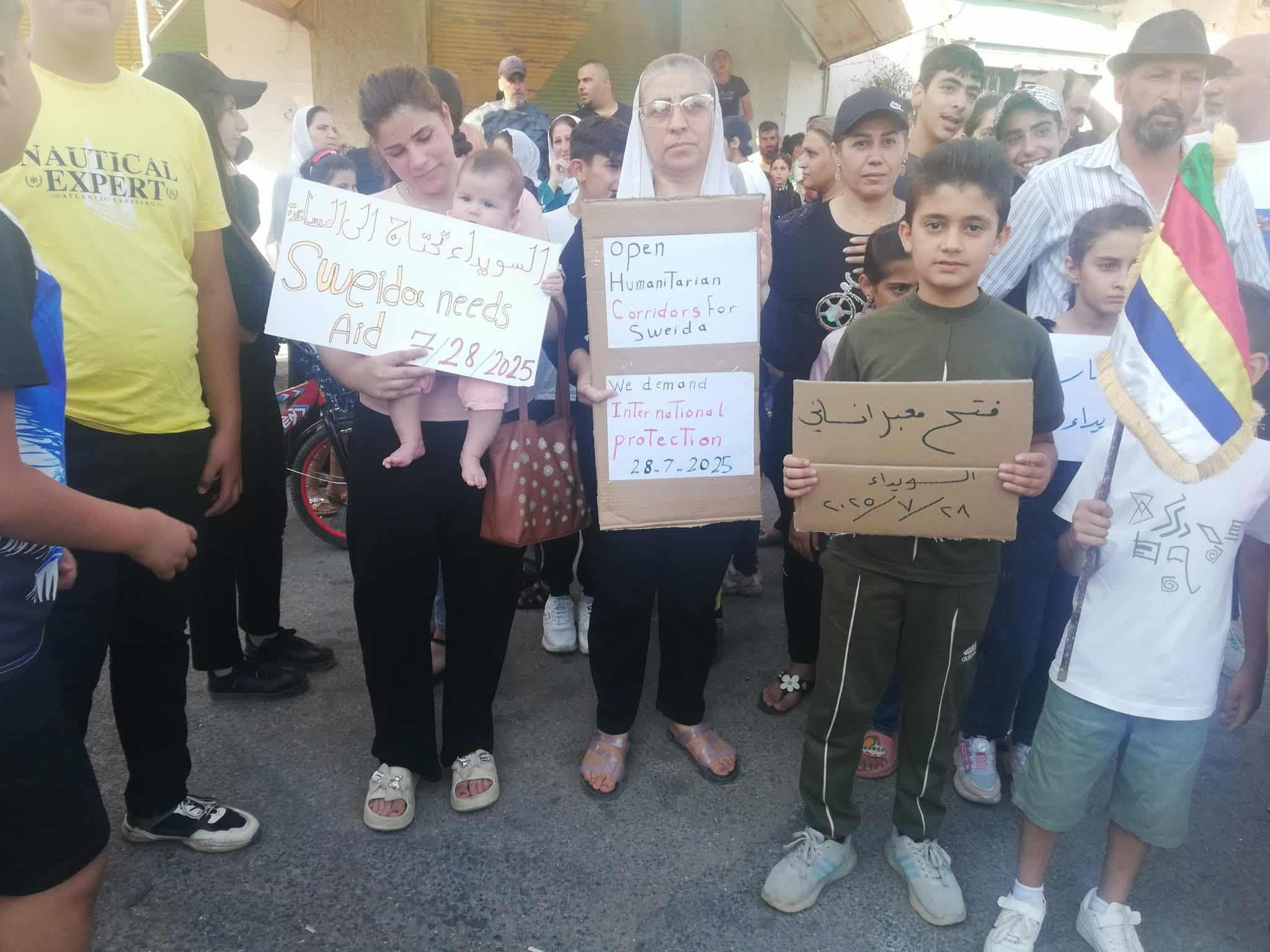
Throughout the siege, demonstrations and symbolic actions were regularly organized inside the camp to call for the lifting of the siege and alert the international community. These were mainly initiated by the Yarmouk Coordination Committee, which at the same time set up an agricultural project called “Bassmat Kheir” to produce vegetables for the community. The alternative school “Al-Dimashkiya” also launched its educational activities during this period for children in the camp who had been deprived of education since the end of UNRWA activities, opening several alternative schools inside and near the camp.
During the first half of 2013, while Palestinian factions within the camp were fragmented into some twenty small groups with no power or influence, Aknaf Beit al-Maqdis obtained external support enabling it to arm itself and expel the criminal factions Suqur Al-Joulan and Ababil Hauran from the camp. The leader of Suqur Al-Joulan, Abu Ammar Bayan Muzail, had previously been arrested and identified as an agent of the regime. [1]
On July 18, 2013, the partial blockade of the camp turned into a total siege, with the regime and the PFLP-GC prohibiting all movement of goods and people. This led to a state of health crisis and advanced malnutrition among the camp's residents, so much so that in October the imam of Yarmouk issued a fatwa authorizing the killing and consumption of dogs, cats, and donkeys. The level of famine was so high that even the fighters of the various factions were more concerned with survival than with fighting each other.
Following the overthrow of Mohamed Morsi in Egypt, Hamas was considerably weakened and definitively withdrew its support for the Syrian-Palestinian rebels, before renewing its ties with Hezbollah and Iran. However, the Syrian regime did not reopen dialogue with Hamas, refusing to release its members from prison.
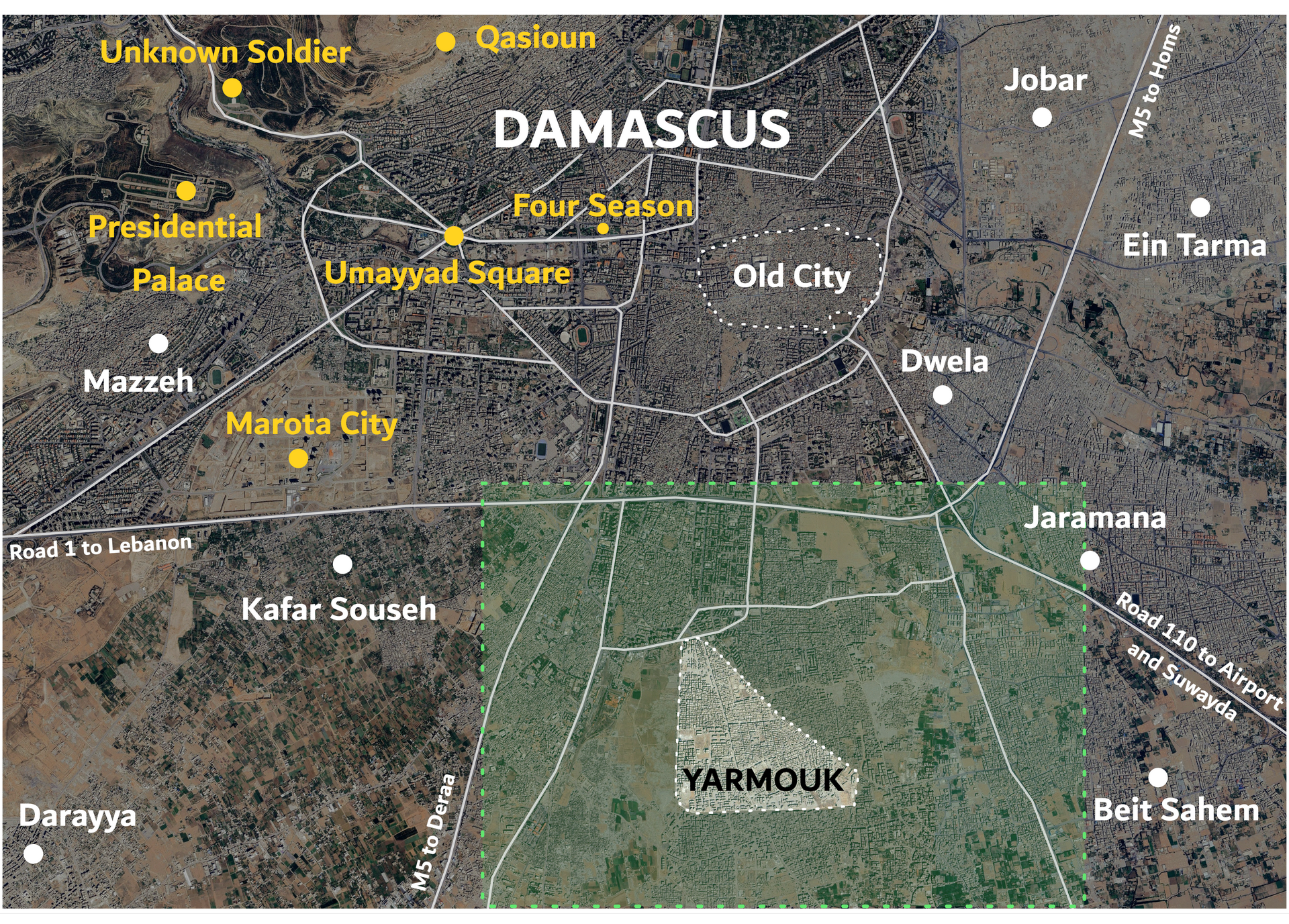
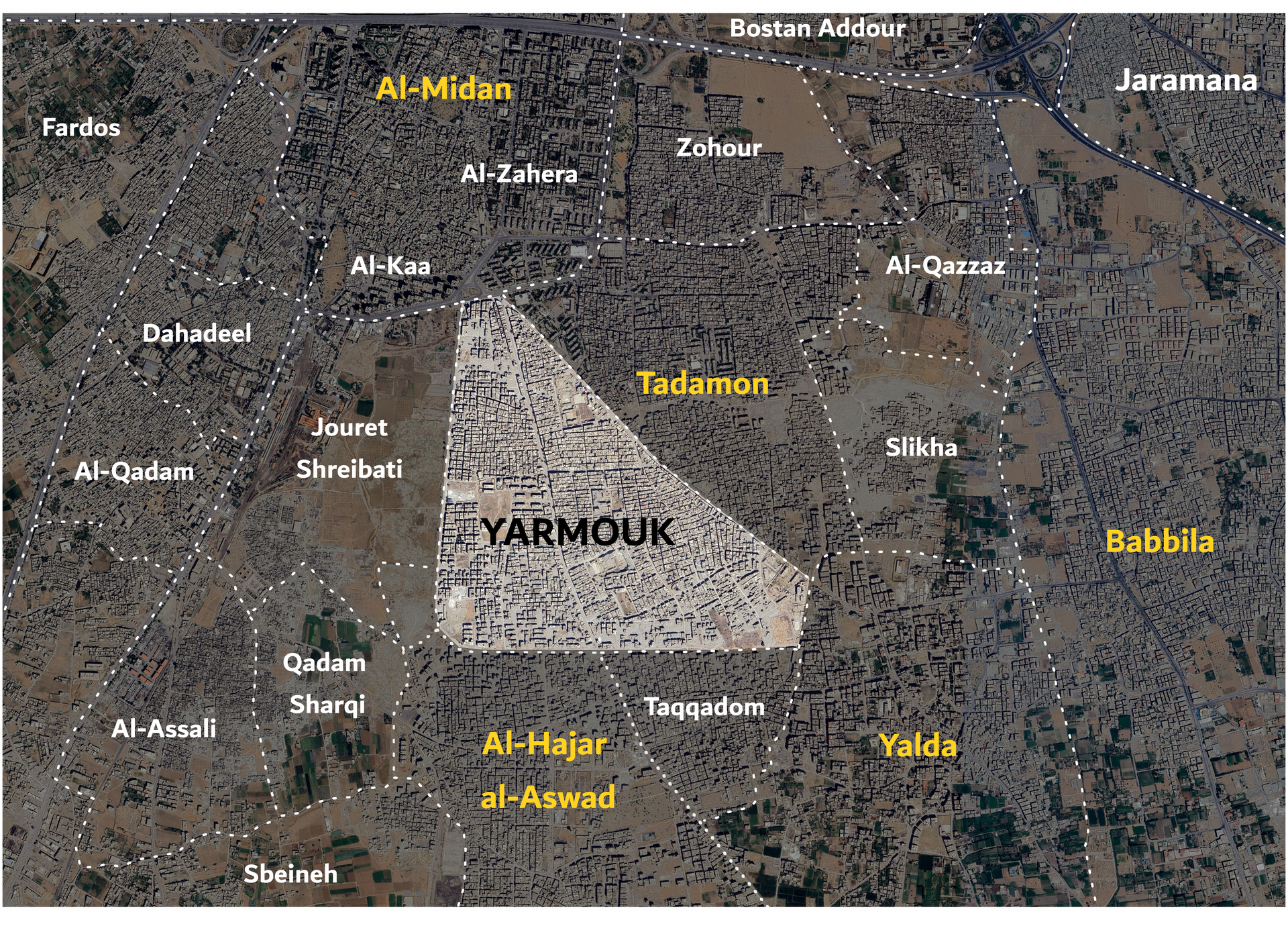
Meanwhile, on November 6, 2013, several of the main rebel groups present in the Damascus region formalized the creation of a military alliance independent of the FSA and placed under the umbrella of the Greater Damascus Operations Room. This included several factions active in Yarmouk and the surrounding districts (Al-Hajar al-Aswad, Yalda, Babbila, Beit Sahem): Ahrar al-Sham, Aknaf Beit al-Maqdis, Liwa Sham al-Rasul, Kataeb Sahaba, Liwa Shabab al-Hoda, Liwa al-Ummah al-Wahida, etc. [2]
On February 2, 2014, the regime arrested 27 people as they arrived at a checkpoint to receive food aid. On the same day, the Director of National Palestinian Civil Society, Fuad Omar Abu Basil, was kidnapped by the regime, and the next day, it was the turn of humanitarian worker Mahmoud Mu'ad to be arrested and disappear without a trace. Residents were regularly arrested or beaten by regime soldiers during distributions or while attempting to pass through checkpoints, particularly towards Yalda.
Contacts were established between the residents and the Palestine Liberation Organization (PLO), as well as the Fatah leadership in Ramallah, in order to initiate talks with the Arab League and the regime to end the siege and the accompanying reprisals against civilians. As part of these negotiations, the PLO secured food distributions in Al-Rijeh Square in the northern part of the camp. The main organizations distributing humanitarian aid in the camp at the time were the Palestine Charity Committee, the Nour Association for Relief and Development, the Jafra Foundation for Relief & Youth Development, and the Palestinian Red Crescent Society.[3]
The humanitarian distribution site quickly became the scene of rivalries and regular armed confrontations between factions, and residents waiting for aid were regularly targeted and wounded by sniper fire. On March 23, an anti-tank rocket (RPG) was fired at the crowd gathered to receive humanitarian aid in Al-Rijeh Square, killing seven people. The shooter, Mouaffaq Dawa, a member of the “Free Palestine Movement,” was nicknamed “The Butcher of Yarmouk” by residents and was also accused of rape. He was in charge of a checkpoint and food aid distributions. A few years later, when brought before German courts, he justified his actions as revenge for the death of his nephew. [4] [5]
That same month, a truce was agreed between the regime and the opposition, including Jabhat al-Nusra.
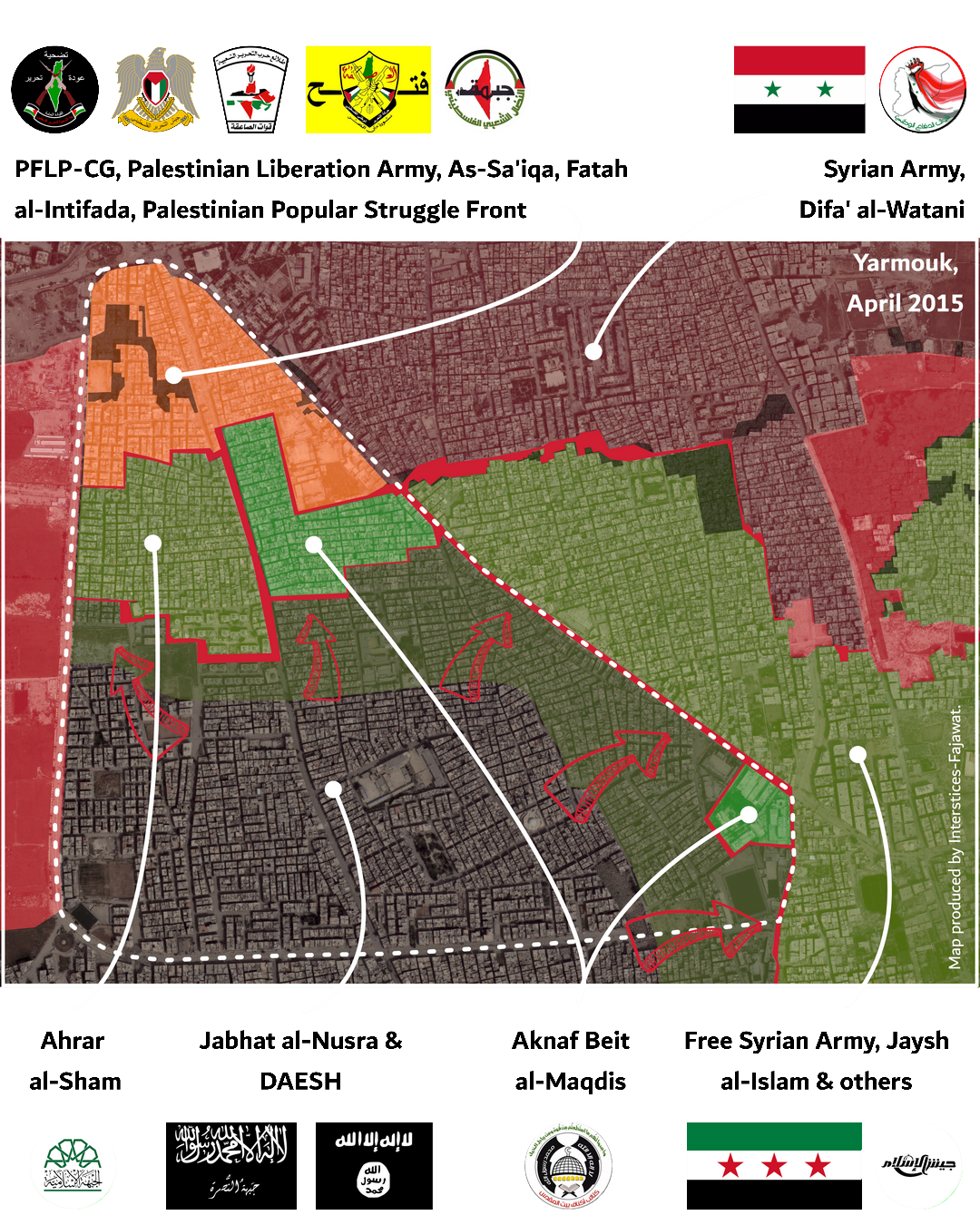
In March 2014, Aknaf Beit al-Maqdis (100 to 300 fighters) and Liwa al-Asifa controlled 75% of the territory, where a number of small factions also remained, such as Free General Command (around 40 defectors from the PFLP-GC), Al-Zaatoot (around 50 Fatah members), Ahrar al-Yarmouk (around 50 members), Free Palestine Liberation Army (defectors from the PLA), Liwa Al-‘Ahda Al-‘Umariya, Zahrat al-Mada’en, the Ibn Taymiyyah battalion, Al-Kara'in (Fatah members), Sahran, Yarmouk Residents League, and Joint Palestinian Power.
At the same time, Palestinian members of Jabhat al-Nusra formalized their activities in the camp, joined by approximately 250 non-Palestinian Jabhat al-Nusra fighters from al-Hajar al-Aswad.
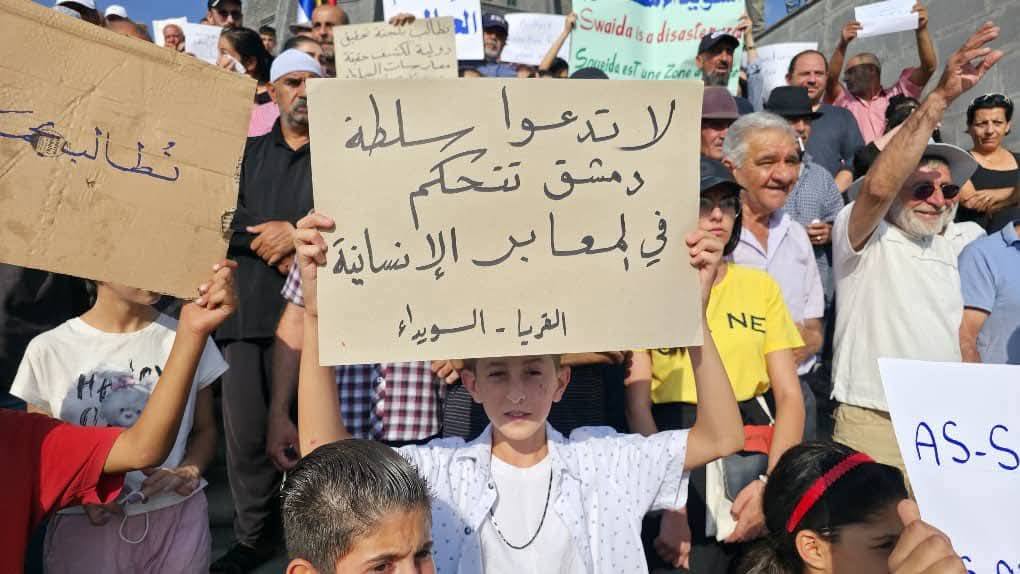
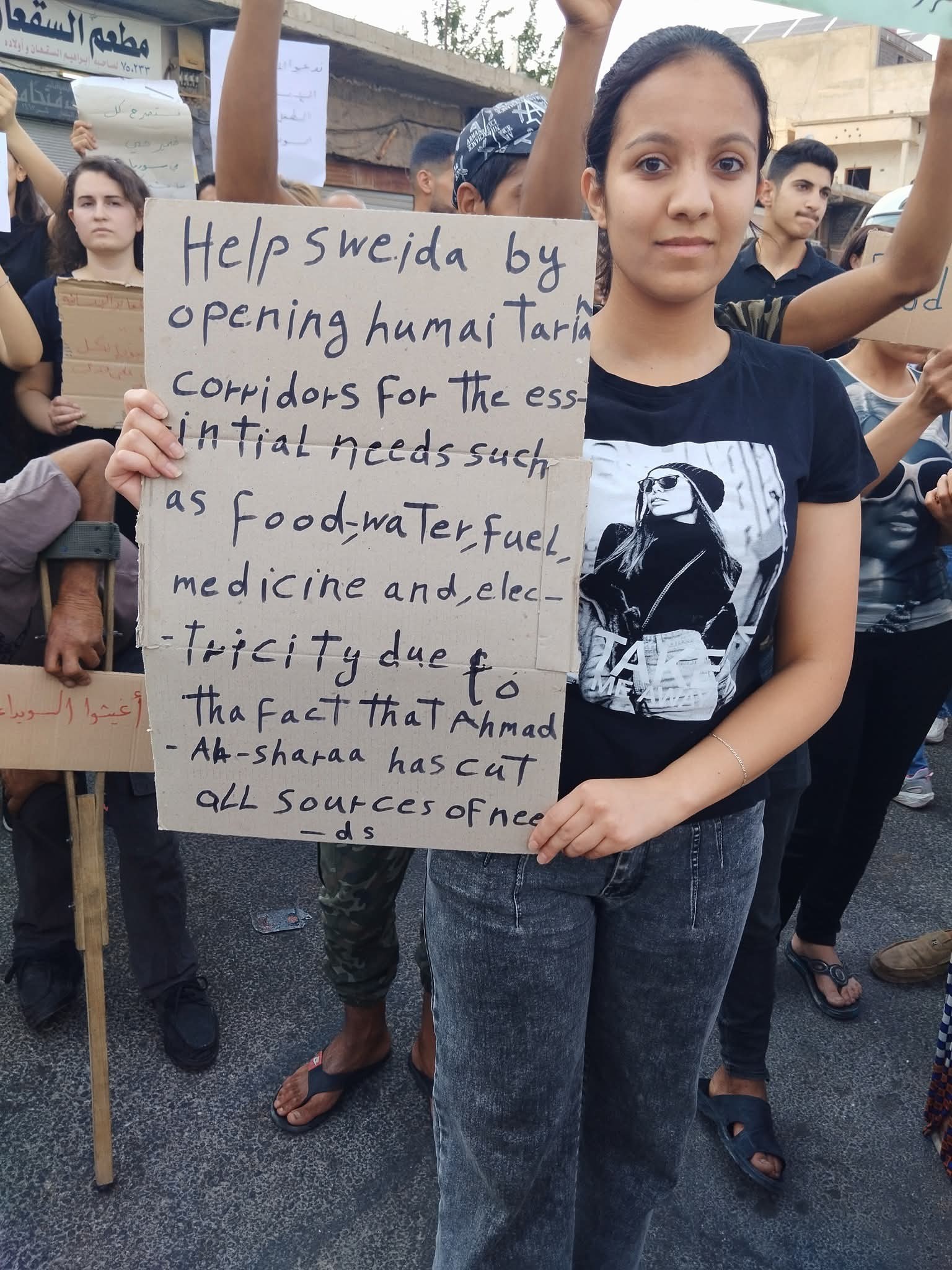
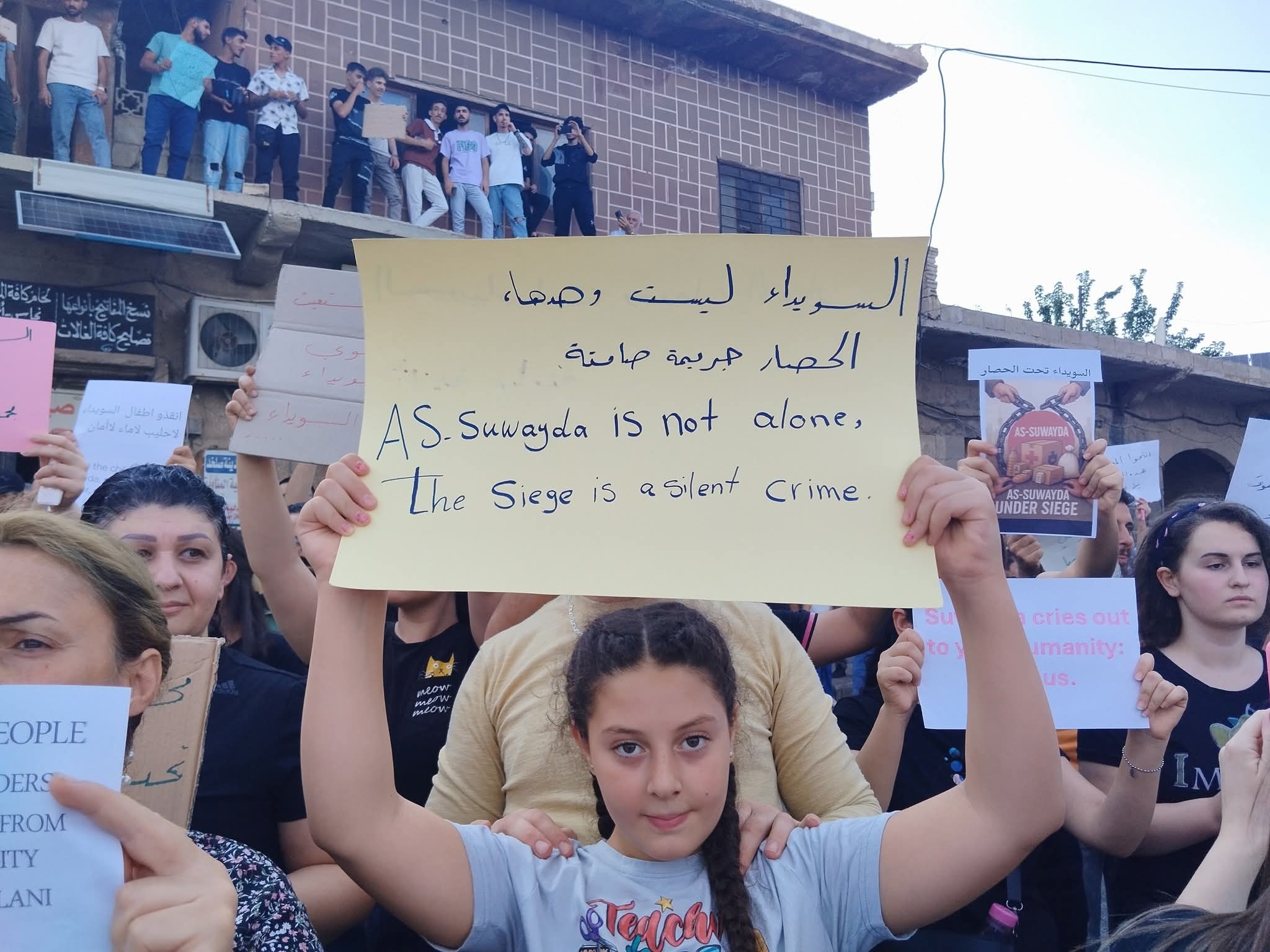
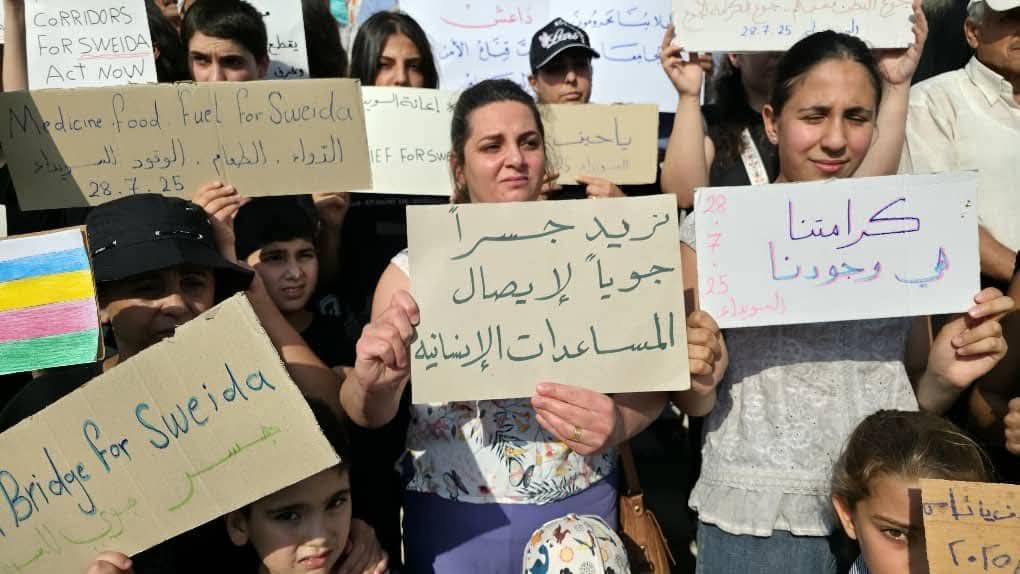
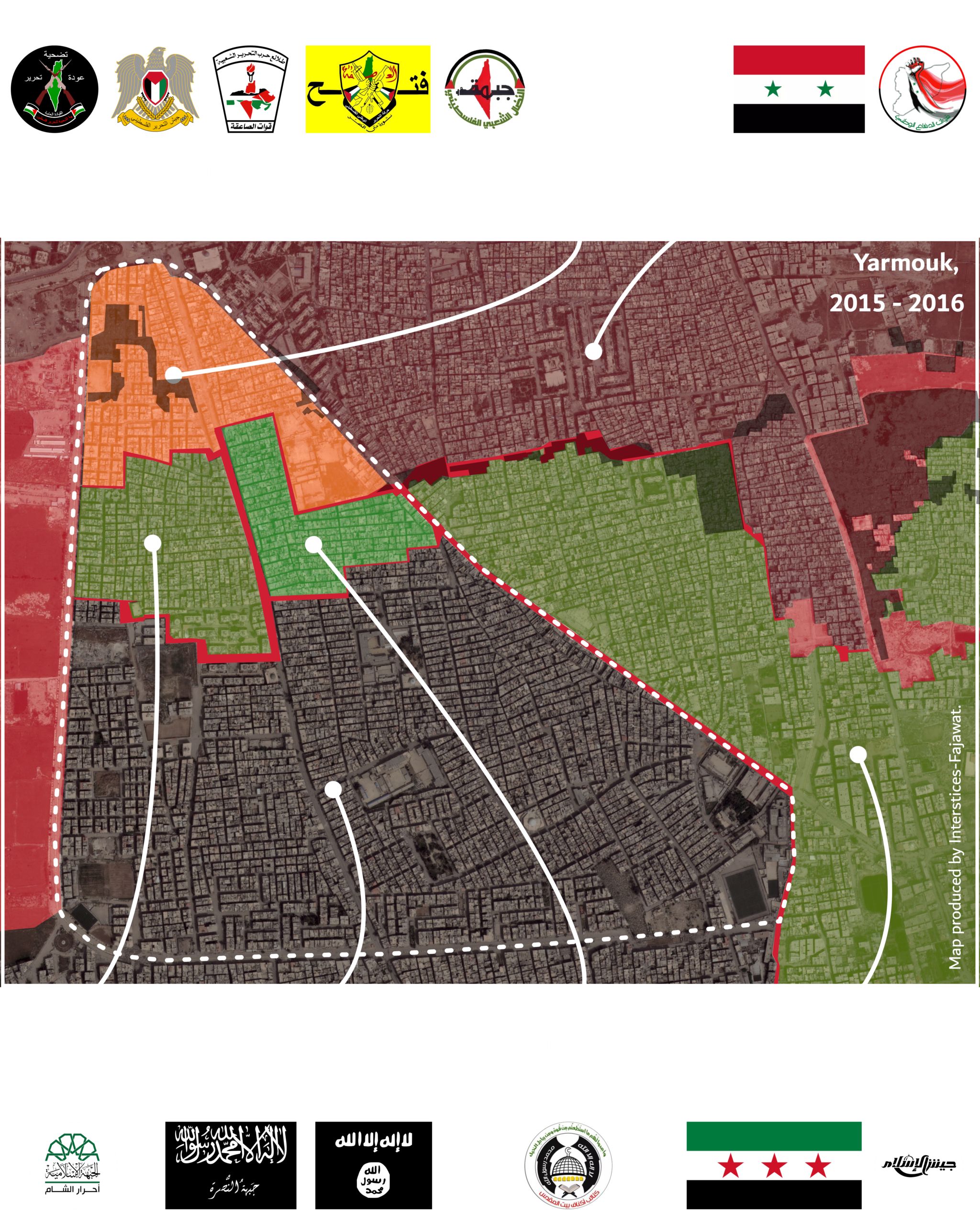
During 2014, five successive truces were signed between the various parties to the conflict, but none were respected and the regime continued to bomb the camp, destroying infrastructure and rendering it uninhabitable. [6] Each party blamed the other for the violence and the violation of the agreements, with Fatah accusing the PFLP-GC and the regime, while the latter accused Fatah and Jabhat al-Nusra. In July, eleven civilian groups and institutions in the camp called on all parties to take immediate action to resolve the humanitarian crisis, in particular by allowing food, medicine, and drinking water to enter and lifting the siege. The UN, the Palestinian Embassy in Syria, and the General Authority for Palestinian Arab Refugees were also called upon by the Yarmouk Civil Council, established in March, while campaigns and demonstrations organized by residents multiplied. To no avail.
On August 8, 2014, a civilian delegation tasked with ensuring the implementation of the conditions set out in the ceasefire agreements, namely the surrender of rebel fighters to the authorities in exchange for the neutralization of the conflict and the return of residents, was targeted by Jabhat al-Nusra, injuring one of its representatives and putting an end to the various attempts at talks.
From the second quarter of 2014 until the end of 2015, a series of car bombings and selective assassinations targeted a number of Palestinian activists and civil society actors inside the camp: Abu Al-Khalil (June 17, 2014), Baha Saqr (Yarmouk Residents League), Ahmed Al-Sahli (August 19, 2014), Abdullah al-Bader (August 20, 2014), Ali Al Hija (November 29, 2014), Mohammad Yousuf Areisha (Director of the Relief Office) December 20, 2014), Mohammad Qasim Tiraweya (Fatah, December 23, 2014), Abdallah Rezeq (January 12, 2015), Nemer Hussein (Yarmouk Civil Council, February 11, 2015), Firas Hussein Al-Najee (Basma Foundation, February 22, 2015), Yahya Abdullah al-Hourani Abu Suhaib (March 30, 2015), Mustafa Sharaan Abu Maaz (Palestine Charity Committee, July 13, 2015), Abu Diyaa Emara (July 27, 2015), Abu Ahmed Houari (Palestinian National Authority & Democratic Front, October 28, 2015). These assassinations took place in the context of daily rivalries and clashes between factions affiliated with Jabhat al-Nosra and other Palestinian factions, foremost among them Aknaf Beit al-Maqdis, which also suffered several assassination attempts against its leaders. [7] [8]
On September 9, 2014, the regime cut off the camp's water supply before launching a series of strikes on Al-Rijeh Square and its surroundings, Al-Forn Al-Ali Street, the area around Al-Mansoura School, as well as the Safareyat Al-Karmel neighborhood and Al-‘Urubeh Street located south of the camp (Yalda and Taqqadom). These strikes were in response to an attempted attack by the FSA in the neighboring district of al-Zahira, near the checkpoint at the northern entrance to Yarmouk. Ten days later, residents launched a protest campaign called “Yarmouk Camp is thirsty. Yarmouk Camp calls out ‘We want to live’.”
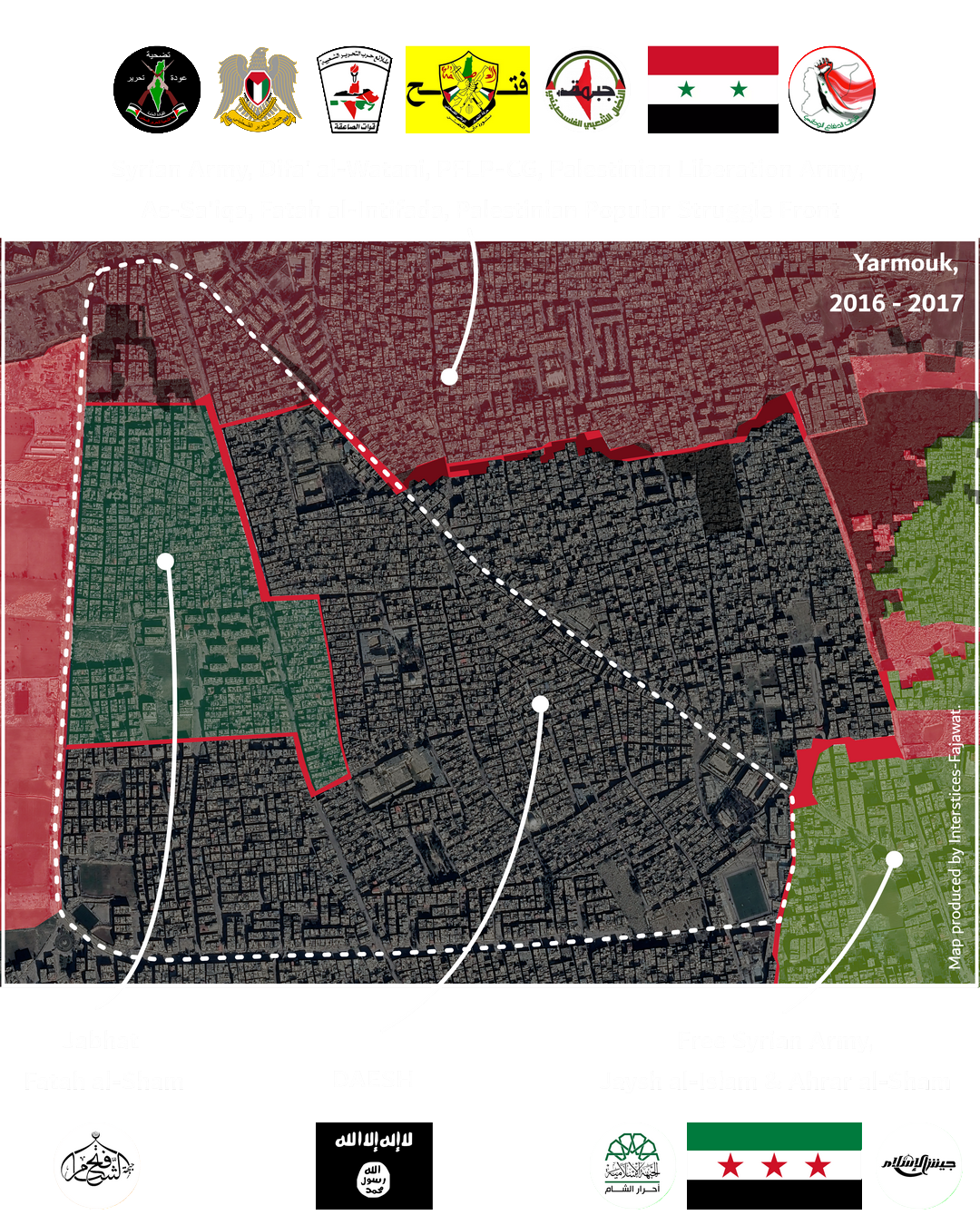
In December 2014, Jabhat Al-Nusra released a video of the execution of two Yarmouk residents accused of “blasphemy.” [9] At the end of the month, Islamic State seized the Al-Zein neighborhood (Uruba Street) located on the southern edge of the camp, across 30th Street. [10]
At the beginning of 2015, there were only 17,000 to 20,000 residents in Yarmouk, including 3,500 children. [11] [12]